What Yarn Is Best for Amigurumi? The Ultimate Fiber & Weight Guide for Plushies
Looking for the best yarn for amigurumi? The right choice depends on the size of your plushie, how clearly you want your stitches to show, how soft you want the finished toy to feel, and how much stuffing pressure the fabric needs to handle. For most crochet amigurumi, smooth cotton, cotton blends, and acrylic yarn are the easiest choices, while chenille is ideal when you want a soft, oversized plush finish.
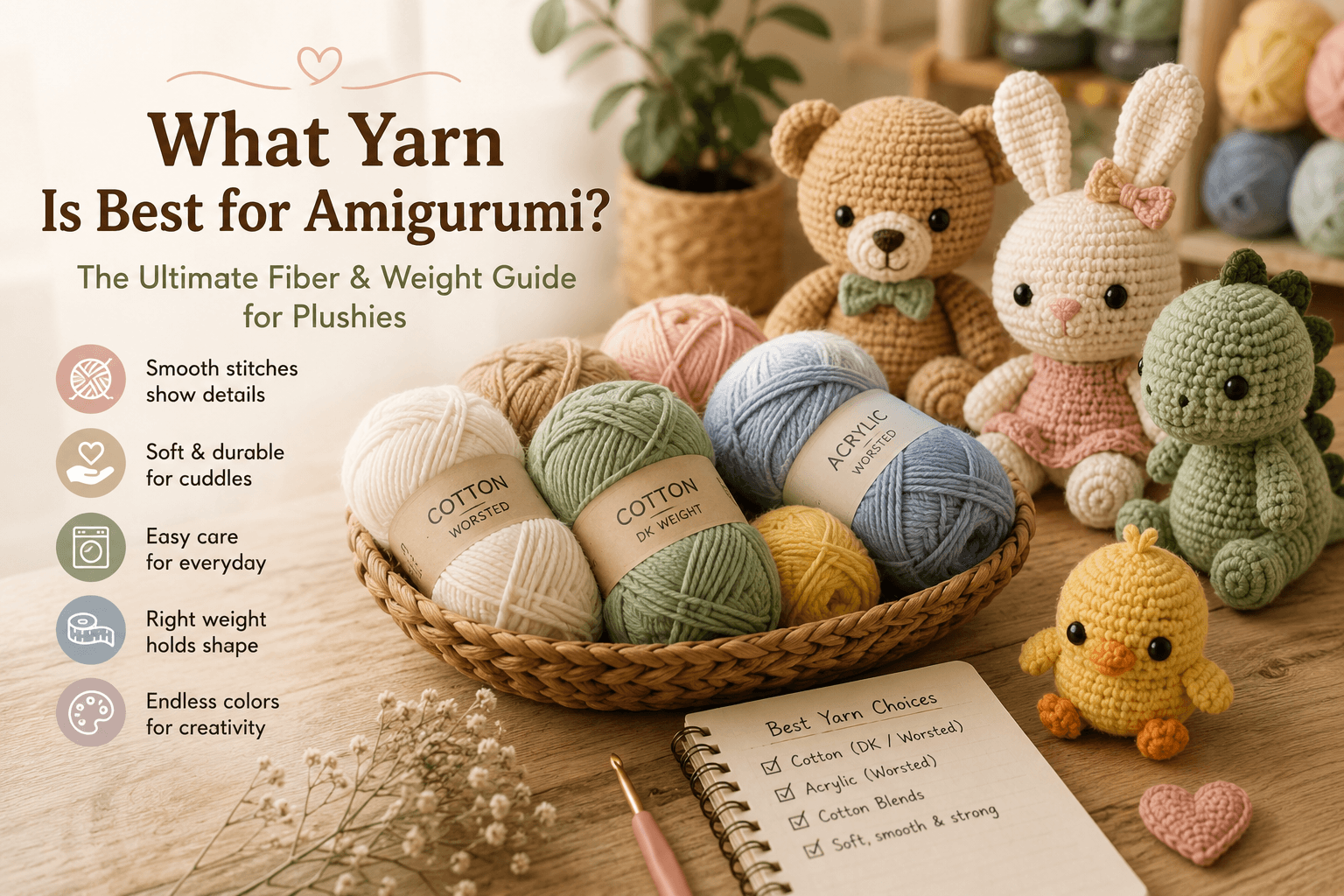
What Is the Best Yarn for Amigurumi?
For beginners and most standard amigurumi patterns, worsted-weight (#4) acrylic or cotton yarn is a reliable starting point. If you want exceptionally crisp stitch definition, choose cotton. If you prefer a softer, more forgiving yarn with plenty of colors and easy care, acrylic is often the better option.
For smaller, detailed amigurumi, DK (#3) or sport-weight (#2) yarn can create a more delicate finished toy. For large, squishy plushies, bulky or chenille yarn can dramatically speed up the project.
The important thing is not simply choosing a yarn labeled “amigurumi.” You want a yarn that creates a tight, dense fabric with visible stitches and minimal gaps.
Why Yarn Choice Matters So Much for Amigurumi
Amigurumi is different from making a scarf, sweater, or blanket.
You are usually crocheting in tight single crochet stitches and then filling the finished shape with stuffing. If your yarn is too stretchy, fuzzy, loosely spun, or worked with a hook that is too large, the stuffing can become visible through the fabric.
A good amigurumi yarn should ideally provide:
- Clear stitch definition
- A smooth surface
- Enough strength to withstand tight tension
- Minimal unwanted stretch
- A dense fabric that hides stuffing
- Good color availability
- Easy care when the finished toy needs washing
This is why a yarn that feels wonderful for a sweater may perform poorly when used for a tiny crochet bear or stuffed animal.
Step 1: Choose Cotton for Crisp, Detailed Amigurumi
If your priority is clean stitch definition, cotton is one of the best yarn choices for amigurumi.
Cotton has very little elasticity, so your stitches tend to stay where you put them. This makes increases, decreases, shaping, embroidered details, and facial features easier to see.
It is particularly useful for:
- Small animals
- Detailed crochet dolls
- Realistic amigurumi
- Keychain-sized plushies
- Toys with lots of color changes
- Pieces where precise shaping matters
Mercerized cotton can be especially pleasant for detailed work because its smooth finish makes individual stitches easy to identify.
The downside of cotton
Cotton can feel less forgiving than acrylic. When you are crocheting extremely tight stitches, the lack of stretch can make your hands work harder.
So while cotton may produce a beautifully crisp finished toy, it isn't necessarily the most comfortable choice for every crocheter.
Step 2: Try Acrylic for Soft, Affordable Beginner Amigurumi
If you're learning how to crochet amigurumi, acrylic is one of the easiest places to start.
Acrylic yarn is widely available, comes in a huge range of colors, and is generally inexpensive. Its slight elasticity can also make tight crochet more forgiving than working with rigid cotton.
That makes acrylic especially useful for:
- Beginner amigurumi
- Large stuffed animals
- Children's toys
- Practice projects
- Colorful characters
- Projects where machine washing is important
The trade-off is stitch definition. Some acrylic yarns have a softer or fuzzier surface than cotton, which can make tiny stitches look less crisp.
For the cleanest result, look for smooth, tightly spun or anti-pilling acrylic yarn rather than very fuzzy varieties. Current amigurumi guides frequently recommend acrylic as the practical budget-friendly option.
Step 3: Consider Cotton-Acrylic Yarn Blends
Can't decide between cotton and acrylic?
A cotton-acrylic blend can give you a useful middle ground.
These yarns combine some of cotton's stitch definition with acrylic's softness and flexibility. They can be particularly comfortable when you're making several toys in a row and don't want the yarn to feel overly rigid in your hands.
A blend is worth considering when you want:
Cotton: crisp stitches + structure
Acrylic: softness + flexibility + affordability
Blend: a balance of both
For many crocheters, this makes cotton-acrylic yarn a practical everyday choice for amigurumi.
Step 4: Match the Yarn Weight to the Size of Your Amigurumi
The best yarn weight for amigurumi depends heavily on the finished size you're trying to create.
As a general starting point:
| Yarn Weight | Typical Amigurumi Use | Approx. Hook Range* |
|---|---|---|
| Sport (#2) | Tiny detailed toys | 2.5–3 mm |
| DK (#3) | Small to medium amigurumi | 3–3.5 mm |
| Worsted (#4) | Standard plushies | 3.5–4 mm |
| Bulky (#5) | Large plushies | Around 5 mm |
| Super Bulky (#6) | Jumbo stuffed animals | 6 mm+ |
*Always check the pattern and yarn label, then adjust based on the fabric you are creating.
Worsted-weight yarn is a particularly versatile choice for standard-sized amigurumi, while DK is useful when you want smaller and more detailed pieces. Bulky and super-bulky yarns are better suited to oversized plush designs.
Step 5: Use a Smaller Hook to Prevent Stuffing From Showing
Choosing the right yarn is only half the equation.
Your crochet hook size for amigurumi also determines how dense the fabric becomes.
Unlike a sweater, where you may want a soft fabric with plenty of drape, amigurumi normally needs a compact fabric that keeps the stuffing contained.
If you use a hook that is too large, you may notice:
- Small holes between stitches
- Polyester stuffing showing through
- Uneven shaping
- Loose stitches around increases
- A softer structure than intended
A common approach is to go one or more hook sizes smaller than the yarn's regular label recommendation, then make a small test section. Several current guides recommend reducing hook size specifically to create the dense gauge amigurumi requires.
Don't choose the hook based on a fixed number alone. The finished fabric is the real test: it should be tight enough that the stuffing isn't visible without becoming so difficult to crochet that your stitches are distorted.
Step 6: Know When Chenille and Plush Yarn Make Sense
If your goal is a soft, squishy crochet plushie, chenille and velvet-style yarns can completely change the look of your amigurumi.
They're excellent for:
- Jumbo teddy bears
- Squishy animals
- Chunky plushies
- Soft dolls
- Oversized amigurumi
The downside is that chenille can hide your stitches.
This becomes especially challenging when a pattern contains lots of increases, decreases, tiny limbs, or embroidered facial details. Some current guides specifically warn that plush yarn can make stitch counting and shaping more difficult.
So don't automatically choose chenille simply because it feels softer.
For detailed amigurumi → cotton or smooth acrylic.
For big, cuddly plushies → chenille or plush yarn.
That simple distinction can save you a lot of frustration.
Step 7: Avoid Yarns That Hide Your Stitches
Some yarns look beautiful in the skein but become difficult to work with once you start making tiny crochet stitches.
For beginner-friendly amigurumi, be cautious with:
Fuzzy yarn
The halo can make individual stitches difficult to see.
Eyelash or novelty yarn
The texture can make counting stitches extremely difficult.
Very loosely spun yarn
Loose plies can split easily when you're repeatedly inserting a hook into tight stitches.
Bouclé yarn
Its loops and texture can obscure the structure of the fabric.
Highly textured yarn
It can be difficult to identify where increases and decreases belong.
The general rule is simple:
The easier it is to see each single crochet, the easier it is to make accurate amigurumi.
Step 8: Choose Yarn Based on the Finished Toy, Not Just the Fiber
There isn't one universal best yarn for crochet toys.
Think about what you're actually making.
For a small detailed animal
Choose smooth cotton or DK yarn.
For a beginner-friendly teddy bear
Try worsted acrylic.
For a realistic animal
Cotton can give you excellent stitch definition and precise shaping.
For a large plushie
Bulky acrylic or chenille can reduce the amount of time required to crochet the body.
For a washable children's toy
Look for a durable, machine-washable yarn and follow the manufacturer's care instructions.
For a display piece
Cotton is a strong choice when crisp structure and long-term shape retention are more important than maximum softness.
The "best" yarn changes according to the job.
Cotton vs. Acrylic vs. Chenille for Amigurumi
| Feature | Cotton | Acrylic | Chenille |
| Stitch definition | Excellent | Very good | Low |
| Softness | Good | Very good | Excellent |
| Easy to count stitches | Excellent | Very good | Difficult |
| Beginner-friendly | Good | Excellent | Moderate |
| Best for tiny details | Excellent | Very good | Poor |
| Best for large plushies | Good | Very good | Excellent |
| Shape definition | Excellent | Good | Moderate |
| Typical cost | Moderate | Low–moderate | Moderate |
| Main drawback | Less forgiving | Can be less crisp | Hides stitches |
One More Thing: Your Stuffing Matters
Even the best yarn for amigurumi won't produce a professional-looking toy if the stuffing is uneven.
Instead of putting one large handful of stuffing into the body, add small amounts gradually.
Push the filling into narrow limbs and corners before adding more. This helps prevent lumps and makes it much easier to control the final shape.
Stuff firmly enough to support the form, but don't stretch the crochet fabric until large gaps appear between the stitches.
Frequently Asked Questions
What is the best yarn for amigurumi beginners?
Smooth worsted-weight acrylic is an easy starting point because it is affordable, widely available, colorful, and relatively forgiving. Cotton is another excellent option if you prioritize crisp stitch definition.
Is cotton or acrylic better for amigurumi?
Cotton generally wins for stitch definition and firm shape, while acrylic is often softer, more flexible, affordable, and beginner-friendly. Your choice should depend on the finished toy and the feel you prefer.
What yarn weight is best for amigurumi?
Worsted weight (#4) is a versatile choice for standard-sized amigurumi. DK (#3) works well for smaller detailed toys, while bulky and super-bulky yarns are better suited to oversized plushies.
Why can I see stuffing through my amigurumi?
Your stitches may be too loose, your hook may be too large, or the yarn may not provide enough coverage. Try a smaller hook and check your tension before reducing the amount of stuffing.
Can you use chenille yarn for amigurumi?
Yes. Chenille is excellent for soft and oversized plushies, but its fuzzy surface makes stitches harder to see. It is usually better for simple shapes than tiny, highly detailed amigurumi.
Should I use yarn under or yarn over for amigurumi?
Both methods can work. Yarn-under single crochet is popular among amigurumi makers because it can create a compact, more square-looking stitch, while traditional yarn-over produces the familiar V-shaped stitch. Use whichever method your pattern specifies and keep it consistent throughout the project.
Pro Tip 💡
Before committing to an entire skein, crochet a small test swatch with your chosen yarn and hook. Stretch the fabric gently and look closely for visible gaps. If you can easily see the stuffing through the stitches, go down a hook size before starting your actual amigurumi.
Create Your Next Plushie
Now that you know how to choose amigurumi yarn, yarn weight, and hook size, you're ready to start your next character.
Explore AlbaCrochet digital PDF amigurumi patterns with clear stitch counts, assembly instructions, shaping guidance, and step-by-step photos designed to make your next crochet plushie easier to create.
Ready to make something?
Put your new skills to use with our free pattern collection.