AlbaCrochet

Tutorials & Tips

How-To Crochet Guides

Clear, friendly, step-by-step tutorials to help you master new stitches, decode patterns, and build your confidence with yarn.

How-To guide results

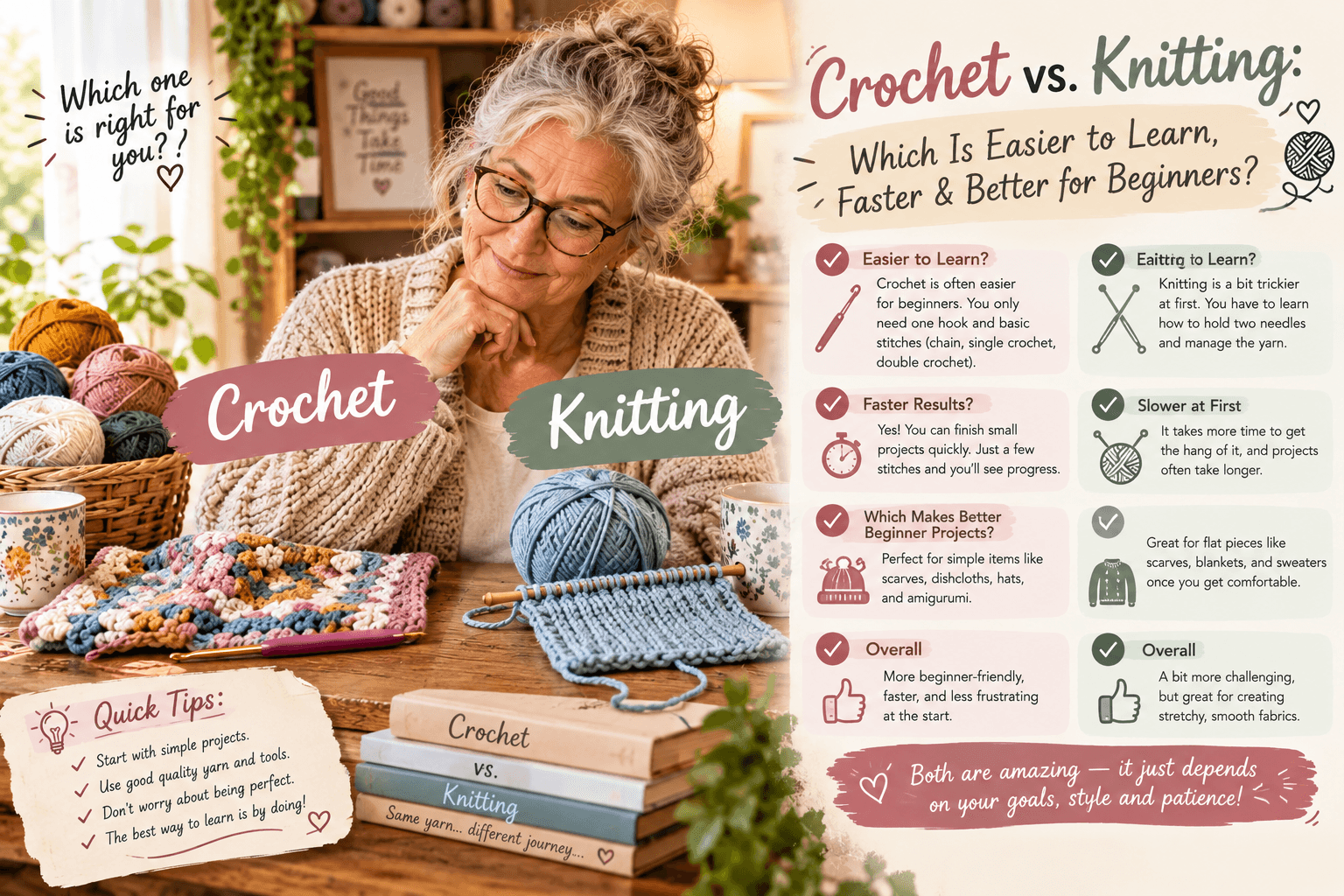
Crochet vs. Knitting: Which Is Easier to Learn, Faster & Better for Beginners?
basics5 min read

Crochet vs. Knitting: Which Is Easier to Learn, Faster & Better for Beginners?

Crochet or knitting? If you're completely new to yarn crafts, choosing between a crochet hook and knitting needles can feel surprisingly difficult. Both crafts let you turn yarn into blankets, sweaters, hats, bags, toys, and home décor. But the way you hold the tools, build stitches, fix mistakes, and create fabric is very different. So which is easier for beginners? Which is faster? Which uses more yarn? And should you learn crochet or knitting first?

Read tutorial
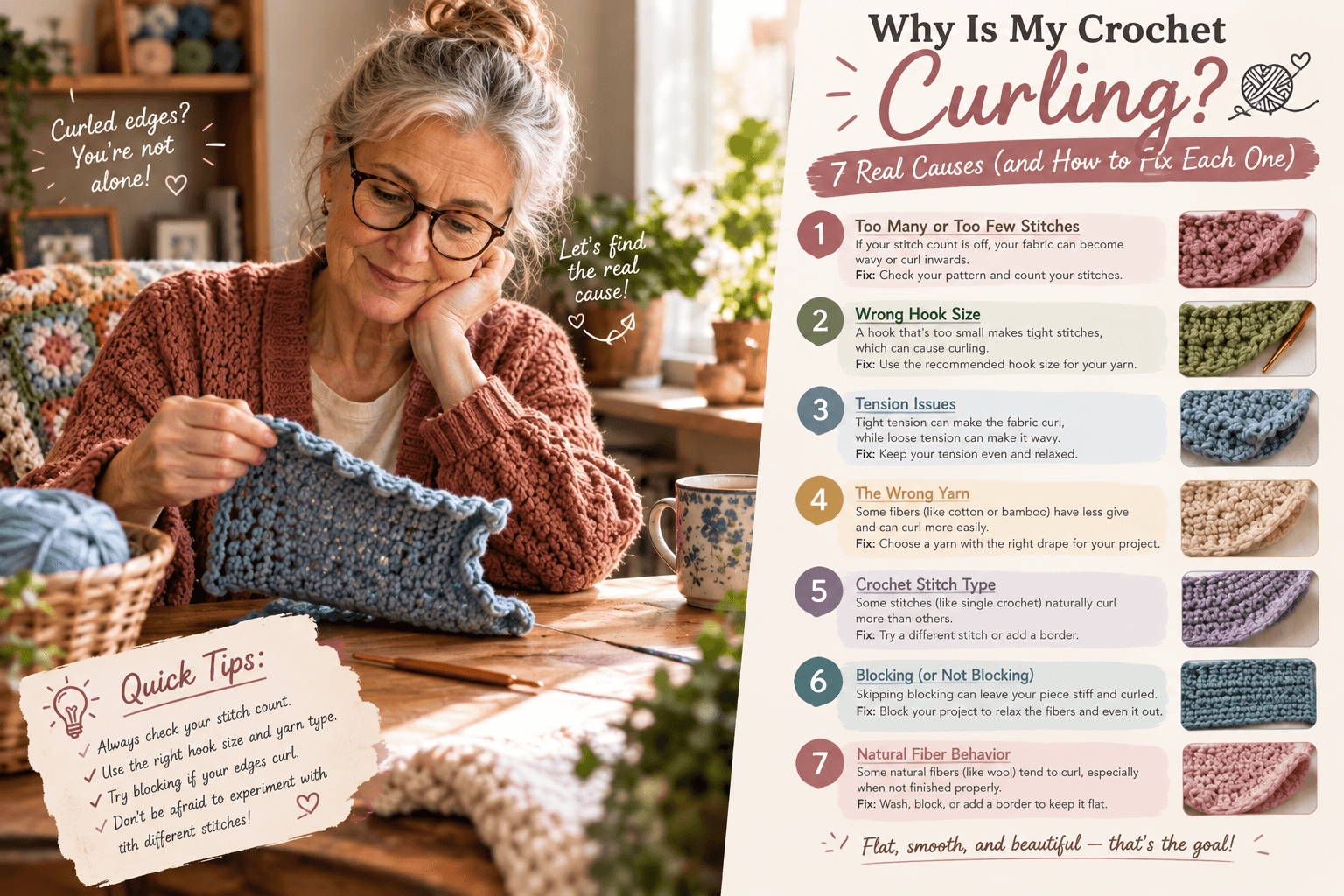
Why Is My Crochet Curling? 7 Real Causes (and How to Fix Each One)
basics5 min read

Why Is My Crochet Curling? 7 Real Causes (and How to Fix Each One)

If you've pulled your work off the hook only to watch the edges roll inward like a scroll, you've probably typed the same frustrated question into Google that thousands of crocheters type every week: why is my crochet curling? The good news is that curling isn't a sign you're "bad" at crochet. It's one of the most common issues in the craft, and it almost always comes down to a handful of fixable causes — tension, hook size, stitch choice, or the yarn itself. Below, we'll break down exactly why is my crochet curling, and what to do about it, one cause at a time.

Read tutorial
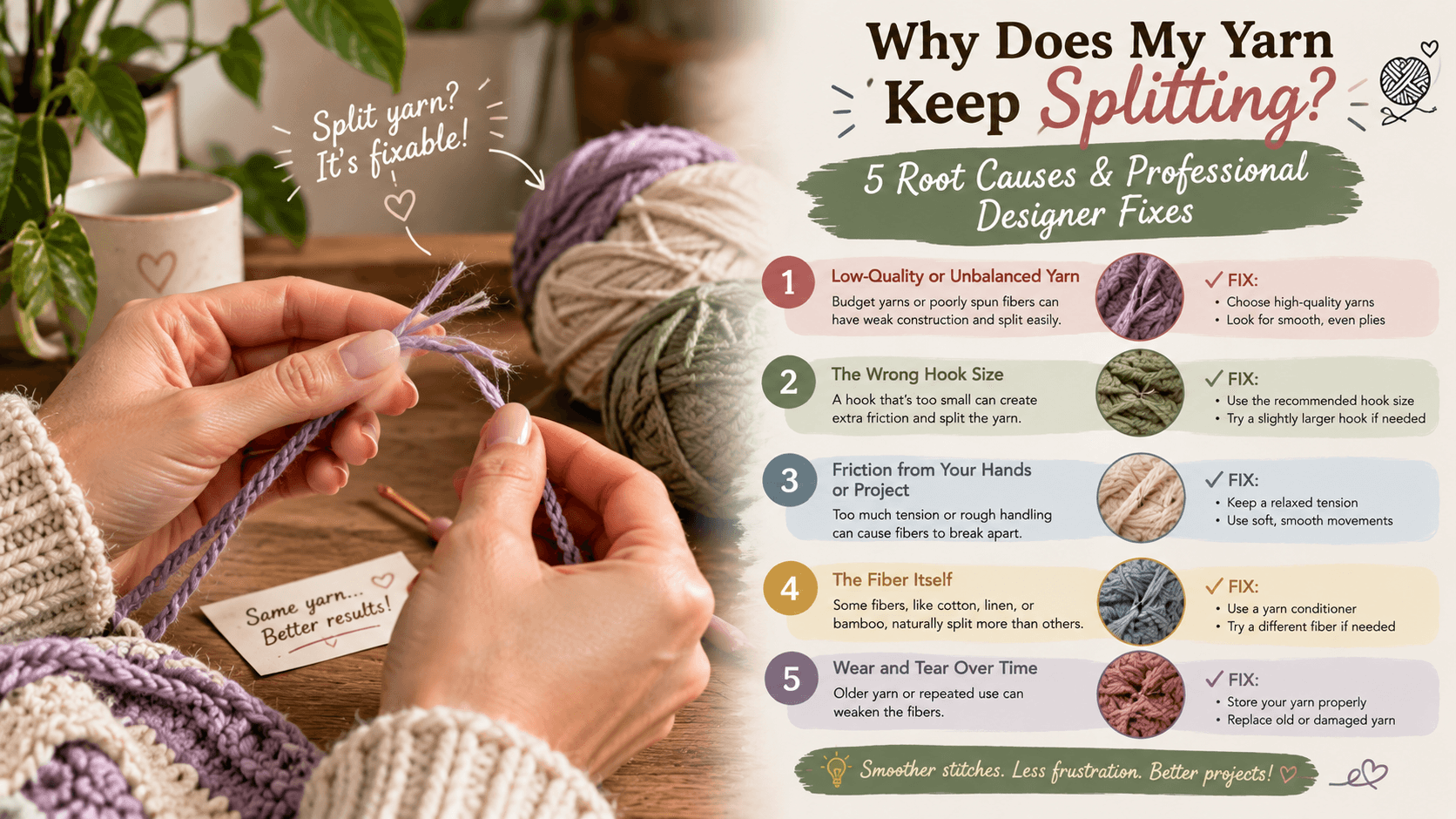
Why Does My Yarn Keep Splitting? 7 Causes & Easy Crochet Fixes
basics5 min read

Why Does My Yarn Keep Splitting? 7 Causes & Easy Crochet Fixes

If your crochet hook keeps catching individual strands instead of the whole yarn, you're probably wondering, “Why does my yarn keep splitting?” Yarn splitting happens when your hook slips between the fibers or plies instead of grabbing the complete working strand. Sometimes the yarn itself is the main culprit. Other times, a sharp hook, tight tension, hook angle, or the way you wrap the yarn can make the problem much worse. The good news? You usually don't need to abandon the project. In this guide, we'll look at the most common causes of crochet yarn splitting, how to identify what's actually causing it, and the simple changes that can make your stitches smoother and cleaner.

Read tutorial
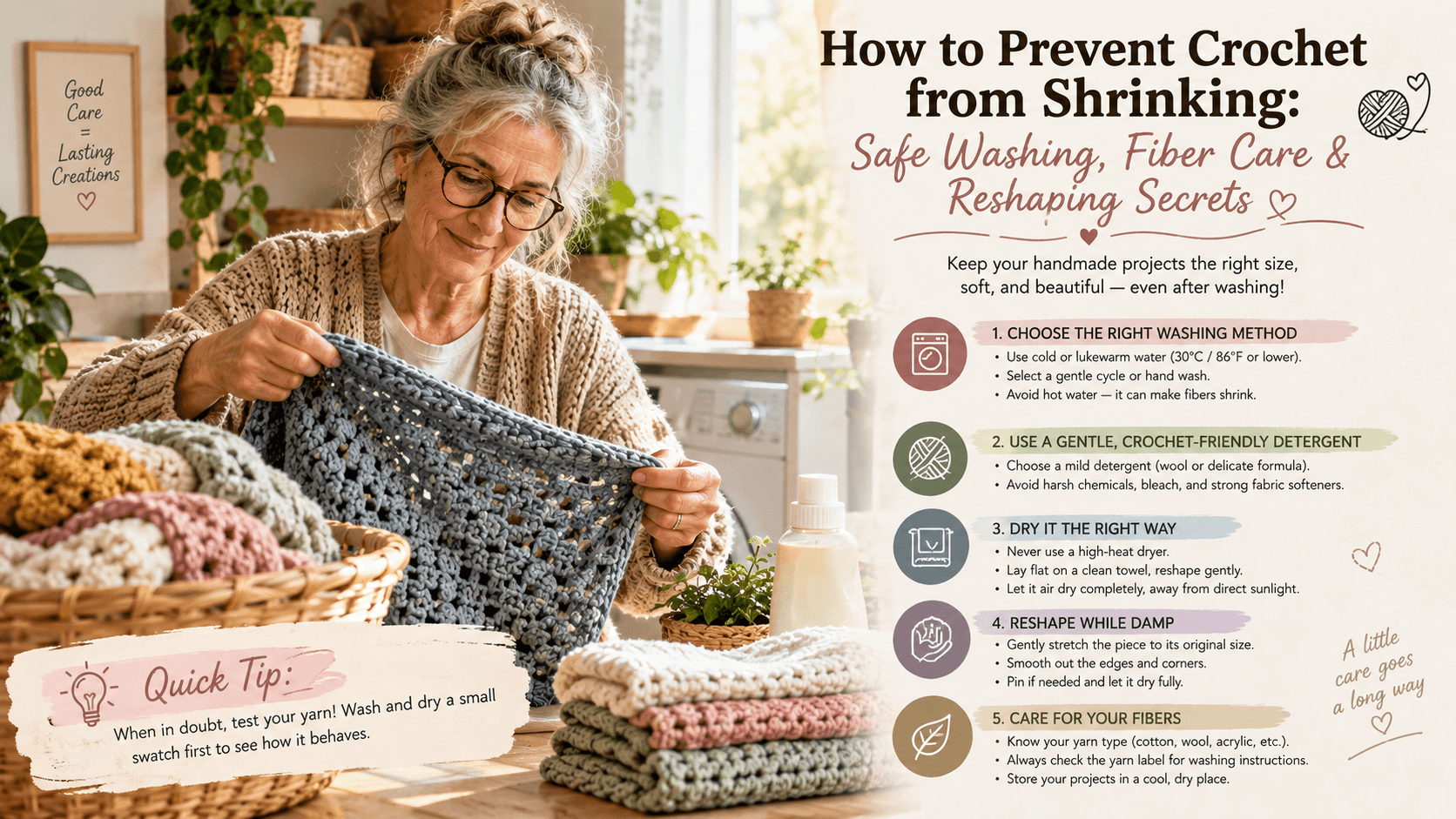
How to Prevent Crochet from Shrinking: How to Wash, Dry & Reshape Crochet Safely
basics5 min read

How to Prevent Crochet from Shrinking: How to Wash, Dry & Reshape Crochet Safely

You finally finish a crochet sweater, wash it for the first time—and suddenly the sleeves are shorter, the body feels tighter, or your beautiful blanket no longer has the same dimensions. If you've ever searched “how to prevent crochet from shrinking” or “how do I wash crochet without ruining it?”, the good news is that most problems can be avoided. The key is understanding that crochet doesn't have one universal washing method. Wool, cotton, acrylic, linen, bamboo, and blends can react very differently to water, heat, agitation, and drying. The safest approach is simple: Check the yarn's care instructions, use gentle washing methods, avoid unnecessary heat and agitation, and reshape the crochet while it dries. Here's how to do it.

Read tutorial
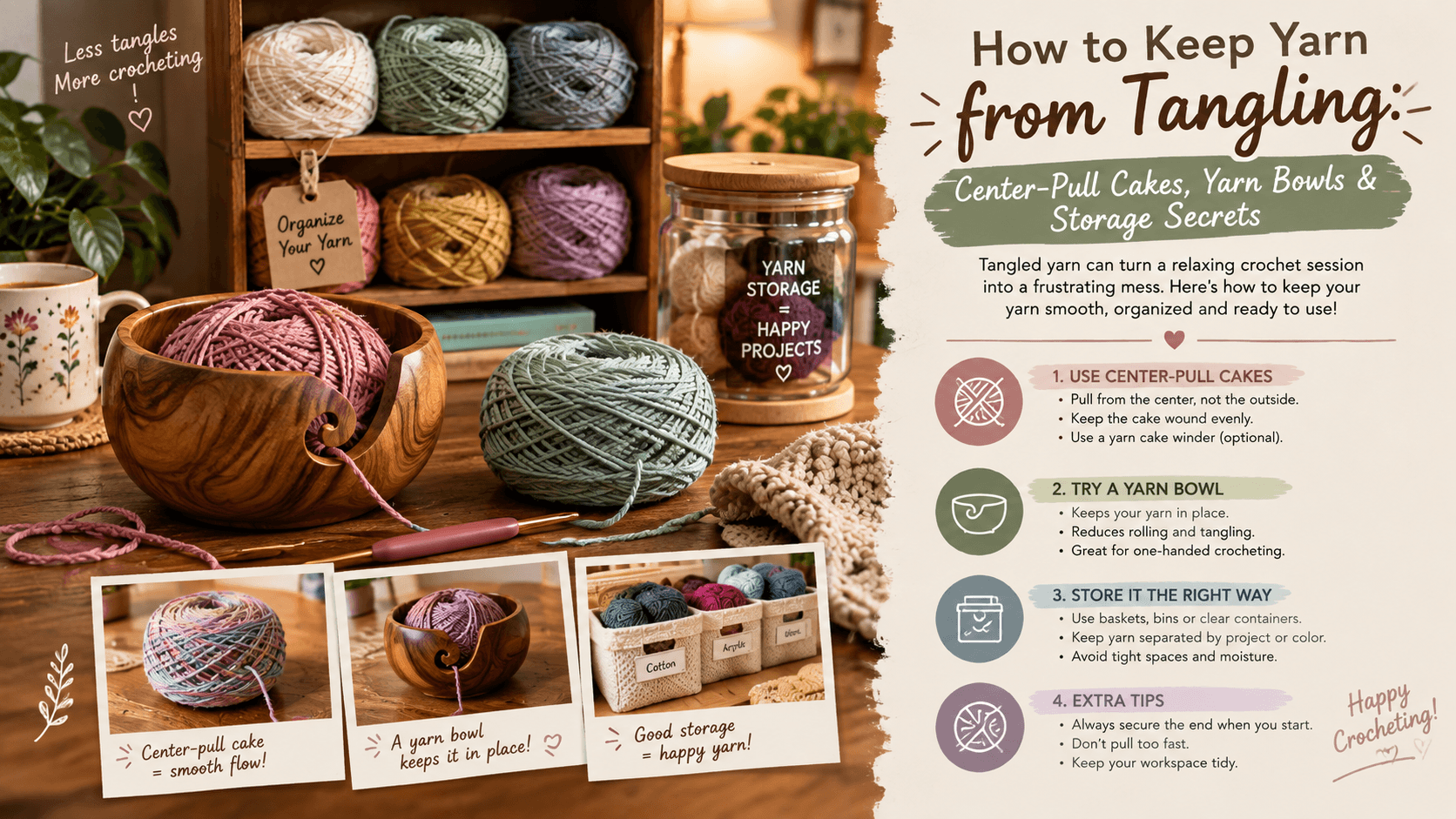
How to Keep Yarn from Tangling While Crocheting: Center-Pull, Yarn Bowls & Easy Storage Tips
basics5 min read

How to Keep Yarn from Tangling While Crocheting: Center-Pull, Yarn Bowls & Easy Storage Tips

Few things ruin a relaxing crochet session faster than reaching for your yarn and discovering a giant knot. You pull a little more from the skein. The knot gets tighter. You pull again. Somehow you've created an even bigger mess. And then there's “yarn barf”—that surprisingly large clump of yarn that sometimes comes flying out when you try to start a center-pull skein. If you've been searching for how to keep yarn from tangling while crocheting, the solution isn't necessarily buying more accessories. The biggest difference comes from controlling how your yarn feeds, where your yarn sits, and how you organize multiple strands. Here's how to keep your yarn moving smoothly without spending half your crochet time untangling it.

Read tutorial
How to Prevent Yarn Splitting When Crocheting: 7 Easy Fixes for Cleaner Stitches
basics5 min read

How to Prevent Yarn Splitting When Crocheting: 7 Easy Fixes for Cleaner Stitches

Your hook goes into the stitch, you pull up a loop—and suddenly you've caught only half of the yarn. If you've ever wondered “why does my crochet yarn keep splitting?”, you're definitely not alone. Yarn splitting happens when your crochet hook catches individual plies or fibers instead of the entire strand. The result can be fuzzy yarn, uneven stitches, loose strands sticking out of your work, and a frustrating amount of frogging. The good news? Yarn splitting is usually a combination of yarn choice, hook shape, tension, and technique—not simply a sign that you're doing something wrong. Here are the most effective ways to prevent yarn splitting in crochet and get cleaner, smoother stitches.

Read tutorial
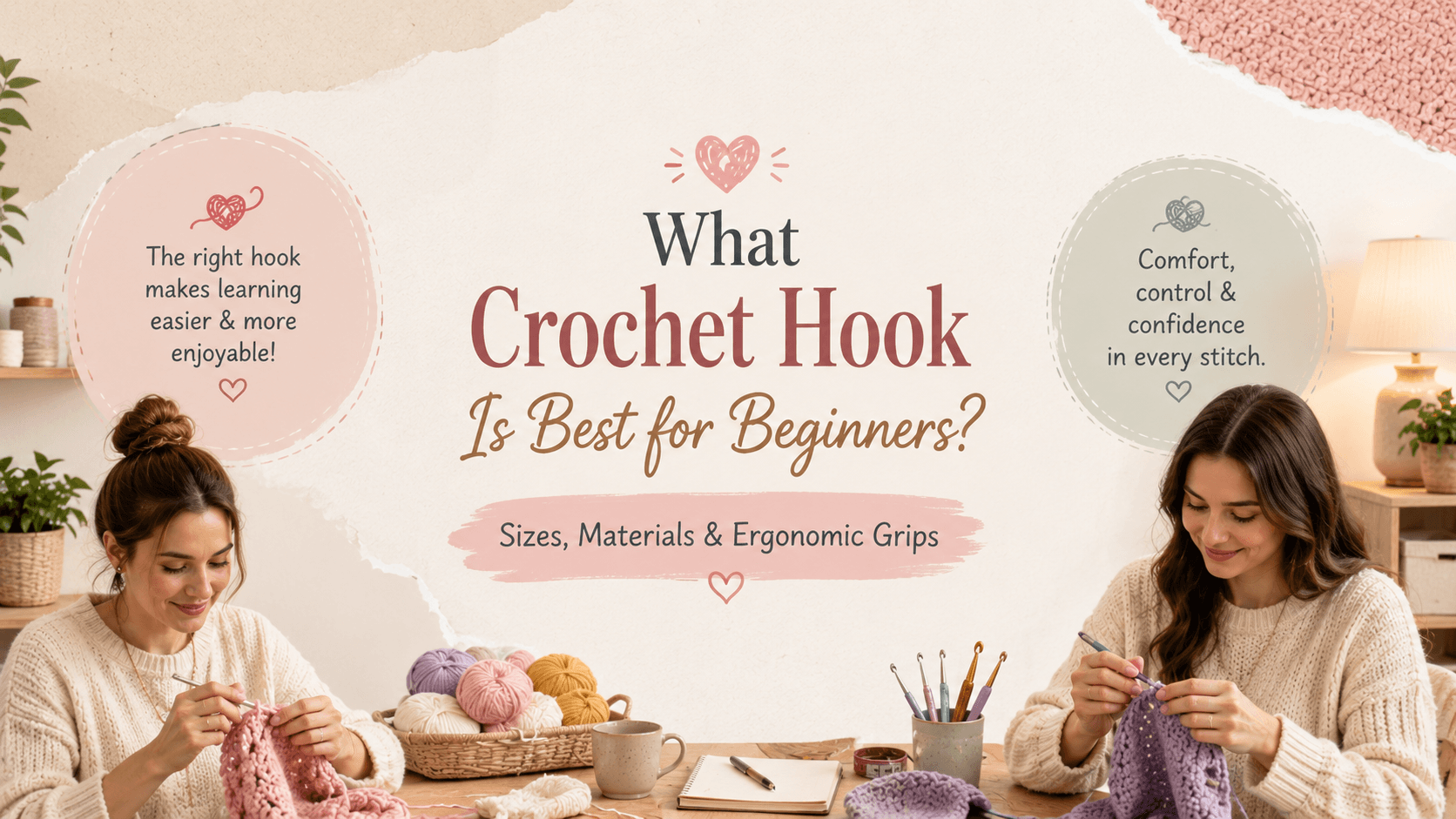
What Crochet Hook Is Best for Beginners? Sizes, Materials & Ergonomic Grips
basics5 min read

What Crochet Hook Is Best for Beginners? Sizes, Materials & Ergonomic Grips

If you’re learning how to crochet, choosing your first hook can feel surprisingly confusing. There are aluminum hooks, plastic hooks, bamboo hooks, ergonomic crochet hooks, inline hooks, tapered hooks—and then there are all those numbers: 3.5 mm, 4 mm, 5 mm, 5.5 mm, 6 mm… So what is actually the best crochet hook for beginners? For most people, a 5 mm or 5.5 mm crochet hook paired with medium-weight yarn is an excellent place to start. These sizes are large enough to make your stitches easy to see without being awkward to control. A smooth metal hook is also a practical choice, while an ergonomic handle can make longer practice sessions more comfortable. But there isn't one perfect crochet hook for everyone. Your yarn, hand position, tension, and personal comfort all matter. Here's how to choose a beginner crochet hook without buying an entire collection before you've even learned your first stitch.

Read tutorial
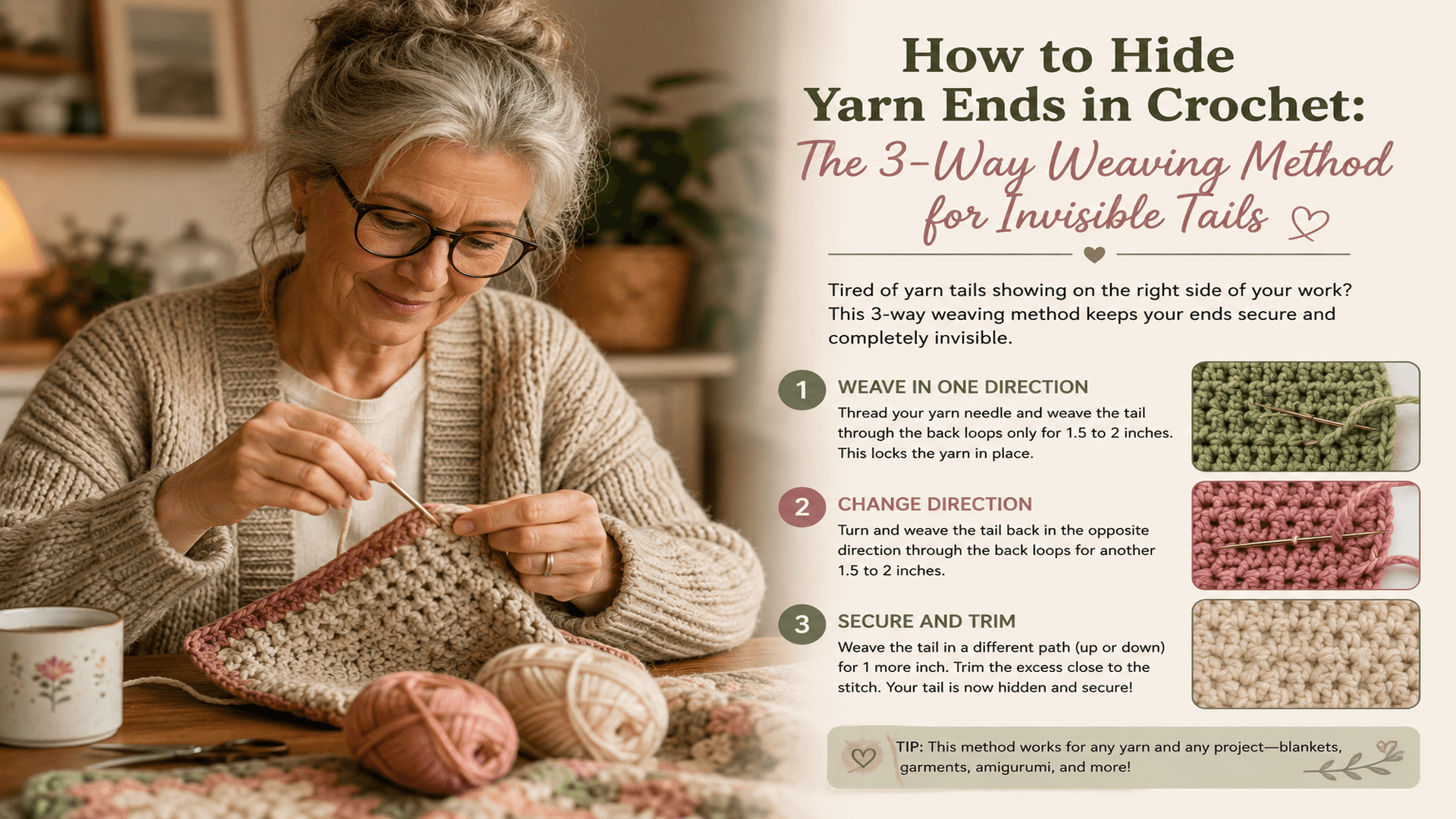
How to Hide Yarn Ends in Crochet: A Simple Method for Secure, Invisible Finishing
basics5 min read

How to Hide Yarn Ends in Crochet: A Simple Method for Secure, Invisible Finishing

Few things make a finished crochet project look less polished than loose yarn tails sticking out of the back. Whether you are finishing a blanket, joining granny squares, changing colors, or completing an amigurumi piece, knowing how to weave in crochet ends is one of those small skills that makes a huge difference. The good news is that you do not need complicated knots or special equipment. With a tapestry needle, a few inches of yarn, and the right weaving path, you can secure most crochet yarn tails neatly inside the fabric. The key is not simply hiding the end. You want to make it difficult for the tail to work its way back out when the project is stretched, handled, or washed. One of the most reliable approaches is to weave the yarn in one direction, reverse the path, and then make a final pass through a different section of the stitches. Changing direction creates additional friction and helps keep the tail in place.

Read tutorial