Why Does My Yarn Keep Splitting? 7 Causes & Easy Crochet Fixes
If your crochet hook keeps catching individual strands instead of the whole yarn, you're probably wondering, “Why does my yarn keep splitting?” Yarn splitting happens when your hook slips between the fibers or plies instead of grabbing the complete working strand. Sometimes the yarn itself is the main culprit. Other times, a sharp hook, tight tension, hook angle, or the way you wrap the yarn can make the problem much worse. The good news? You usually don't need to abandon the project. In this guide, we'll look at the most common causes of crochet yarn splitting, how to identify what's actually causing it, and the simple changes that can make your stitches smoother and cleaner.
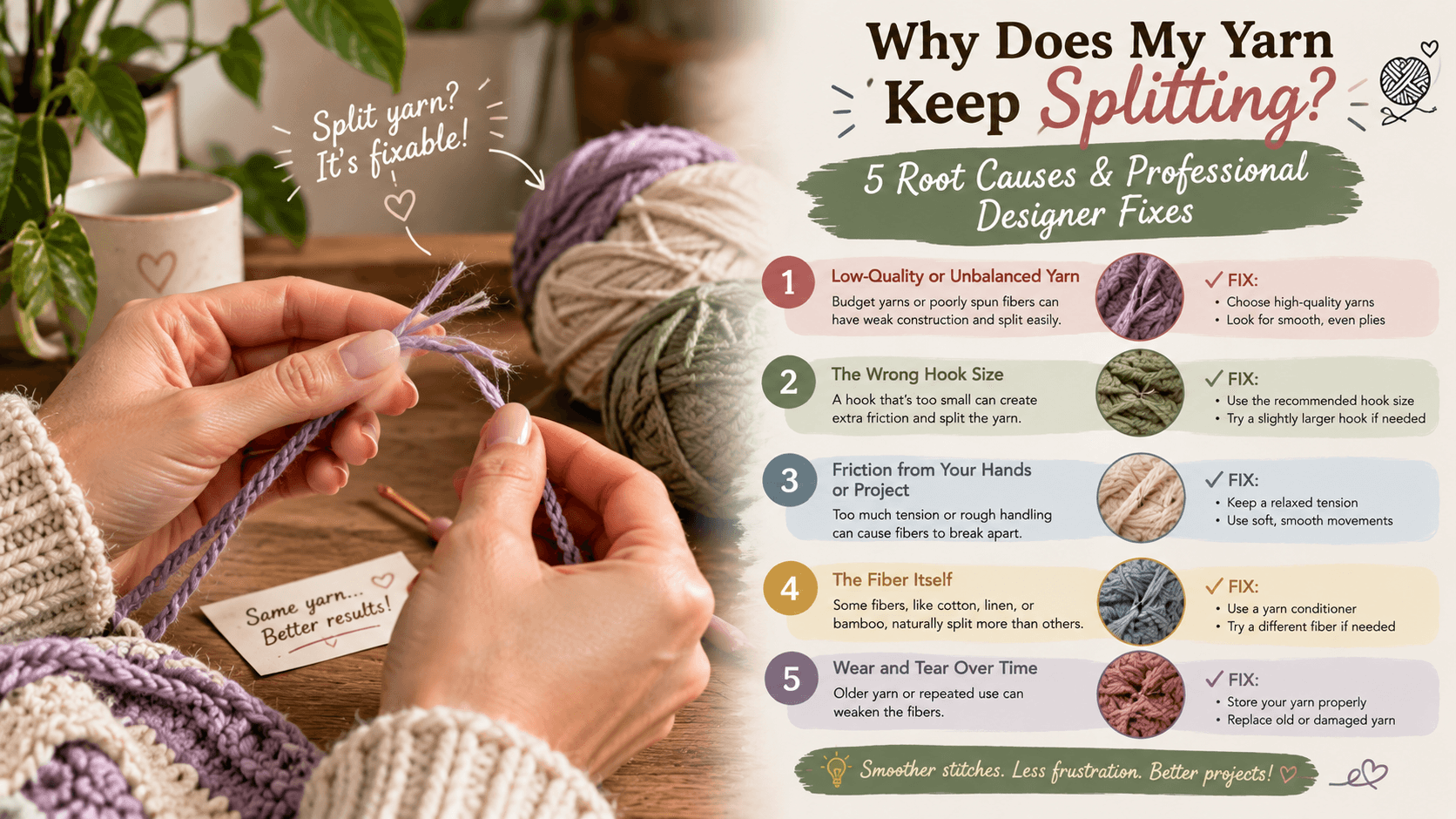
Quick Answer: Why Does Crochet Yarn Split?
Your yarn may keep splitting because of one or more of these factors:
The yarn has a loose or easily separated construction.
You're working with single-ply, loosely plied, or delicate yarn.
Your crochet hook is too sharp or catches individual fibers.
Your tension is too tight.
You're inserting the hook through the yarn instead of cleanly through the stitch.
Your hook and yarn twist don't work well together.
Your hook or hand movement is unintentionally opening the yarn.
Before changing everything at once, try to figure out when the splitting happens. That gives you a much better clue about the real cause.
1. The Yarn Itself May Be Naturally Splitty
Some yarns are simply more prone to splitting than others.
Yarn construction makes a big difference. A tightly plied yarn keeps its strands compact, while a loosely spun or loosely plied yarn can open more easily when a crochet hook passes through it.
Single-ply yarn can also behave differently because there aren't multiple plies twisted together to help maintain the yarn's structure. That doesn't mean single-ply yarn is automatically poor quality—it simply has a different construction and may require more careful handling.
What to look for
Take a close look at the working yarn.
If you can easily see separate strands opening when you pull gently on the yarn, or if your hook repeatedly catches one part of the strand, the yarn's construction may be contributing to the problem.
This is especially noticeable with:
Loosely plied yarn
Some single-ply yarns
Certain soft, loosely spun fibers
Very fine yarn
Some brushed or novelty yarns
Yarns whose plies separate easily
The easiest test
Make a small swatch using the same yarn and hook.
If the yarn splits constantly even when you're deliberately slowing down and using a smooth hook, the yarn is probably a major part of the problem.
Fix: Try a more tightly plied or smoother yarn for your next project, especially if you're still learning crochet.
2. Your Crochet Hook May Be Catching Individual Strands
Sometimes the yarn isn't the problem at all.
A crochet hook with a very sharp point or rough edge can behave like a tiny fork, slipping between the strands of the yarn instead of catching the entire working strand.
This is particularly frustrating with cotton, bamboo, silk blends, fine yarn, and other yarns where the individual fibers or plies are easy to separate.
Run your fingertip or fingernail carefully along the hook head and throat. You shouldn't feel a rough burr or obvious snag.
Try this simple comparison
If you have another hook in the same size, make a few stitches with it.
If one hook splits your yarn constantly while another moves through the same yarn much more smoothly, you've found a likely cause.
You don't necessarily need an expensive hook. What matters is that the hook is smooth, appropriately shaped, and comfortable for your technique.
3. Your Tension May Be Too Tight
Tight crochet tension is another common reason yarn starts fighting your hook.
When the stitches are pulled tightly around the hook, there's less room for the hook to move through the stitch. You may compensate by pushing the hook harder or forcing it through the yarn.
That extra pressure can make the hook pierce between the plies.
Try this
Relax your working hand slightly.
Instead of pulling every loop tightly against the hook, allow the loop to sit naturally on the shaft of the hook.
You should be able to move the hook through the stitch without forcing it.
If your stitches feel extremely tight and your hook constantly gets stuck, try going up 0.5 mm or 1 mm temporarily and see whether the splitting improves.
You don't necessarily need to keep the larger hook for your final project. This is simply a useful diagnostic test.
4. Your Hook May Be Entering the Yarn Instead of the Stitch
There's an important difference between splitting a stitch and splitting the yarn.
When you're working into a stitch, your hook should pass through the intended stitch loops. If the hook tip accidentally catches the middle of the working yarn while you're making the yarn-over or pulling through, it can separate the plies.
This is particularly easy to do when crocheting quickly.
Slow down at the moment the split happens
Instead of changing your entire technique, watch the hook.
Ask yourself:
“Is the hook actually entering the stitch, or is the tip piercing the working yarn?”
If the hook is piercing the yarn, try approaching the stitch with a slightly flatter, smoother movement.
You don't need a dramatic hook rotation. A small adjustment is often enough.
5. Your Yarn's Twist Direction Can Affect Splitting
This is the more technical reason many crocheters never hear about.
Yarn has a direction of twist. You'll commonly hear these described as S-twist and Z-twist.
The final twist of a plied yarn can interact with the rotational movement created while you crochet. Depending on your handedness and whether you use a standard yarn-over or another wrapping technique, your motion can either reinforce or loosen the yarn's existing twist. When the twist loosens, the yarn can open up and become more prone to splitting.
This is one reason the exact same yarn can feel completely different to two crocheters.
How to identify the twist
Hold a short section of yarn vertically and look closely at the diagonal direction of the fibers or plies.
The slant resembling the center of an S indicates S-twist, while the opposite diagonal indicates Z-twist.
Don't worry if this sounds complicated.
You don't need to become a yarn spinner to crochet successfully.
The practical test is much simpler:
If a particular yarn repeatedly becomes looser and more splitty as you crochet, the way your crochet motion interacts with that yarn may be contributing to the problem.
What can you do?
Try changing one variable at a time:
Slow down your yarn-over.
Reduce unnecessary hook rotation.
Try a different hook.
Test yarn-under on a small swatch if appropriate for the stitch.
Try the same yarn with another crocheter's technique.
Test a different yarn construction.
The goal isn't to memorize that “S is bad” or “Z is good.”
There is no universal best twist direction for every crocheter.
Handedness, wrapping method, yarn construction, and individual technique all matter.
6. Your Working Loop May Be Too Tight
Here's a technique problem that's easy to overlook.
If your active loop is pulled tightly around the narrow part of the hook, you have less space to maneuver when completing the stitch.
Instead of forcing the hook through a tight opening, allow the working loop to sit comfortably on the hook shaft.
Think of the hook shaft as your working space.
You don't need to make the loop huge, but you also shouldn't choke it against the throat of the hook.
A simple visual check
Before completing a stitch, look at the loop on your hook.
If it looks extremely small and compressed, consciously relax your tension.
The goal is a consistent loop height rather than a loop that changes dramatically from stitch to stitch.
This can improve both crochet tension and stitch consistency while reducing unnecessary friction.
7. You're Moving the Hook Too Aggressively
Crochet doesn't need to be a race.
When you're moving quickly, the hook can approach the stitch at a sharp angle and accidentally catch one ply instead of the whole yarn.
This becomes especially noticeable with:
Fine cotton yarn
Bamboo yarn
Silk blends
Loose plied yarn
Dark yarn where individual strands are difficult to see
Intricate stitches requiring repeated insertions
If your yarn only starts splitting when you speed up, you've found a strong clue.
Try the “slow row” test
Work one complete row at roughly half your normal speed.
Don't change the yarn.
Don't change the hook.
Don't change the pattern.
Simply slow down.
If the splitting dramatically decreases, your hand movement or hook angle is probably contributing to the problem.
Once you know that, gradually increase your speed while keeping the same controlled motion.
How to Tell Whether the Yarn or Your Technique Is the Problem
Don't replace your entire yarn stash before doing this quick test.
| What happens | Most likely cause |
|---|---|
| Yarn splits with every hook | Yarn construction |
| Only one hook splits it | Hook shape or roughness |
| Splitting gets worse when you crochet faster | Hook movement |
| Splitting improves when you loosen tension | Tight tension |
| Yarn becomes noticeably looser as you work | Twist interaction |
| Splitting happens mostly during yarn-over | Wrapping/hook movement |
| Only certain stitches split | Stitch insertion or angle |
| Another crocheter can use the yarn easily | Technique or handedness |
| The yarn visibly separates before the hook touches it | Yarn construction/twist |
This kind of crochet troubleshooting is much more useful than simply buying another yarn and hoping for the best.
Why Cotton Yarn Often Feels So Splitty
Cotton is a popular crochet fiber, but some cotton yarns can be frustrating because their strands are clearly defined and don't always spring back together after the hook separates them.
Mercerized cotton can also have a smooth, firm surface that makes individual strands easy to see.
That doesn't mean cotton is bad for crochet.
It can actually be excellent for:
Amigurumi
Crochet bags
Dishcloths
Home décor
Summer garments
Detailed stitch patterns
The key is matching your hook, tension, and technique to the particular cotton yarn.
If you're constantly splitting cotton, try a smoother hook and slightly relax your tension before abandoning the yarn.
What About Acrylic Yarn?
Acrylic yarn can also split, although the experience varies significantly between yarns.
Some acrylic yarns have a smooth, compact construction that makes them easy to crochet. Others have multiple strands that separate readily when the hook catches them.
If your acrylic yarn keeps splitting, don't assume that the fiber itself is responsible.
Compare:
Same yarn + different hook
and then:
Same hook + different yarn.
Those two tests can tell you much more than the fiber label alone.
A Better Fix Than Constantly Changing Hooks
If you're dealing with persistent yarn splitting, don't make five changes simultaneously.
Use this order:
Test 1: Slow down
Crochet several stitches slowly.
Test 2: Relax your tension
Let the working loop sit naturally on the hook.
Test 3: Check your hook
Look for rough edges, burrs, or an overly aggressive tip.
Test 4: Change the hook
Try another hook in the same size.
Test 5: Change the yarn
Use a smoother, more tightly constructed yarn and compare.
Test 6: Observe the twist
If the yarn visibly loosens as you work, investigate whether your crochet motion is removing twist.
This method helps you identify the actual cause instead of randomly changing tools.
How to Stop Yarn Splitting While Crocheting: Quick Checklist
Before you start ripping out rows, check these:
Is the yarn loosely constructed?
Is your hook smooth?
Is the hook too sharp for this yarn?
Are you crocheting with very tight tension?
Is your active loop compressed against the hook throat?
Are you accidentally piercing the working yarn?
Does slowing down reduce the splitting?
Does the yarn become visibly looser as you work?
Does another hook perform better?
Does another yarn perform better?
Usually, one or two of these will stand out.
The Best Yarn for Crocheters Who Hate Splitting
If yarn splitting drives you crazy, look for yarn with a smooth, compact construction and clearly defined plies rather than automatically choosing a particular fiber.
A tightly constructed or cable-like yarn can be easier to work with because the structure stays together more readily under the hook.
But there's no single “best yarn that doesn't split.”
Your ideal yarn depends on:
Your crochet style
Your dominant hand
Hook shape
Stitch type
Yarn weight
Fiber
Desired fabric texture
A yarn that is wonderfully easy for one crocheter can be frustrating for another.
That's why a small swatch is often more useful than a long list of “best yarn” recommendations.
One Simple Experiment You Can Try Today
Take the yarn you're currently struggling with.
Make three small swatches:
Swatch A: Your normal technique
Swatch B: Same hook, but with noticeably looser tension
Swatch C: Same yarn and tension, but with another hook of the same size
Compare how often the yarn splits.
If B improves, your tension was probably contributing.
If C improves, your hook was probably contributing.
If none improves, the yarn's construction or twist interaction may be the bigger issue.
That's a much more reliable way to diagnose why your crochet yarn keeps splitting.
Frequently Asked Questions
Why does my yarn keep splitting when I crochet?
The most common causes are yarn construction, hook shape, tight tension, accidental yarn piercing, and the way your crochet motion interacts with the yarn's twist. Test one variable at a time to identify the main cause.
How do I stop yarn from splitting when crocheting?
Start by slowing down, relaxing your tension, and checking that your hook is smooth. If the problem continues, try another hook or a more tightly constructed yarn.
What crochet hook is best for splitty yarn?
A smooth hook with a tip that doesn't aggressively catch individual fibers is usually easier to use with splitty yarn. The exact shape that works best depends on the yarn and your technique.
Does yarn twist affect crochet?
Yes. The direction and balance of yarn twist can interact with your crochet movements. Depending on the yarn, handedness, and wrapping method, crocheting can either loosen or reinforce the yarn's twist.
Is single-ply yarn bad for crochet?
No. Single-ply yarn isn't automatically low quality or unsuitable for crochet. It simply has a different structure and may be more prone to opening or splitting during certain techniques.
Why does my yarn split only on certain stitches?
Some stitches require more precise insertions or repeated yarn-overs, making it easier for your hook to catch individual strands. Pay attention to exactly where the split occurs rather than assuming the entire yarn is the problem.
Final Tip: Don't Blame Yourself—or the Yarn—Too Quickly
When your yarn keeps splitting, it's tempting to decide that you bought the wrong yarn or that you're simply crocheting incorrectly.
Usually, the answer is somewhere in between.
Yarn construction + hook shape + tension + hook movement + yarn twist all interact.
Once you learn to identify which part of that combination is causing the problem, fixing splitty yarn becomes much easier.
And sometimes the most professional solution really is simple: use a different yarn.
Not every yarn is worth fighting with.
For more practical crochet tips, troubleshooting guides, and beginner-friendly patterns, explore the crochet resources and digital PDF patterns from AlbaCrochet.
Next Steps
Continue Learning
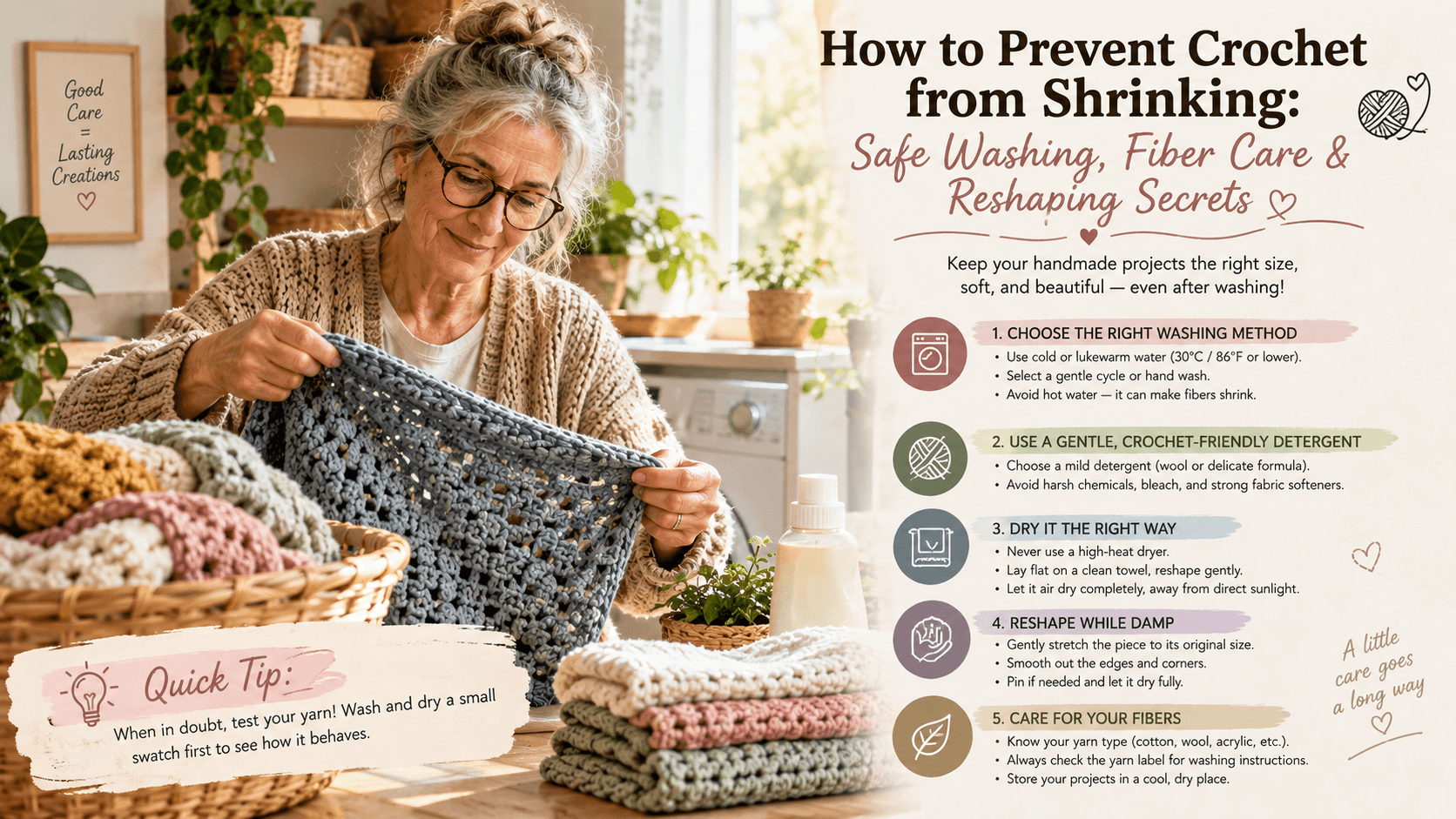
How to Prevent Crochet from Shrinking: How to Wash, Dry & Reshape Crochet Safely
You finally finish a crochet sweater, wash it for the first time—and suddenly the sleeves are shorter, the body feels tighter, or your beautiful blanket no longer has the same dimensions. If you've ever searched “how to prevent crochet from shrinking” or “how do I wash crochet without ruining it?”, the good news is that most problems can be avoided. The key is understanding that crochet doesn't have one universal washing method. Wool, cotton, acrylic, linen, bamboo, and blends can react very differently to water, heat, agitation, and drying. The safest approach is simple: Check the yarn's care instructions, use gentle washing methods, avoid unnecessary heat and agitation, and reshape the crochet while it dries. Here's how to do it.
Read tutorial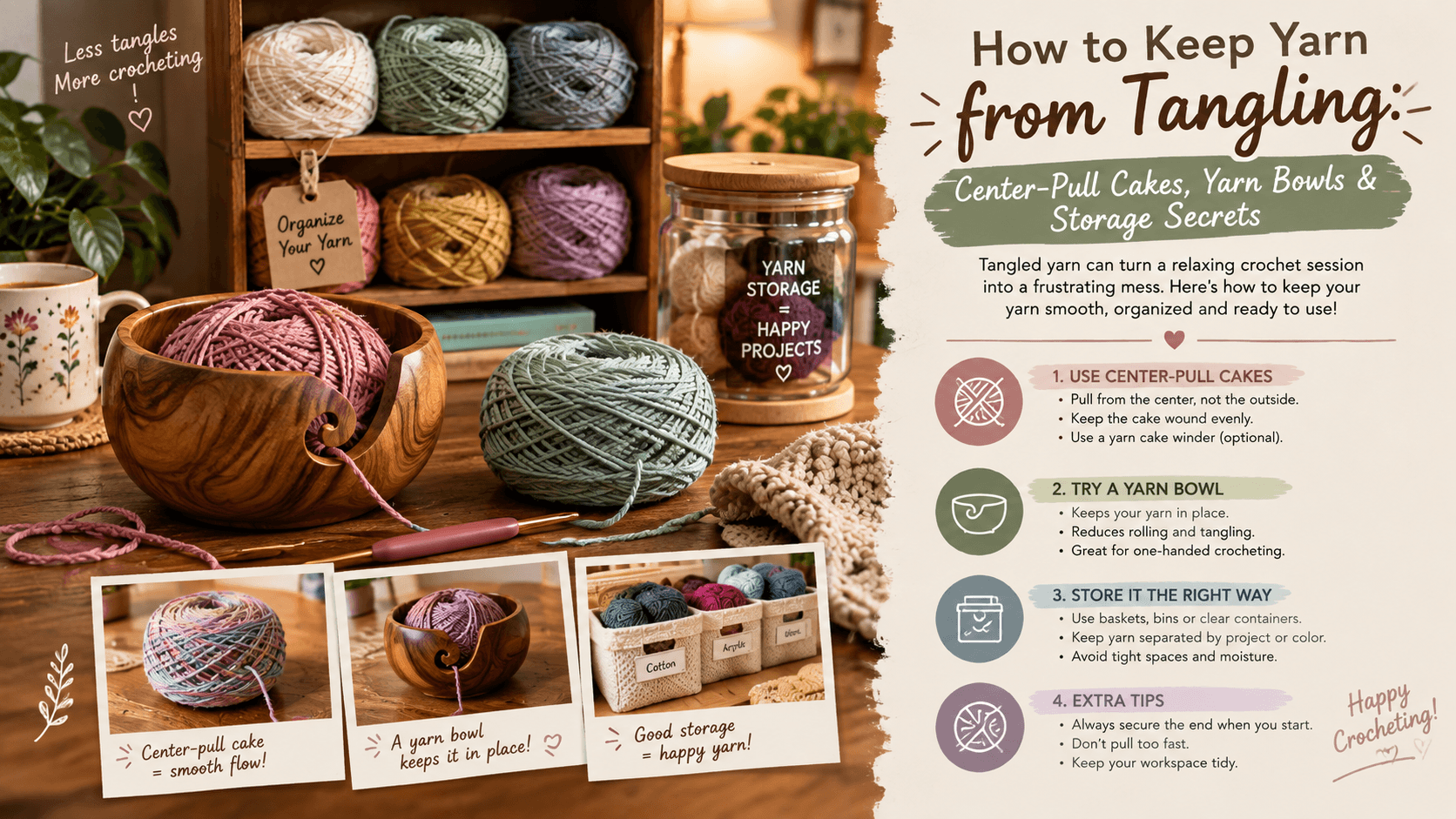
How to Keep Yarn from Tangling While Crocheting: Center-Pull, Yarn Bowls & Easy Storage Tips
Few things ruin a relaxing crochet session faster than reaching for your yarn and discovering a giant knot. You pull a little more from the skein. The knot gets tighter. You pull again. Somehow you've created an even bigger mess. And then there's “yarn barf”—that surprisingly large clump of yarn that sometimes comes flying out when you try to start a center-pull skein. If you've been searching for how to keep yarn from tangling while crocheting, the solution isn't necessarily buying more accessories. The biggest difference comes from controlling how your yarn feeds, where your yarn sits, and how you organize multiple strands. Here's how to keep your yarn moving smoothly without spending half your crochet time untangling it.
Read tutorial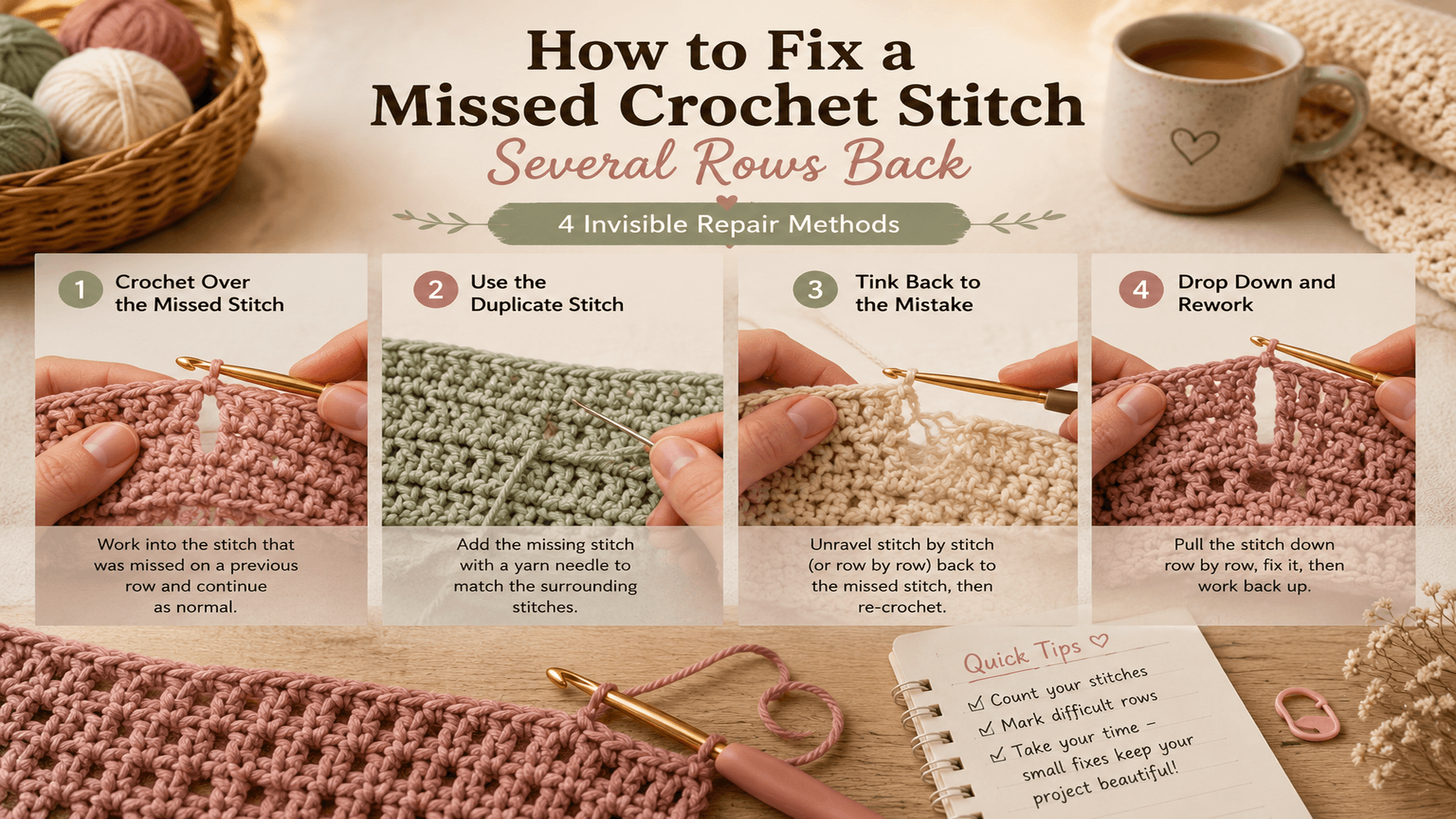
How to Fix a Missed Crochet Stitch Several Rows Back: 4 Ways to Repair Crochet Without Starting Over
Found a skipped crochet stitch several rows below your hook? Don't panic. A missed stitch can make your crochet look uneven, create a small hole, or throw off your stitch count—but you don't always have to unravel the entire project. In this guide, you'll learn how to fix a missed crochet stitch, when it's better to frog back to the mistake, and how to repair a small gap with a crochet hook or tapestry needle when undoing isn't practical.
Read tutorial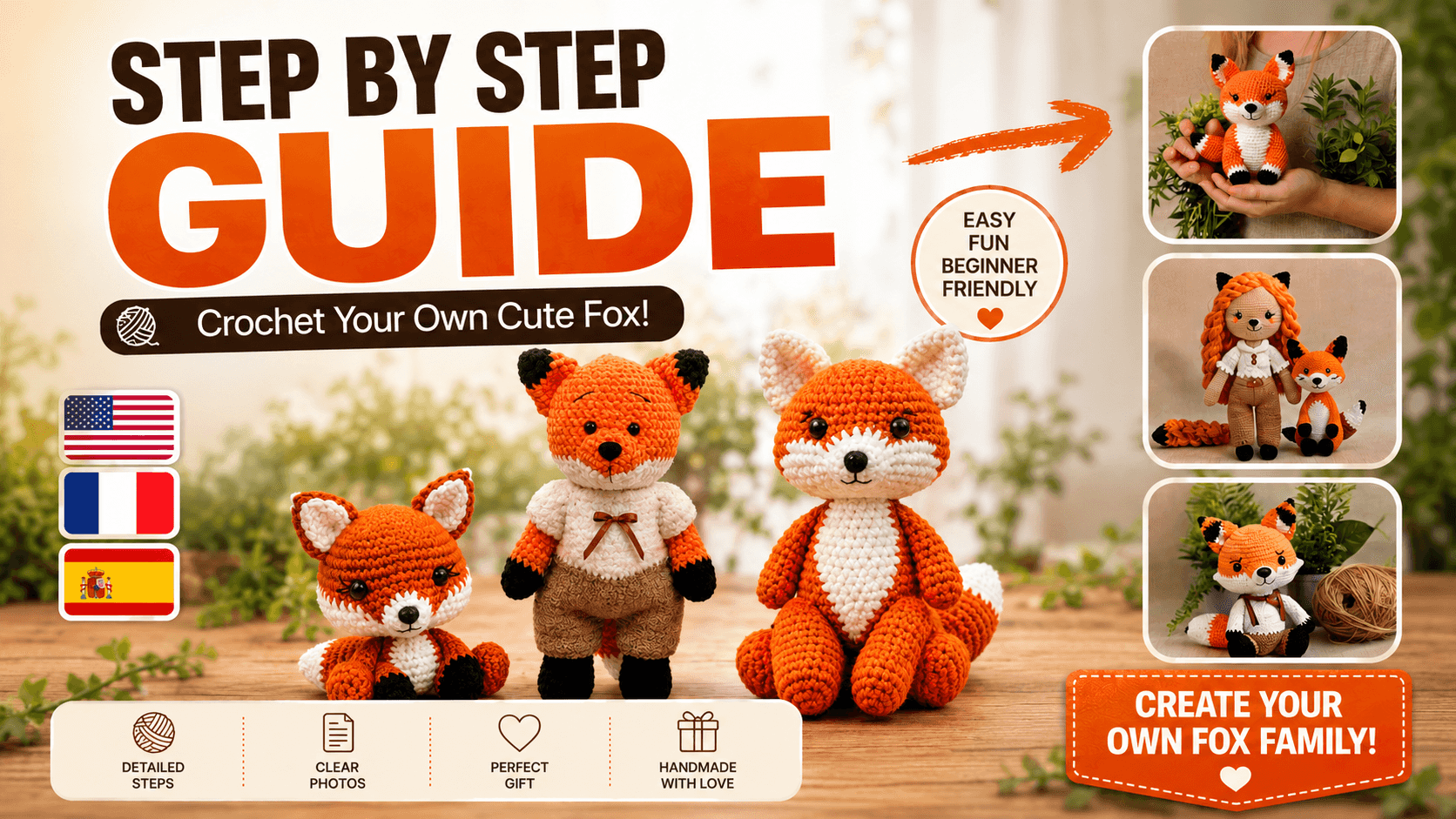
Put It Into Practice
Crochet Fox Pattern | No-Sew Amigurumi PDF | Easy DIY Plush Fox Tutorial | Beginner-Friendly Handmade Halloween & Christmas Gift
🦊 Create your own adorable crochet fox with this easy amigurumi fox crochet pattern! This beginner-friendly PDF crochet pattern includes step-by-step instructions and helpful photos to make a cute fox plush with a white shirt and brown pants. Perfect for handmade gifts, fall crafts, Halloween, Thanksgiving, woodland decor, and anyone who loves cute amigurumi crochet patterns.
View the pattern →