How to Prevent Crochet from Shrinking: How to Wash, Dry & Reshape Crochet Safely
You finally finish a crochet sweater, wash it for the first time—and suddenly the sleeves are shorter, the body feels tighter, or your beautiful blanket no longer has the same dimensions. If you've ever searched “how to prevent crochet from shrinking” or “how do I wash crochet without ruining it?”, the good news is that most problems can be avoided. The key is understanding that crochet doesn't have one universal washing method. Wool, cotton, acrylic, linen, bamboo, and blends can react very differently to water, heat, agitation, and drying. The safest approach is simple: Check the yarn's care instructions, use gentle washing methods, avoid unnecessary heat and agitation, and reshape the crochet while it dries. Here's how to do it.
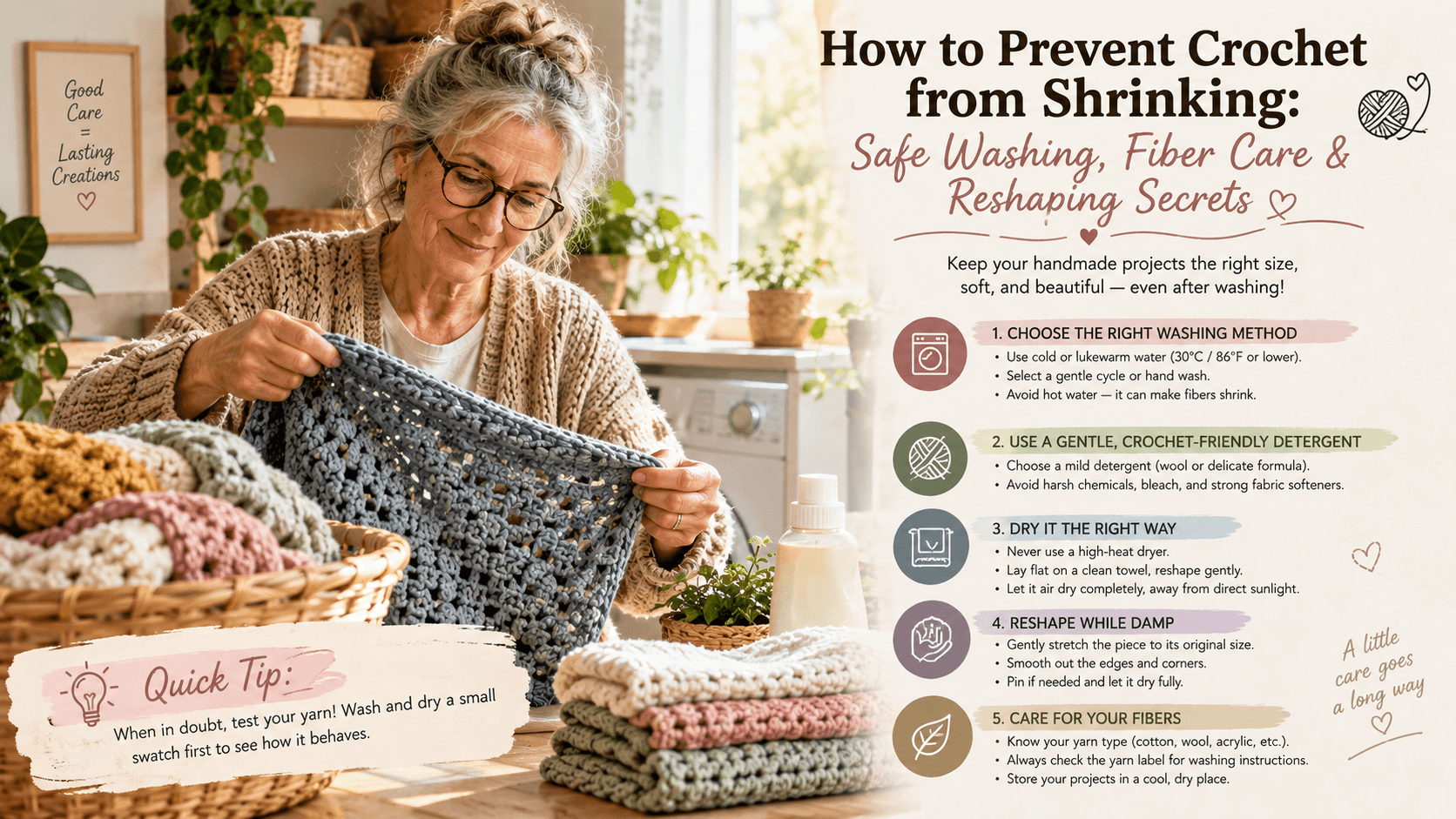
Why Does Crochet Shrink?
Crochet can change size for several reasons, and “shrinkage” isn't always technically the same thing.
Some fibers contract when exposed to heat or moisture. Others can felt, mat, stretch, or lose their original shape because of agitation.
And because crochet is made from interconnected loops, the fabric can also change dimensions when it's wet and then dry in a different position.
The biggest risks are usually:
Hot water
High dryer temperatures
Aggressive washing cycles
Wringing and twisting
Excessive agitation
Incorrect blocking
Washing a fiber according to the wrong care method
Wool deserves particular attention because heat, moisture, and agitation can cause felting and permanent changes in the fabric. The Craft Yarn Council specifically advises gentle washing and avoiding wringing, twisting, and scrubbing handmade crochet.
So before you put your crochet in the washing machine, find out what yarn you actually used.
Before Washing: Find Out What Your Crochet Is Made From
This is the step people skip.
If you still have the yarn label, check it before doing anything else.
Look for:
Fiber content
Is it wool, cotton, acrylic, linen, bamboo, or a blend?
Washing instructions
Does the label say hand wash, machine wash, or something else?
Water temperature
Does it recommend cold, cool, or warm water?
Drying instructions
Can it go in the dryer, or should it be dried flat?
Special warnings
Some yarns have specific instructions because of their construction or fiber blend.
If you don't have the label anymore, look up the exact yarn manufacturer's care instructions if you know the brand and yarn name.
Don't assume that two yarns made from the same fiber should be treated identically.
How Different Crochet Fibers React to Washing
Your crochet yarn type makes a huge difference.
Wool and Other Animal Fibers
Wool is particularly vulnerable to felting.
Heat combined with moisture and agitation can cause the fibers to become entangled and create a denser, smaller fabric.
That's why untreated wool crochet should be handled gently.
For wool garments, cool or lukewarm water, minimal agitation, and careful drying are generally safer than a hot wash and aggressive spin cycle.
And never wring a wet wool crochet sweater.
Cotton Crochet
Cotton doesn't felt like wool, but it can still shrink, stretch, or change shape depending on the yarn, construction, temperature, and drying method.
Cotton crochet garments can also become surprisingly heavy when wet.
That's why lifting a wet cotton sweater from one corner can stretch the garment.
For delicate cotton crochet, gentle washing and flat drying are good habits. For sturdy cotton items, the yarn label may allow machine washing.
Acrylic Crochet
Acrylic is generally more resistant to ordinary shrinkage than wool or cotton, but that doesn't mean it's immune to damage.
High heat can distort acrylic fibers, and excessive heat can permanently alter the fabric.
So don't assume:
“It's acrylic, therefore I can put it in a hot dryer.”
Always follow the yarn's care instructions.
Blended Yarns
Blends can be tricky because each fiber contributes different characteristics.
For example, an acrylic-cotton blend may be more dimensionally stable than pure cotton, but the cotton component can still respond to heat and moisture.
When you're unsure, follow the care instructions for the specific yarn rather than guessing based on only one fiber in the blend.
The Safest Way to Wash Crochet by Hand
For a delicate crochet garment, hand washing is often the most controlled option.
Here's a simple method.
1. Fill a Basin With Cool or Lukewarm Water
Use a clean sink or basin.
Avoid unnecessarily hot water, especially for wool and other heat-sensitive fibers.
2. Add a Gentle Detergent
Use a mild detergent or a product appropriate for the fiber.
You don't need to aggressively scrub the crochet to get it clean.
3. Submerge the Crochet
Place the item into the water and allow it to become fully saturated.
Gently press the water through the fabric rather than aggressively rubbing it.
4. Let It Soak if the Care Instructions Allow
A short soak can help loosen dirt without the mechanical agitation of a vigorous wash.
For wool and other delicate fibers, minimize movement.
5. Rinse Carefully
Drain the dirty water and rinse according to the detergent's instructions.
Avoid repeatedly twisting the fabric to force water out.
6. Support the Entire Item When Lifting
This is especially important for wet sweaters and large crochet pieces.
A wet garment can become surprisingly heavy.
Instead of grabbing one sleeve or corner, support the fabric underneath with both hands.
Never Wring Wet Crochet
This deserves its own section because it's one of the easiest mistakes to avoid.
When crochet is saturated with water, the fabric becomes heavier and more vulnerable to distortion.
Twisting it like a towel can stretch stitches and change the shape of the garment.
Instead:
Press → support → roll → reshape
The Craft Yarn Council recommends gently squeezing water out rather than wringing or twisting, then using a towel to remove additional moisture.
The Towel-Roll Method for Removing Water
Once you've rinsed the crochet:
Lay a clean towel flat.
Place the wet crochet on top.
Roll the towel and crochet together.
Gently press along the roll.
Unroll it.
Transfer the damp crochet to a dry towel or blocking surface.
You aren't trying to make the crochet completely dry with the towel.
You're simply removing enough excess water that the piece isn't carrying unnecessary weight while it dries.
This is particularly useful for crochet sweaters, cardigans, shawls, and large blankets.
How to Dry Crochet Without Shrinking or Stretching It
For many handmade crochet pieces, drying flat is the safest option when maintaining shape is important.
Lay the damp piece flat on a clean towel or suitable drying surface.
Then gently reshape it.
Straighten:
Sleeves
Hems
Corners
Necklines
Edges
Seams
Granny-square joins
Don't stretch the entire project aggressively.
You're trying to return it to its intended dimensions—not force it several sizes larger.
Current crochet-care guidance recommends laying handmade crochet flat to dry and reshaping it rather than hanging it wet.
How to Block Crochet After Washing
If your crochet has changed shape slightly after washing, blocking can help restore its dimensions and improve the finished shape.
Blocking is particularly useful for garments, lace, granny squares, shawls, and projects where accurate dimensions matter.
Wet Blocking
Wet blocking involves:
Wetting the crochet.
Gently removing excess water.
Laying it flat.
Shaping it to the desired measurements.
Pinning it if necessary.
Allowing it to dry completely.
Wet blocking works particularly well for natural fibers such as wool and cotton. Crochet.com also recommends wet blocking for projects that need more significant stretching or reshaping.
Mist Blocking
If the project only needs a small adjustment, you may not need to completely soak it.
Lightly mist the crochet with water, shape it, and allow it to dry flat.
This can be a useful option when you only need to correct minor curling or shape issues.
Steam Blocking
Steam can be useful for certain fibers and projects, but heat requires caution.
In particular, never press a hot iron directly onto acrylic crochet. High heat can permanently alter or melt the synthetic fibers. Crochet.com specifically warns against letting the iron touch acrylic during steam blocking.
When in doubt, check the yarn manufacturer's instructions before using steam.
Can You Put Crochet in the Washing Machine?
Sometimes.
But the answer depends on the yarn and care label, not simply the fact that something is crochet.
If your yarn's instructions permit machine washing, use the gentlest appropriate settings.
A practical setup for a machine-washable crochet item may include:
Cold water
Gentle or delicate cycle
Mild detergent
Mesh laundry bag for extra protection
Low or no heat for drying if the care label permits
For crochet blankets, Whirlpool similarly recommends following the item's care label and using a gentle cycle with cold water for suitable crochet or knit blankets.
If the yarn says hand wash only, don't put it in the washing machine simply because someone online says their similar project survived one.
How to Wash a Crochet Sweater Without Shrinking It
Crochet sweaters deserve extra care because they're large, heavy, and often made from fibers that can stretch when wet.
A good routine is:
Before washing:
Check the fiber and care instructions.
During washing:
Use cool water and minimal agitation when hand washing is appropriate.
After washing:
Never wring the sweater.
Water removal:
Use the towel-roll method.
Drying:
Lay the sweater flat.
Reshaping:
Align the sleeves, sides, neckline, and hem with the original measurements.
Storage:
Fold it rather than hanging it if the weight of the garment could stretch the shoulders.
Hanging wet crochet is particularly risky because gravity can pull the loops out of shape.
How to Wash a Crochet Blanket Without Ruining It
Large crochet blankets create a different problem: weight.
A wet blanket can become extremely heavy, so dragging it out of the washing machine or lifting it from one corner can distort the fabric.
If the blanket is machine washable according to its care instructions, use an appropriate gentle cycle and avoid overloading the machine.
If hand washing is recommended:
Use a large clean basin or bathtub.
Avoid aggressive agitation.
Support the blanket when lifting it.
Press out excess water.
Use towels to absorb moisture where practical.
Dry it flat or according to the manufacturer's instructions.
For very large blankets, the care label should be your first reference rather than assuming hand washing is automatically better.
What If Your Crochet Already Shrunk?
Don't immediately throw it away.
First determine what happened.
Did it actually shrink?
Did it stretch in one direction?
Did the stitches become denser?
Did the fabric felt?
Or did it simply dry in a different shape?
Those are different problems.
If the fabric is still flexible
You may be able to reshape it through careful blocking.
Wet the item according to the fiber's care requirements, remove excess water without wringing, and gently ease it back toward its original dimensions while it dries.
If wool has felted
This is more difficult.
Once wool fibers have significantly interlocked through felting, the original dimensions may not be fully recoverable.
Don't aggressively stretch the garment and expect it to return perfectly to its original size.
If you're unsure
Test your reshaping method on a small inconspicuous section first.
Can You Unshrink Crochet With Hair Conditioner?
You'll see this tip everywhere:
Soak the shrunken wool in water and hair conditioner, then stretch it.
It can sometimes make a fabric feel softer and easier to manipulate, but it's not a guaranteed way to reverse shrinkage.
Once wool has significantly felted, the physical structure of the fibers has changed.
So I wouldn't promise that conditioner can “unlock the keratin bonds” or restore a sweater to its original size.
If your expensive wool crochet has seriously shrunk, a cautious blocking attempt may be reasonable, but aggressive stretching can make the situation worse.
For valuable or sentimental garments, professional textile or cleaning advice is safer than relying on a viral home remedy. Recent laundry guidance similarly cautions that severely shrunken animal-fiber garments may not be fully recoverable.
Does Blocking Prevent Crochet From Shrinking?
Not exactly.
Blocking and washing solve different problems.
Blocking helps you control the shape and dimensions of a crochet project.
It doesn't magically make a fiber shrink-proof.
For example, if you wet-block a cotton sweater and then later wash it in hot water and dry it with high heat, the fabric can change again.
That's why finished crochet garments may need to be reshaped after washing.
Crochet.com notes that projects may need to be blocked again after becoming wet through washing or rain.
Think of blocking as setting the shape for that particular stage of the project's life, not permanently locking the fiber into one dimension.
The Easiest Way to Prevent Crochet Shrinkage
If you want one simple routine to remember, use this:
Before washing
Check the yarn label.
During washing
Use the gentlest method appropriate for the fiber.
When removing water
Never wring or twist.
During drying
Avoid unnecessary heat and reshape the item while damp.
After drying
Measure it if the exact size matters.
And if you're making a crochet garment where sizing is important, keep the original pattern measurements or schematic.
That gives you something to compare against after washing.
Crochet Shrinkage Prevention Cheat Sheet
| Crochet Item | Safer General Approach |
|---|---|
| Wool sweater | Gentle wash according to label, avoid agitation, dry flat |
| Cotton sweater | Cool/gentle wash if permitted, reshape and dry flat |
| Acrylic garment | Follow label, avoid excessive heat |
| Crochet blanket | Follow yarn label; support the wet weight |
| Granny squares | Gentle washing and reshape/block flat |
| Crochet shawl | Gentle washing and careful blocking |
| Amigurumi | Follow the yarn's care instructions; avoid unnecessary heat |
| Delicate lace | Hand wash when recommended and block flat |
| Mixed-fiber project | Follow the specific yarn manufacturer's instructions |
These are general starting points, not replacements for the care instructions of your specific yarn.
One Small Habit That Can Save Your Crochet
Before you wash a new crochet garment, take a few measurements.
For a sweater, measure:
Chest width
Body length
Sleeve length
Shoulder width
Hem width
Write the measurements down.
For a blanket, record the length and width.
Then you'll know exactly whether the piece has changed after washing.
This is much more useful than simply looking at it and wondering:
“Does this seem smaller?”
You can actually compare the numbers.
The Golden Rule for Washing Handmade Crochet
Don't treat all crochet the same.
A wool sweater, cotton dishcloth, acrylic blanket, and bamboo shawl can have completely different care requirements.
The best way to prevent crochet from shrinking is to match your washing and drying method to the fiber.
When in doubt:
Less heat. Less agitation. No wringing. More support.
And always check the yarn manufacturer's care instructions first.
Your crochet took hours to make. Giving it a few extra minutes of careful washing is worth it.
Keep Your Handmade Crochet Looking Its Best
Beautiful crochet doesn't end with the final stitch.
Learning how to wash, dry, block, and store your projects properly can help preserve their shape and appearance for much longer.
At AlbaCrochet, you'll find beginner-friendly crochet patterns and practical guides designed to help you not only make beautiful projects, but also understand how to care for them once they're finished.
Next Steps
Continue Learning
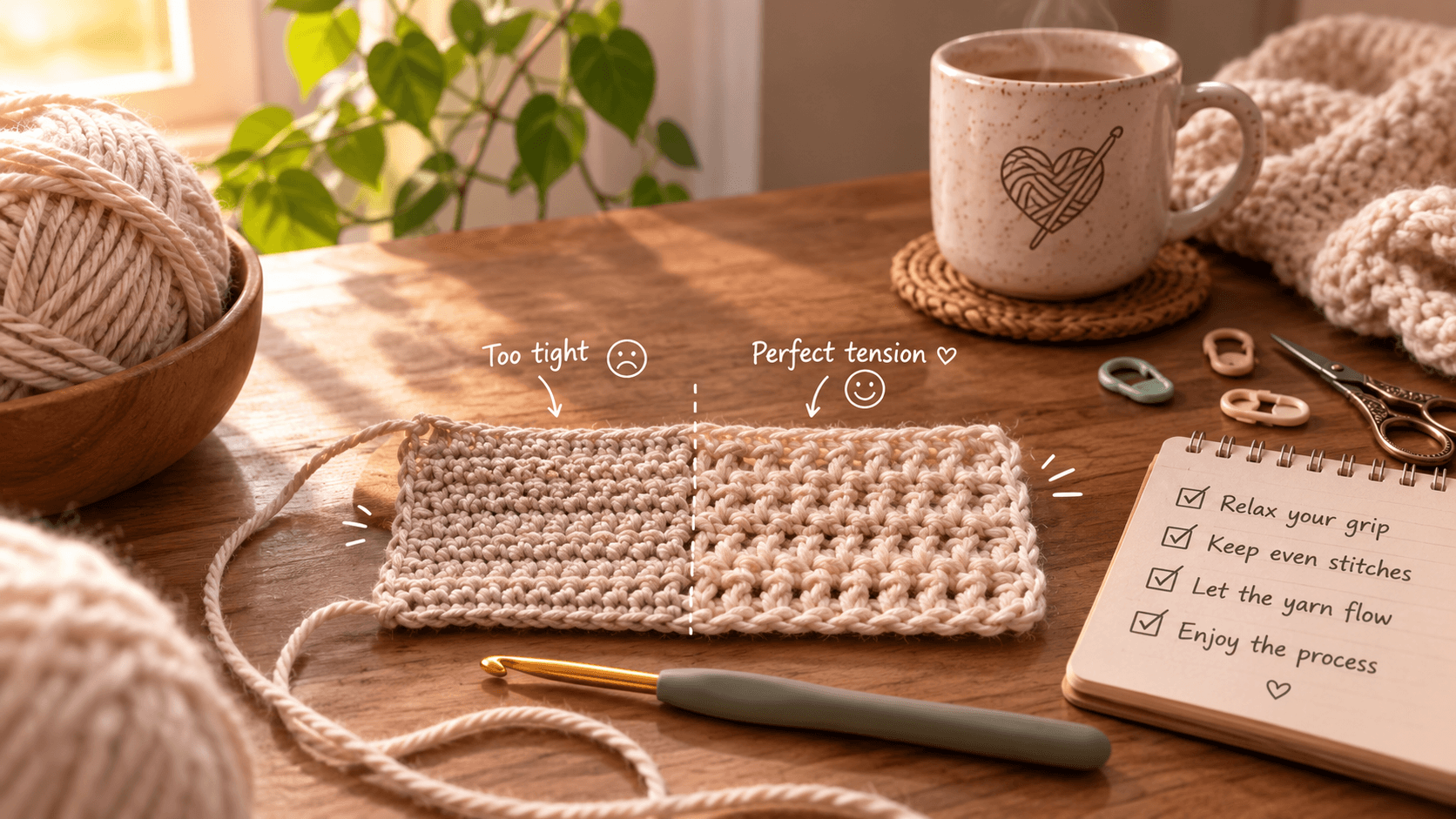
Why Is My Crochet Getting Tighter? 5 Causes and Easy Fixes
If your crochet is getting tighter as you go, you're not alone. You may notice that your stitches are getting smaller, your project is becoming narrower, your fabric feels stiff, or your crochet hook is becoming difficult to insert into each stitch. In most cases, tight crochet stitches are caused by changing yarn tension, gripping the hook or yarn too tightly, pulling loops too tight, using the wrong hook size, or accidentally skipping stitches. The good news is that you usually don't need to start over. Once you identify why your crochet tension is too tight, you can make a few small adjustments to create smoother, more even stitches.
Read tutorial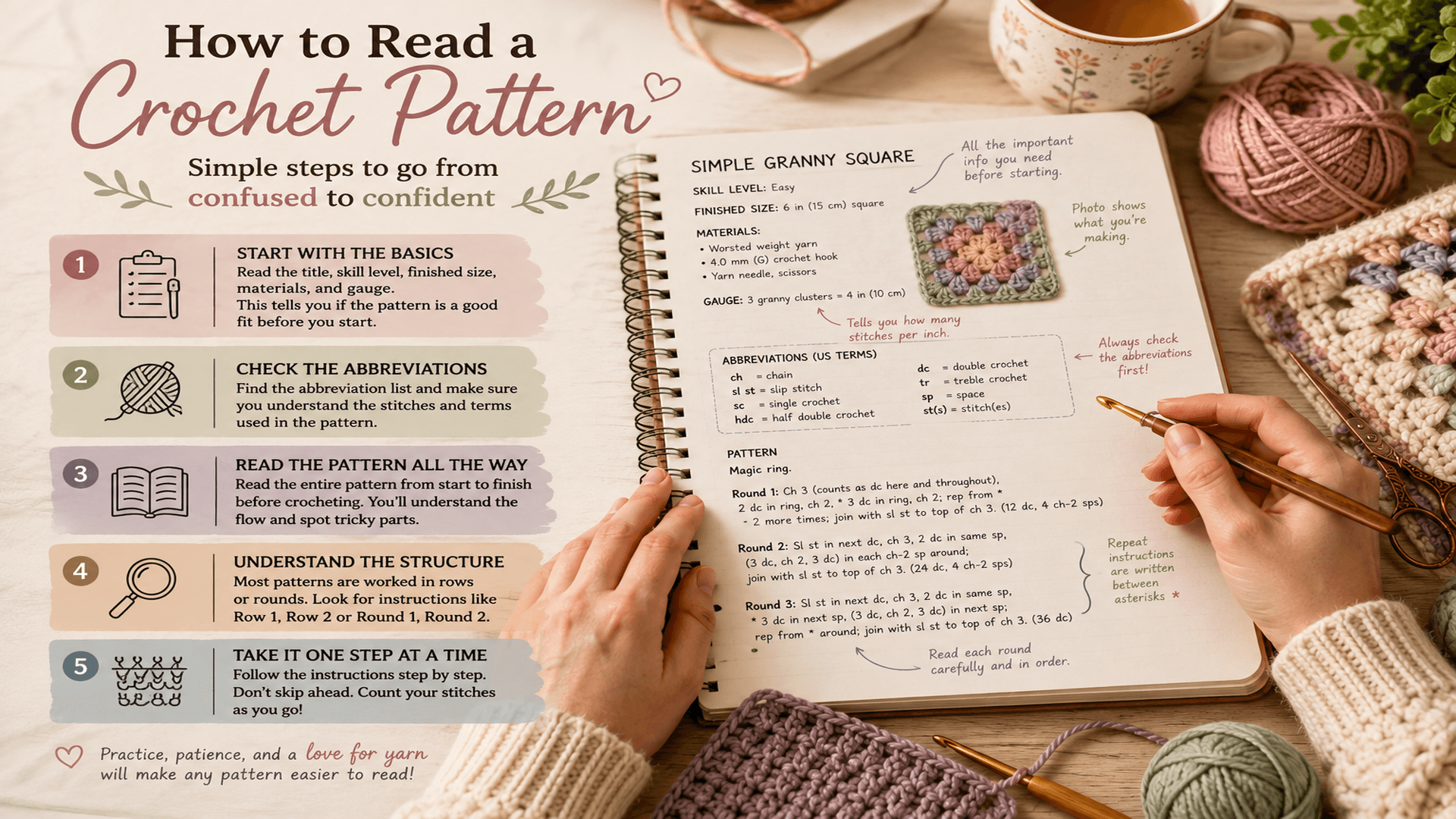
How to Read a Crochet Pattern: A Beginner's Guide to Abbreviations, Symbols & Stitch Counts
If you've ever opened a crochet pattern and thought, “What does all of this mean?”, you're definitely not alone. A pattern can look confusing at first because crocheters use abbreviations, symbols, parentheses, asterisks, and stitch counts instead of writing every instruction in full sentences. The good news is that once you understand a handful of common crochet pattern abbreviations and symbols, you can read most patterns much more easily. This guide will show you how to read a crochet pattern step by step, including written instructions, stitch counts, repeats, sizing, and crochet charts.
Read tutorial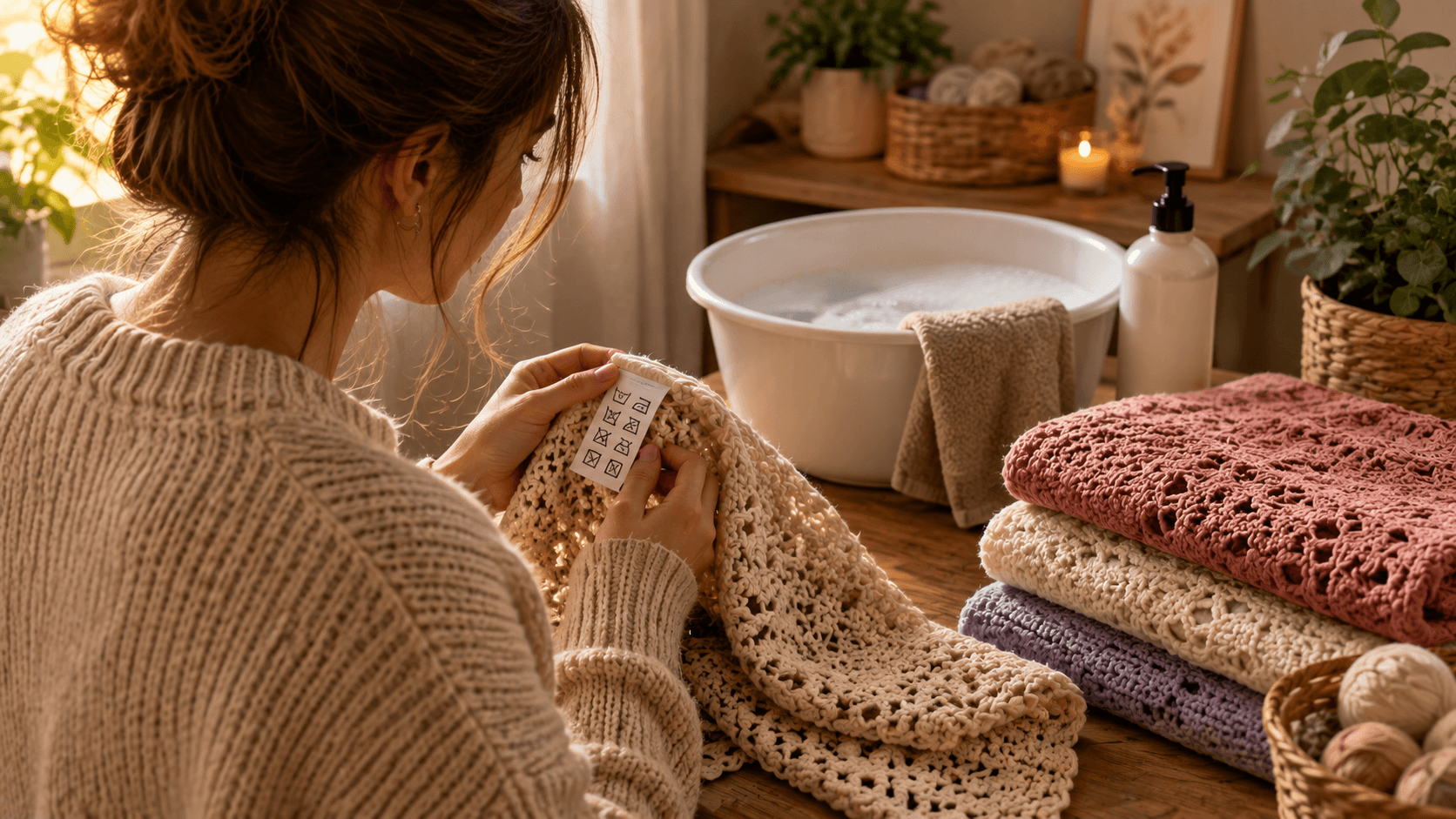
How to Wash Handmade Crochet Items: Hand-Washing and Machine Care Guide
You've spent hours creating a beautiful crochet blanket, sweater, scarf, or amigurumi. So when it's time to clean it, you want to make sure washing doesn't cause shrinking, stretching, felting, fading, or damage. The best way to wash handmade crochet items depends mainly on the yarn you used. Acrylic, cotton, wool, alpaca, and blended yarns can all have different care requirements. That's why the first step is always to check the original yarn label or the care instructions provided with the pattern. In this guide, you'll learn how to wash crochet items safely, when hand washing is the better option, when machine washing may be suitable, and how to dry handmade crochet without stretching it out of shape.
Read tutorial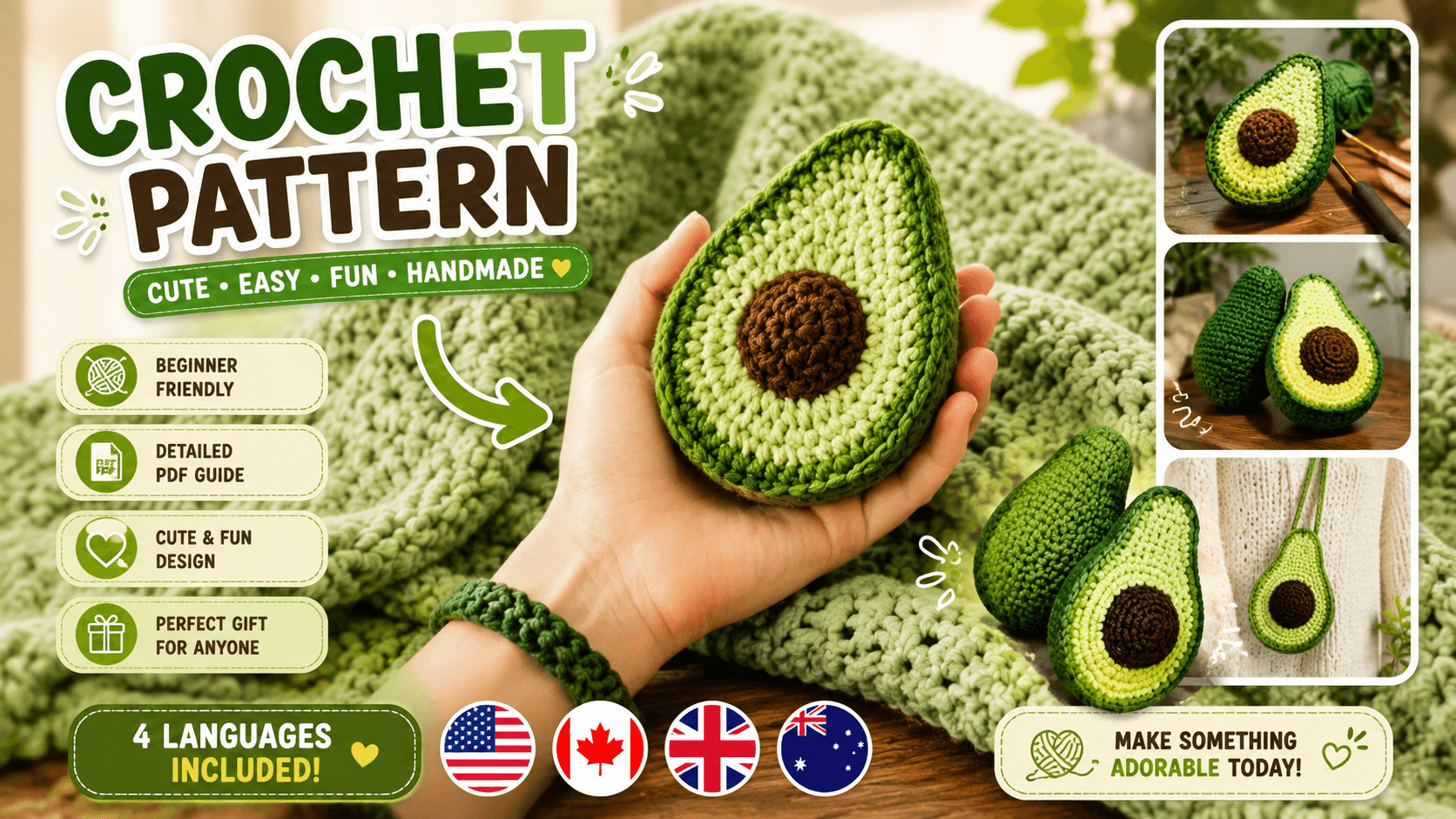
Put It Into Practice
Crochet Avocado Pattern | Avocado Amigurumi PDF | Cute Crochet Fruit Pattern | Beginner Crochet Pattern
Create your own adorable crochet avocado amigurumi with this easy-to-follow PDF pattern! This cute crochet fruit design includes the avocado pit, green pulp, and outer peel, making it a fun project for beginners and avocado lovers.
View the pattern →