Why Is My Crochet Getting Tighter? 5 Causes and Easy Fixes
If your crochet is getting tighter as you go, you're not alone. You may notice that your stitches are getting smaller, your project is becoming narrower, your fabric feels stiff, or your crochet hook is becoming difficult to insert into each stitch. In most cases, tight crochet stitches are caused by changing yarn tension, gripping the hook or yarn too tightly, pulling loops too tight, using the wrong hook size, or accidentally skipping stitches. The good news is that you usually don't need to start over. Once you identify why your crochet tension is too tight, you can make a few small adjustments to create smoother, more even stitches.
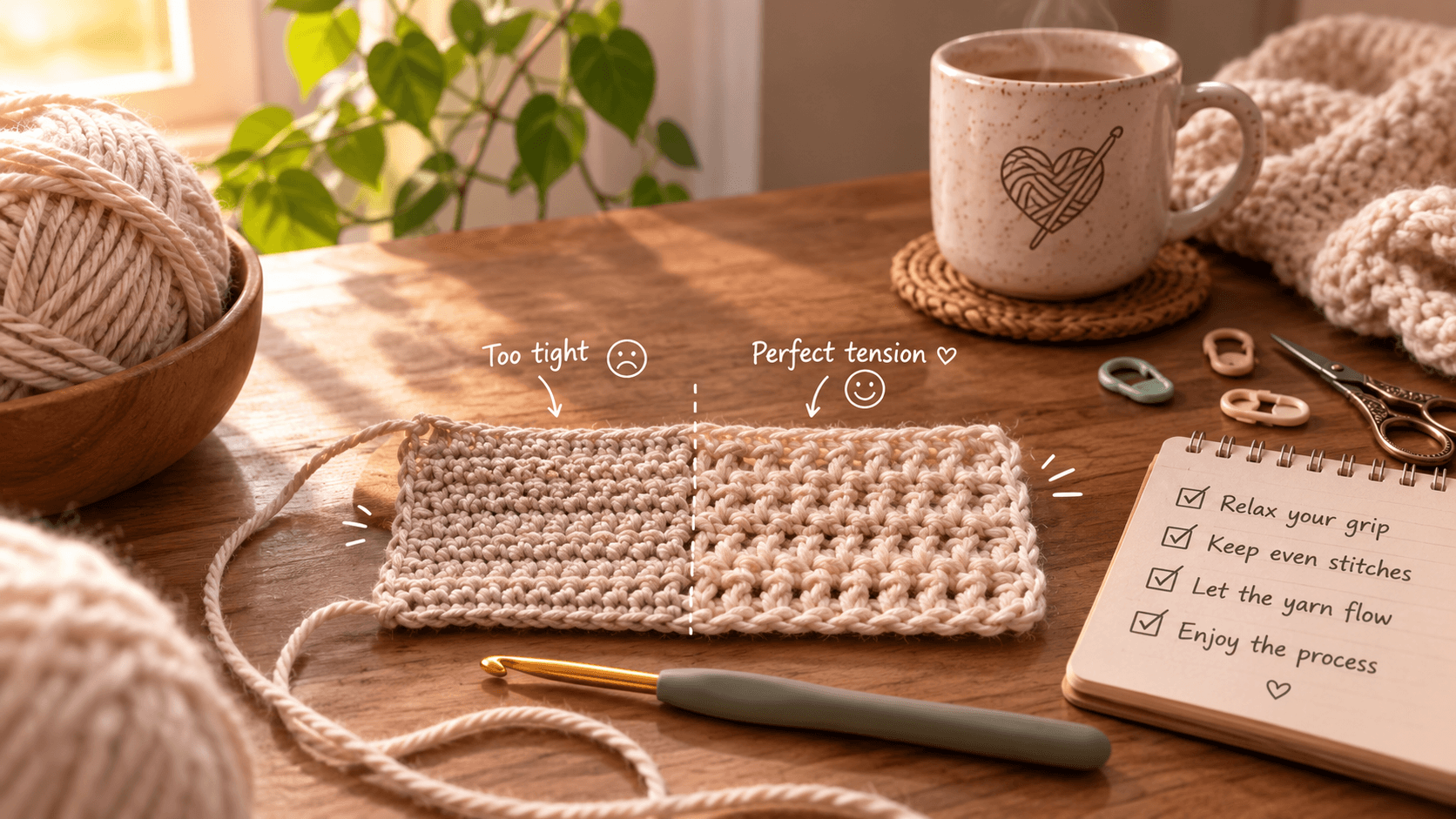
1. You're Pulling the Yarn Too Tightly
One of the most common reasons for crochet stitches getting tighter is pulling the working yarn too firmly after making each stitch.
You may not even notice you're doing it. Many crocheters automatically pull the yarn after completing a stitch to make everything look neat. However, repeatedly tightening each stitch can make your loops smaller and smaller.
How to fix it
Try letting each stitch rest naturally on your hook before moving on.
Instead of pulling the yarn tight after every stitch:
- Keep a relaxed grip on the working yarn.
- Let the yarn slide smoothly through your fingers.
- Avoid pulling the completed stitch tightly against the hook.
- Focus on making every stitch the same size instead of making it as tight as possible.
A good crochet stitch should feel secure without being difficult to work into.
2. You're Holding the Hook or Yarn Too Tightly
If your hand starts to feel tired or cramped, you may be gripping your crochet hook too tightly.
This often happens when you're concentrating, learning a new stitch, or trying to make your stitches look perfectly neat. The tighter your hands grip the hook and yarn, the easier it is for your crochet tension to become too tight.
How to fix it
Take a moment to check both hands.
Your hook hand should feel controlled but relaxed. Your yarn hand should guide the yarn without squeezing or locking it in place.
Try this simple test:
- Crochet 10 stitches normally.
- Stop and shake out your hands.
- Crochet the next 10 stitches while consciously relaxing your grip.
- Compare the two sections.
You may be surprised by how much your tension changes when your hands relax.
3. Your Loops Are Forming Too Small on the Hook
Another reason your crochet is getting tighter is where your working loop sits on the hook.
Crochet hooks are not always the same width from the tip to the shaft. If you repeatedly pull your loops tight near the narrower part of the hook instead of allowing them to rest around the full-diameter shaft, your stitches can become smaller than intended.
How to fix it
Before completing the next part of your stitch, give the working loop enough room to sit comfortably around the main shaft of the hook.
You don't need to make every loop deliberately loose. The goal is consistency.
Try to avoid:
- Pulling loops tightly toward the hook tip.
- Forcing every loop as small as possible.
- Changing loop size from one stitch to the next.
This simple adjustment can make your crochet tension more consistent.
4. Your Hook May Be Too Small for Your Tension
Sometimes the problem isn't your technique alone.
If you're naturally a tight crocheter, the hook size recommended in a pattern may produce fabric that is denser or smaller than the intended gauge.
This is especially important when making clothing, blankets, or projects where the finished size matters.
How to fix it
Make a small gauge swatch using the recommended hook.
If you have more stitches per inch than the pattern calls for, your stitches are smaller than expected. Try going up to a larger hook size and make another swatch.
The goal isn't to use the biggest hook possible. The goal is to find the hook size that gives you the correct gauge while still creating fabric you like.
5. You May Be Accidentally Skipping Stitches
If your crochet project is getting narrower, don't assume that tension is the only problem.
Missing even one stitch occasionally can gradually make a rectangular project narrower. This often happens at the beginning or end of a row, where edge stitches can be easy to miss.
How to fix it
Count your stitches regularly, especially if your project is supposed to stay the same width.
Stitch markers can also help you identify the first and last stitch of each row.
If your stitch count is correct but the project still looks narrower, uneven tension is more likely to be the cause.
How to Keep Crochet Tension Consistent
If your crochet tension changes as you work, don't try to force every stitch to be perfectly tight or perfectly loose.
Instead, focus on creating a relaxed and repeatable rhythm.
Here are a few ways to develop more even crochet tension:
- Hold your hook with a relaxed grip.
- Let the yarn feed smoothly through your fingers.
- Avoid pulling every completed stitch tight.
- Keep your working loops a consistent size.
- Check your stitch count when your project starts getting narrower.
- Take a short break if your hands start feeling tense or tired.
- Make a small practice swatch before starting an important project.
- Check your gauge when the finished size matters.
With practice, your hands will naturally develop a more consistent rhythm.
What If My Crochet Is Already Too Tight?
If you've only worked a few rows, undoing the tight section and starting again with a more relaxed tension may be the easiest solution.
If you've already made significant progress, first check whether the problem is actually affecting the size or shape of your project.
For projects where exact sizing matters, compare your work with the pattern gauge. If your fabric is much smaller, denser, or stiffer than expected, try a larger hook and make a new gauge swatch before continuing.
For decorative projects, such as some amigurumi, tighter stitches may actually be desirable if they create the fabric required by the pattern.
Final Thoughts
If you're wondering, "Why is my crochet getting tighter?", the answer is usually a small change in your tension, yarn control, loop size, hook size, or stitch count.
Start by counting your stitches to make sure your project isn't narrowing because you're accidentally skipping stitches. Then pay attention to how tightly you're holding the yarn and hook.
The goal isn't to crochet as loosely as possible. It's to create consistent crochet tension so your stitches stay even from the first row to the last.
With a little practice and a few small adjustments, you'll find a comfortable rhythm and your crochet stitches will become easier to work, softer, and more consistent.
Ready to make something?
Put your new skills to use with our free pattern collection.