How to Wash Handmade Crochet Items: Hand-Washing and Machine Care Guide
You've spent hours creating a beautiful crochet blanket, sweater, scarf, or amigurumi. So when it's time to clean it, you want to make sure washing doesn't cause shrinking, stretching, felting, fading, or damage. The best way to wash handmade crochet items depends mainly on the yarn you used. Acrylic, cotton, wool, alpaca, and blended yarns can all have different care requirements. That's why the first step is always to check the original yarn label or the care instructions provided with the pattern. In this guide, you'll learn how to wash crochet items safely, when hand washing is the better option, when machine washing may be suitable, and how to dry handmade crochet without stretching it out of shape.
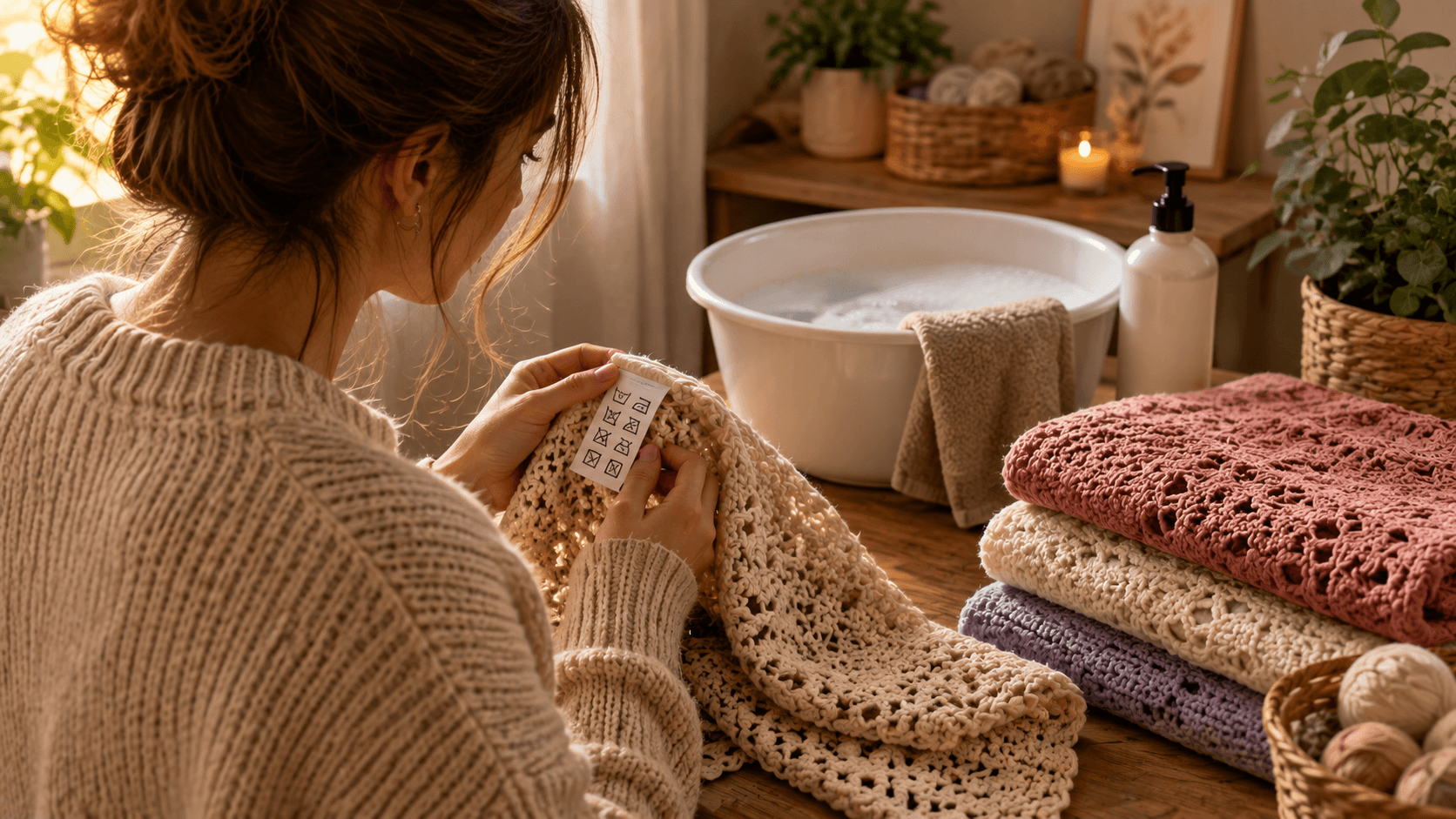
1. Check What Type of Yarn You Used
Before washing any handmade crochet item, identify the fiber content.
If you still have the yarn label, check for:
- Fiber content.
- Recommended water temperature.
- Hand-wash or machine-wash instructions.
- Whether tumble drying is allowed.
- Any special care instructions.
This is especially important for wool and other natural fibers.
Not all wool has the same care requirements. Some wool yarns are labeled as hand wash only, while others are specifically designed to be machine washable.
If you don't know what yarn was used, treat the item carefully and consider hand washing a small hidden area first if appropriate.
2. How to Hand Wash Crochet Items
Hand washing is often the safest choice for delicate, handmade, or shape-sensitive crochet items.
Start by filling a clean sink or basin with water at the temperature recommended for the yarn.
Add a small amount of suitable detergent and gently mix it into the water.
Place the crochet item into the water and allow it to become fully saturated.
Gently clean the crochet
Move the item gently through the water.
Avoid:
- Scrubbing the stitches aggressively.
- Rubbing delicate fibers against themselves.
- Twisting or wringing the item.
- Pulling the fabric while it is wet.
For wool and other delicate fibers, rough handling can damage the fabric or affect its shape.
If the item needs to soak, follow the care instructions for the specific yarn rather than assuming every fiber needs the same soaking time.
3. Rinse Carefully
After washing, rinse the crochet item according to the detergent and yarn care instructions.
Support the weight of the item with both hands when lifting it from the water.
This is especially important for large blankets, sweaters, and other heavy pieces because wet crochet can weigh significantly more than dry crochet.
Avoid twisting the item to remove water.
Instead, gently press out excess water.
4. Use the Towel-Roll Method
One of the safest ways to remove excess water from handmade crochet is the towel-roll method.
Lay a clean, dry towel on a flat surface.
Place your washed crochet item on top and gently arrange it into its natural shape.
Roll the towel and crochet item together, then press gently along the roll.
The towel will absorb excess moisture without the need to wring or twist the crochet.
For very wet or large items, you may need to repeat this process with another dry towel.
5. How to Dry Handmade Crochet Items
For many crochet garments and shape-sensitive projects, flat drying is the safest option.
Lay the item on a clean towel, drying rack designed for flat drying, or blocking surface.
Gently reshape it while it is damp.
Make sure to:
- Straighten the edges.
- Adjust the sleeves or garment shape.
- Smooth out major wrinkles.
- Return the item to its intended measurements when necessary.
Allow the crochet to air dry completely.
Avoid placing delicate items directly on strong heat sources such as radiators unless the yarn care instructions specifically say this is safe.
For many wool garments, flat drying is recommended because hanging a wet garment can stretch it under its own weight.
Can You Machine Wash Crochet?
Sometimes, yes.
Whether you can machine wash crochet depends on the yarn and the care instructions.
Many acrylic and cotton yarns can be machine washed, while some specially treated wool yarns are also machine washable.
However, never assume that a handmade crochet item is automatically safe for the washing machine.
Before machine washing, check:
- The yarn label.
- The pattern's care instructions.
- Whether the item contains delicate decorations.
- Whether the item may stretch or lose its shape.
- Whether the yarn specifically allows machine washing.
If machine washing is recommended, a gentle or delicate cycle may be appropriate depending on the yarn instructions.
Turning garments inside out or placing smaller delicate items inside a suitable laundry bag can also help reduce friction during washing.
How to Wash Acrylic Crochet Items
Acrylic yarn is commonly used for crochet blankets, scarves, garments, and amigurumi.
Many acrylic yarns can be machine washed, but you should always follow the instructions on the specific yarn label.
If the label allows machine washing, use the recommended temperature and cycle.
Avoid assuming that all acrylic yarns have identical heat tolerance.
When drying, follow the label instructions. Some acrylic yarns may allow tumble drying on a specific setting, while others may be better air-dried.
How to Wash Wool Crochet
Wool crochet needs more attention because different types of wool can have different care requirements.
Some wool items are hand wash only, while machine-washable wool should be washed according to its care label.
For hand-wash-only wool, use water and detergent suitable for wool, handle the item gently, and avoid rubbing or wringing it. Mild or neutral wool detergents are commonly recommended for wool care.
After washing, gently remove excess water and reshape the item for drying.
Unless the care instructions say otherwise, flat drying is usually the safest choice for maintaining the shape of a wool crochet garment.
How to Wash Cotton Crochet
Cotton crochet can often handle regular washing better than delicate animal fibers, but the correct method still depends on the specific yarn and its care label.
Check the recommended washing temperature before cleaning the item.
Cotton can become heavy when wet, so support large crochet blankets or garments carefully when lifting them.
If the item needs to keep a particular shape, lay it flat and reshape it while damp.
Can You Put Crochet in the Dryer?
Sometimes, but only if the yarn's care instructions allow it.
Do not assume that every crochet item is safe for a tumble dryer.
Heat can cause problems for some fibers, while the movement of the dryer may affect the shape or surface of certain handmade items.
If the yarn label does not allow tumble drying, air dry the crochet instead.
Some specially labeled wool items can also be tumble dried, but only when their care instructions specifically permit it.
Should You Hang Crochet Items to Dry?
Avoid hanging heavy, wet crochet garments if they are likely to stretch under their own weight.
Sweaters, cardigans, and other garments can lose their shape when wet fabric pulls downward.
Flat drying is usually a safer option for shape-sensitive crochet items.
However, the best drying method should always follow the yarn's care instructions.
Quick Crochet Washing Checklist
- Check the original yarn label before washing.
- Follow the recommended water temperature.
- Use a detergent suitable for the fiber.
- Handle delicate crochet gently.
- Do not aggressively scrub, twist, or wring delicate items.
- Support heavy wet crochet when lifting it.
- Use a towel to remove excess water.
- Reshape garments and other shape-sensitive items while damp.
- Follow the yarn instructions for machine washing and tumble drying.
- Allow the item to dry completely before storing or using it.
Final Thoughts
Knowing how to wash handmade crochet items starts with knowing what yarn was used.
There is no single washing method that works perfectly for every crochet project. Acrylic, cotton, wool, and blended fibers can all have different requirements.
When in doubt, check the original yarn label and choose the gentlest method that matches its care instructions.
By washing carefully, removing excess water without wringing, and drying your crochet in a way that protects its shape, you can help your handmade items stay clean, comfortable, and beautiful for years to come.
Ready to make something?
Put your new skills to use with our free pattern collection.