Crochet vs. Knitting: Which Is Easier to Learn, Faster & Better for Beginners?
Crochet or knitting? If you're completely new to yarn crafts, choosing between a crochet hook and knitting needles can feel surprisingly difficult. Both crafts let you turn yarn into blankets, sweaters, hats, bags, toys, and home décor. But the way you hold the tools, build stitches, fix mistakes, and create fabric is very different. So which is easier for beginners? Which is faster? Which uses more yarn? And should you learn crochet or knitting first?
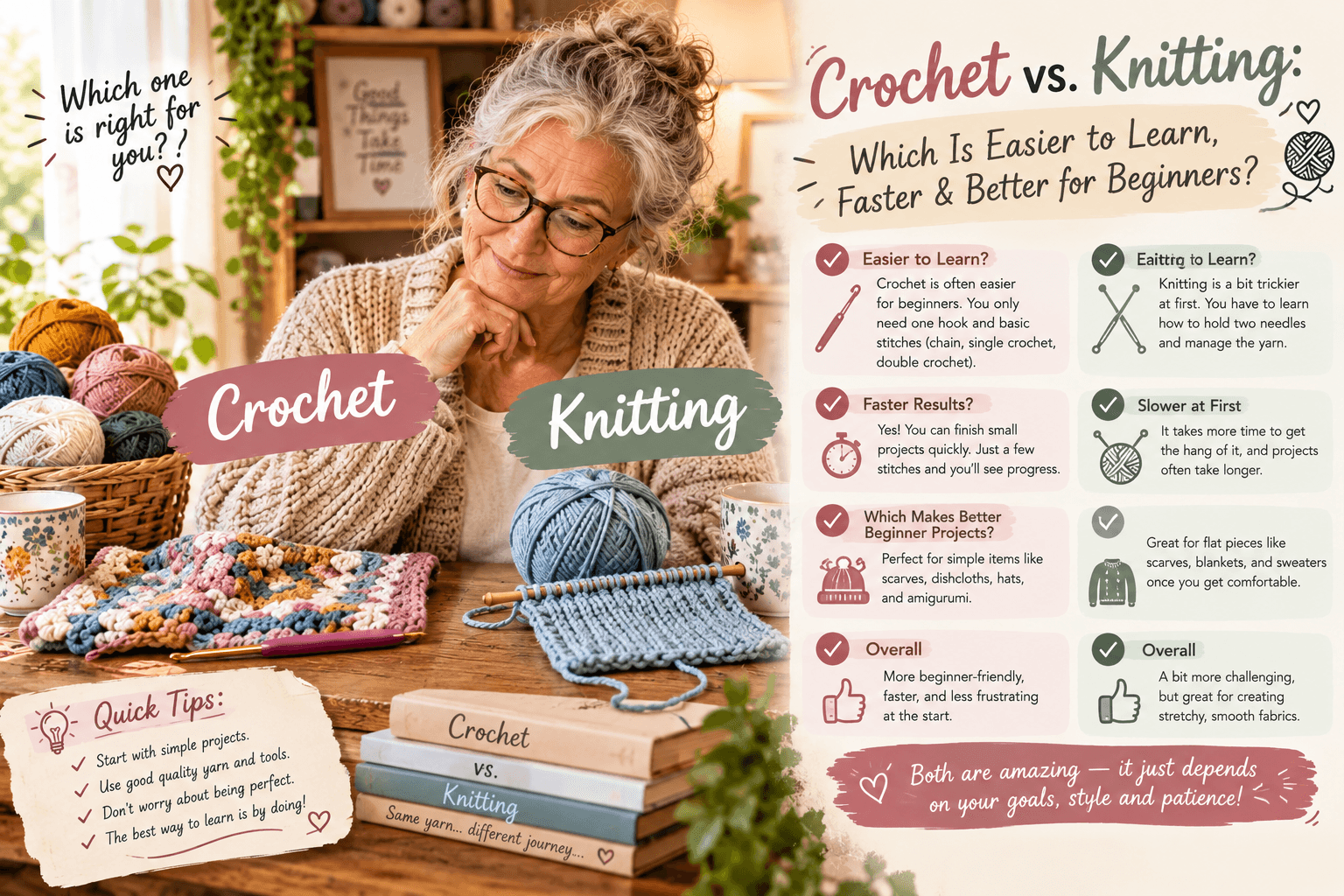
The answer depends partly on what you want to make, but understanding the differences makes the decision much easier.
Crochet vs. Knitting at a Glance
| Feature | Crochet | Knitting |
|---|---|---|
| Main tools | One crochet hook | Two knitting needles or a circular needle |
| Active stitches | Usually one active loop | Many live stitches |
| Beginner learning curve | Often feels simpler initially | Can take more coordination at first |
| Fixing mistakes | Usually straightforward to unravel back | Dropped stitches may require careful recovery |
| Fabric | Often thicker and more structured | Often thinner, stretchier and drapier |
| 3D projects | Excellent for amigurumi and sculptural shapes | Possible, but different construction |
| Garments | Great for many styles | Excellent for stretchy garments |
| Blankets | Very popular | Also excellent |
| Socks | Possible | Particularly common |
| Yarn consumption | Often higher for the same area | Often lower for the same area |
| Portability | Very simple with one hook | Also portable, especially with circular needles |
The biggest mechanical difference is simple:
Crochet uses one hook and generally one active loop. Knitting keeps multiple live stitches on the needles.
That difference affects almost everything else.
Is Crochet Easier Than Knitting for Beginners?
For many complete beginners, crochet feels easier to start.
That's largely because you're managing one hook and one active loop rather than keeping track of a row of live stitches.
If you drop your crochet hook, your finished stitches generally stay where they are. In knitting, multiple stitches remain live on the needles, so losing a stitch can cause it to unravel downward until you catch it.
That doesn't mean knitting is difficult.
It simply means the two crafts have different beginner challenges.
Some people immediately enjoy the two-handed rhythm of knitting, while others find the single-hook movement of crochet more intuitive.
Crochet may suit you if you:
Want to see progress quickly
Prefer using one main tool
Get nervous about dropping stitches
Want to make stuffed toys or 3D projects
Like learning through visual tutorials
Want to start with simple blankets, bags or accessories
Knitting may suit you if you:
Love smooth, stretchy fabric
Want to make socks or traditional sweaters
Enjoy repetitive two-handed movements
Like the appearance of classic knit stitches
Want lightweight garments with lots of drape
There isn't a universal rule that one craft is easier for every person.
Crochet vs. Knitting: What's the Difference?
The difference starts with the way the stitches are constructed.
Crochet
With crochet, your hook pulls loops through other loops to build the fabric one stitch at a time.
Once a stitch is completed, it becomes part of the fabric.
Knitting
Knitting keeps a series of live loops on the needles while you work the next row.
The stitches remain active until they're worked into the next row or eventually bound off.
This creates a different type of fabric and also changes how mistakes behave.
Which Is Faster: Crochet or Knitting?
This question is trickier than it sounds.
You'll often hear that crochet is faster than knitting, and there is a reason for that: many crochet stitches are relatively tall and can build fabric quickly.
But there isn't one universal speed difference.
A double crochet blanket and a single-crochet blanket won't grow at the same rate. The same applies to knitting—simple stockinette, cables, lace, colorwork and textured stitches all have different working speeds.
For chunky blankets and simple accessories, crochet can feel especially fast because large stitches build fabric quickly.
If your priority is fast visual progress
Crochet may feel particularly satisfying.
You can make a few rows and immediately see a noticeable amount of fabric developing.
That's one reason beginners often enjoy starting with:
Granny squares
Crochet scarves
Chunky blankets
Simple hats
Amigurumi
Dishcloths
Which Uses More Yarn: Crochet or Knitting?
This is one area where crochet and knitting can differ noticeably.
Crochet often uses more yarn for the same general area of fabric, especially with dense crochet stitches. Some comparisons put the difference around 20–30%, but the actual amount depends heavily on stitch pattern, gauge, yarn weight, and fabric structure.
So don't treat “crochet uses 30% more yarn” as a universal rule.
Instead, think of it this way:
Dense crochet generally creates a more substantial fabric and can require more yarn than an equivalent knitted fabric.
If you're buying expensive hand-dyed wool, this can matter when calculating your project budget.
For inexpensive acrylic yarn, the difference may be less important than choosing the fabric you actually want.
Which Makes Softer and Stretchier Fabric?
This is where knitting has a major advantage for certain projects.
Knitted fabric is naturally known for its stretch, flexibility and drape.
That's why knitting is particularly popular for:
Sweaters
Socks
Lightweight tops
Fine scarves
Baby garments
Close-fitting clothing
Crochet tends to produce a more structured fabric, although the exact result depends heavily on the stitch and yarn.
Open crochet lace can be surprisingly lightweight and flexible, while tight single crochet can be very dense.
So instead of asking:
“Is crochet or knitting better?”
Ask:
“What type of fabric do I need?”
What Is Better for Amigurumi?
If your dream project is a cute stuffed animal, crochet is an especially natural choice.
Amigurumi is commonly crocheted because crochet makes it easy to create compact, three-dimensional shapes with increases and decreases.
Crochet is excellent for creating:
Animals
Dolls
Food plushies
Keychains
Characters
Miniature figures
Stuffed plants
3D ornaments
The dense fabric also helps keep stuffing contained when the correct yarn and hook size are used.
What Is Better for Sweaters?
Both crafts can make beautiful sweaters.
However, knitting is particularly well suited to garments where you want stretch, fluid drape and a relatively lightweight fabric.
Crochet can also produce excellent sweaters and cardigans, particularly when using open stitches, granny-style construction, lace patterns or lightweight yarn.
The final fabric depends heavily on the stitch pattern.
So if you're searching for:
“crochet vs knitting for sweaters”
don't assume the answer is simply one craft or the other.
Think about whether you want a dense structured cardigan or a lightweight stretchy garment.
Which Is Easier to Fix When You Make a Mistake?
This is one of the biggest differences beginners notice.
Crochet mistakes
If you realize that you made a mistake several stitches or rows ago, you can usually pull the working yarn backward until you reach the problem.
This is commonly called frogging.
Because crochet generally has only one active loop, the process can feel relatively straightforward.
Knitting mistakes
Knitting mistakes can require more attention because multiple stitches are live.
A dropped stitch may run downward through several rows.
You can repair it, but beginners often need to learn how to use a crochet hook or another method to pick up the dropped stitches.
Knitting also has techniques such as tinking, which means undoing knitted stitches one at a time.
For beginners who are nervous about making mistakes, crochet's simpler unraveling process can be reassuring.
Crochet vs. Knitting for Blankets
Both are fantastic for blankets, but they create noticeably different results.
Crochet blankets
Crochet works beautifully for:
Granny square blankets
Chunky blankets
Textured blankets
Ripple blankets
Colorful motifs
Fast beginner blankets
Dense crochet can create a warm, substantial fabric.
Knitted blankets
Knitting is excellent for:
Lightweight blankets
Smooth stitch patterns
Cable designs
Colorwork
Soft draping fabrics
Traditional knitted textures
If you want a quick chunky blanket, crochet may give you the fast visual progress you're looking for.
If you want a smooth, flexible knitted texture, knitting may be more appealing.
Crochet vs. Knitting for Beginners: Cost
You don't need an enormous collection of supplies to start either craft.
For crochet, the basic setup can be as simple as:
One hook + yarn + scissors + a tapestry needle.
For knitting, you'll generally need:
Knitting needles + yarn + scissors + a tapestry needle.
The cost difference depends on what you buy. A beginner doesn't need a giant 50-piece crochet hook set or an expensive collection of interchangeable knitting needles.
Start with the tools required for your first project.
Once you know you enjoy the craft, you can build your collection gradually.
Which Is More Portable?
Both crafts are highly portable.
Crochet has a particularly simple setup because a single hook can handle the project.
You can easily put a small crochet project into a bag and work on it:
While traveling
During a break
At a café
While watching television
At home
During long journeys
Knitting can also be extremely portable, especially when using circular needles.
So portability isn't really a deciding factor for most people.
What Should You Learn First?
Instead of choosing based purely on which craft is “better,” start with the project you've been wanting to make.
Start with crochet if your goal is:
Amigurumi → Crochet
Granny square blanket → Crochet
Chunky blanket → Crochet
Crochet bag → Crochet
3D plushies → Crochet
Simple home décor → Crochet
Consider knitting if your goal is:
Stretchy socks → Knitting
Fine lightweight sweaters → Knitting
Classic knitted garments → Knitting
Highly drapey fabric → Knitting
Traditional knit textures → Knitting
These aren't strict rules. Both crafts can accomplish far more than this list suggests.
They're simply useful starting points.
Can You Learn Crochet and Knitting?
Absolutely.
In fact, you don't have to choose one forever.
Many yarn crafters eventually learn both because each craft gives you access to different stitch structures, fabrics and construction techniques.
Learning crochet first can also make you more comfortable with:
Yarn tension
Reading patterns
Counting stitches
Understanding yarn weights
Working increases and decreases
Recognizing stitch anatomy
Those skills don't make knitting automatic, but they give you useful familiarity with yarn and fiber crafts.
Crochet or Knitting: Which One Should You Try Today?
If you're staring at a ball of yarn wondering “Should I learn crochet or knitting?”, keep it simple.
Pick the craft that matches the thing you actually want to make.
Want a plushie?
Try crochet.
Want a stretchy pair of socks?
Try knitting.
Want a chunky blanket you can see growing quickly?
Try crochet.
Want a lightweight sweater with lots of drape?
Try knitting.
And if you're still undecided, there's nothing wrong with learning one basic project in each.
You may discover that the craft you expected to love isn't the one that feels natural in your hands—and that's completely normal.
Frequently Asked Questions
Is crochet easier than knitting?
Crochet often feels easier to many beginners because it uses one hook and generally one active loop at a time. However, learning preferences differ, and some people find knitting's rhythm more natural.
Is crochet faster than knitting?
Crochet can work up quickly, particularly with taller stitches and chunky yarn, but there is no universal speed difference. Stitch type, yarn weight, project size and experience all affect how quickly a project is completed.
Does crochet use more yarn than knitting?
Often, yes. Dense crochet fabric can use noticeably more yarn for the same approximate area, although the difference depends on stitch pattern, gauge and yarn.
Is crochet or knitting better for beginners?
Both are beginner-friendly crafts. Crochet often provides a simpler starting experience because you're managing one hook and one active loop, while knitting offers different advantages in fabric stretch and drape.
Which is better for making clothes?
Both can make clothing. Knitting is particularly useful when you want lightweight, stretchy and drapey fabric, while crochet can create structured garments, lace, textured cardigans and many other styles.
Can I learn crochet and knitting at the same time?
You can, but beginners may find it easier to learn one craft first, complete a couple of small projects, and then introduce the second. The two crafts share yarn skills but use different hand movements.
The Bottom Line
Crochet and knitting aren't really competitors.
They are two different ways of turning yarn into fabric.
Crochet: one hook, fewer live loops, structured fabric, excellent for amigurumi and quick projects.
Knitting: two needles, multiple live loops, stretchy fabric, excellent for garments and drapey designs.
If you're completely new and want the simplest starting point, crochet is often a comfortable first choice. If your main goal is a stretchy sweater, socks or lightweight garment, knitting may be the craft you want to explore first.
And once you've mastered one, you can always pick up the other.
Your yarn journey doesn't have to stop at one hook or two needles.
Next Steps
Continue Learning
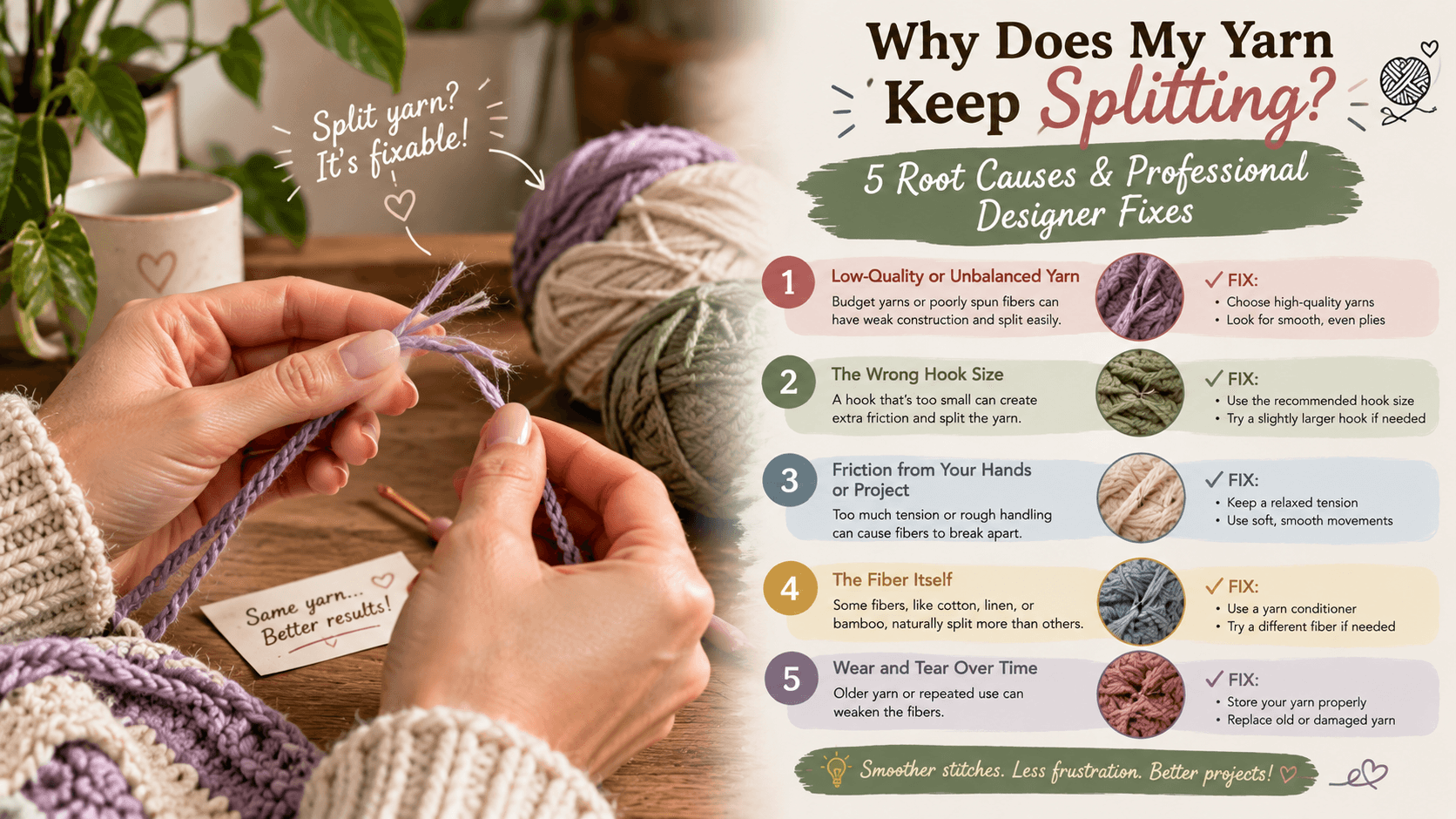
Why Does My Yarn Keep Splitting? 7 Causes & Easy Crochet Fixes
If your crochet hook keeps catching individual strands instead of the whole yarn, you're probably wondering, “Why does my yarn keep splitting?” Yarn splitting happens when your hook slips between the fibers or plies instead of grabbing the complete working strand. Sometimes the yarn itself is the main culprit. Other times, a sharp hook, tight tension, hook angle, or the way you wrap the yarn can make the problem much worse. The good news? You usually don't need to abandon the project. In this guide, we'll look at the most common causes of crochet yarn splitting, how to identify what's actually causing it, and the simple changes that can make your stitches smoother and cleaner.
Read tutorial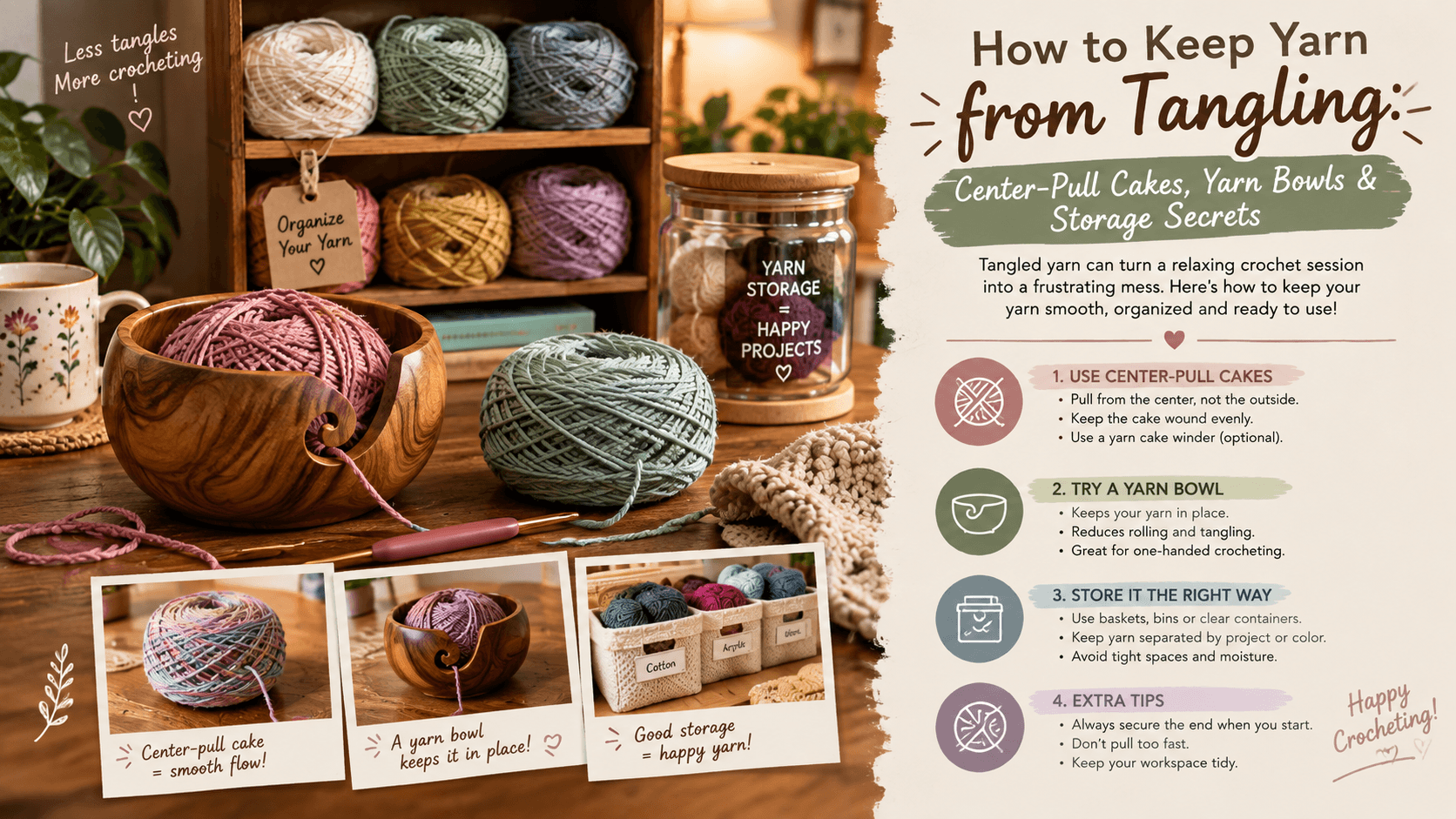
How to Keep Yarn from Tangling While Crocheting: Center-Pull, Yarn Bowls & Easy Storage Tips
Few things ruin a relaxing crochet session faster than reaching for your yarn and discovering a giant knot. You pull a little more from the skein. The knot gets tighter. You pull again. Somehow you've created an even bigger mess. And then there's “yarn barf”—that surprisingly large clump of yarn that sometimes comes flying out when you try to start a center-pull skein. If you've been searching for how to keep yarn from tangling while crocheting, the solution isn't necessarily buying more accessories. The biggest difference comes from controlling how your yarn feeds, where your yarn sits, and how you organize multiple strands. Here's how to keep your yarn moving smoothly without spending half your crochet time untangling it.
Read tutorial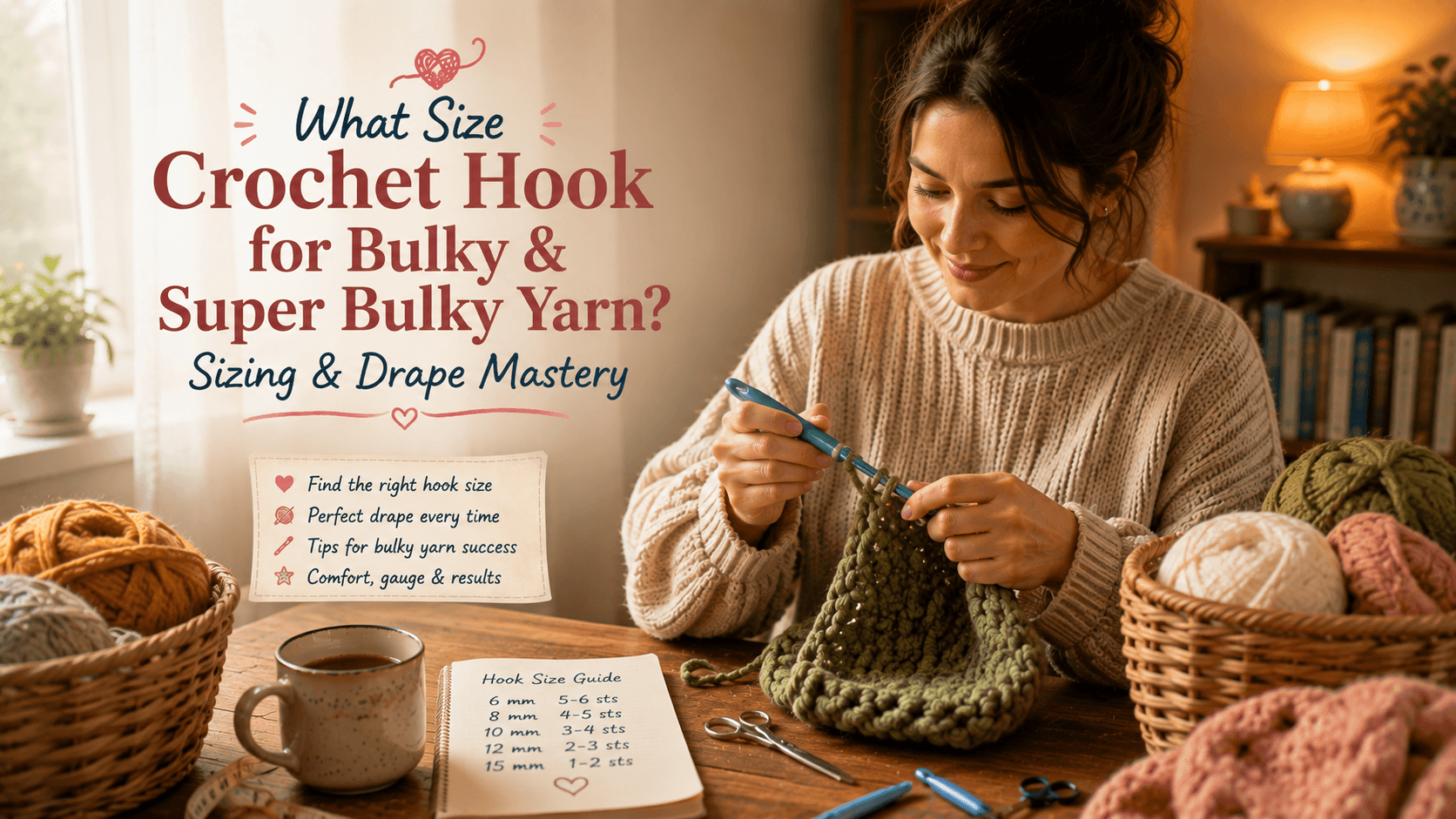
What Size Crochet Hook for Bulky & Super Bulky Yarn? Sizing & Drape Guide
Wondering what size crochet hook to use with bulky yarn? You’re usually looking at a much larger hook than you would use for worsted or DK yarn. But there isn’t one “correct” size for every chunky project.
Read tutorial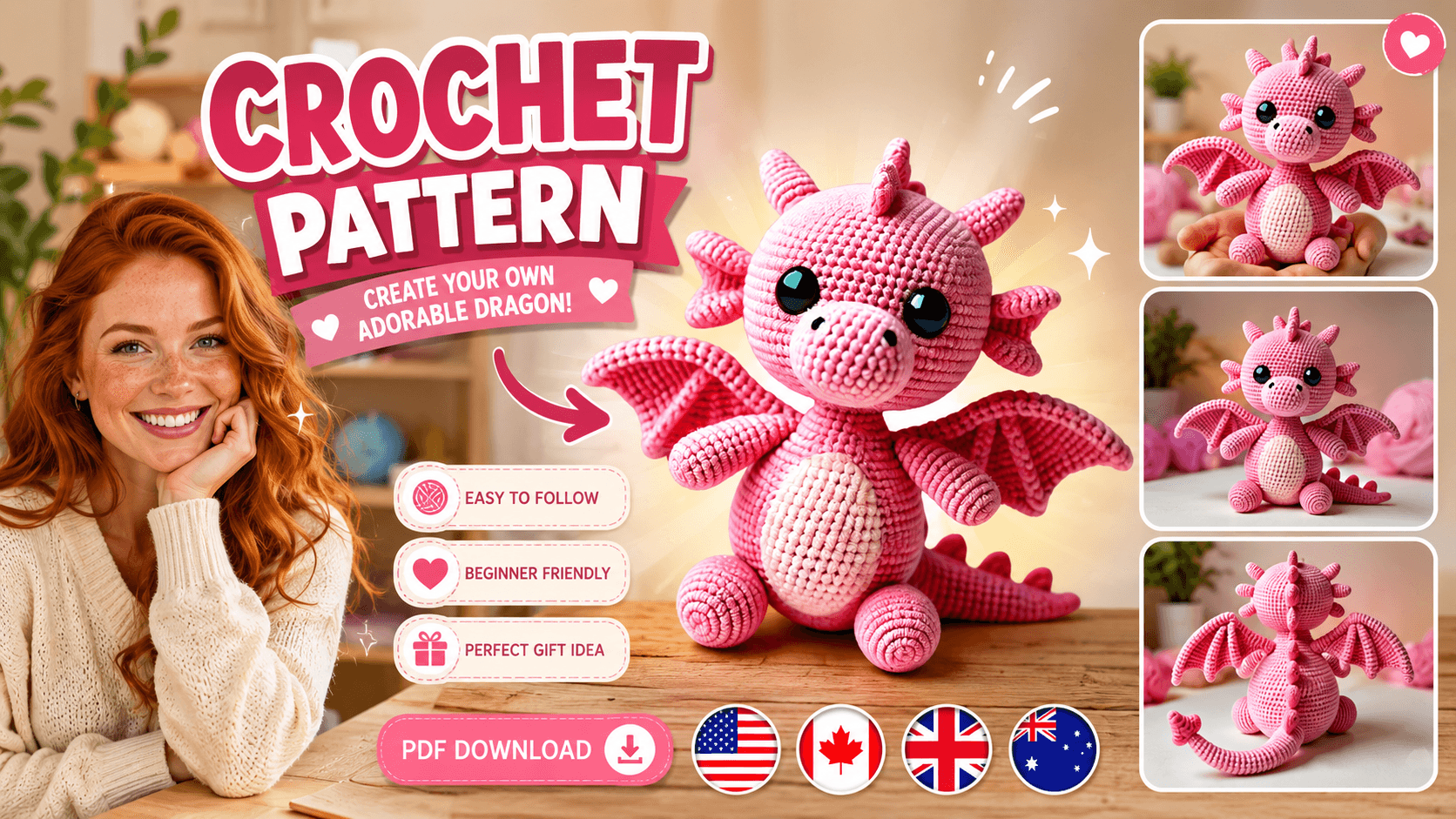
Put It Into Practice
Crochet Dragon Pattern | Amigurumi Dragon PDF | Fantasy Dragon Plush | Crochet Dragon with Wings
Create your own magical crochet dragon with this detailed amigurumi dragon pattern! This beginner-friendly PDF crochet pattern guides you step by step to make an adorable fantasy dragon with beautiful wings. Perfect for dragon lovers, handmade gifts, fantasy decor, crochet plush collections, and anyone looking for a fun dragon crochet pattern to make at home.
View the pattern →