What Size Crochet Hook for Bulky & Super Bulky Yarn? Sizing & Drape Guide
Wondering what size crochet hook to use with bulky yarn? You’re usually looking at a much larger hook than you would use for worsted or DK yarn. But there isn’t one “correct” size for every chunky project.
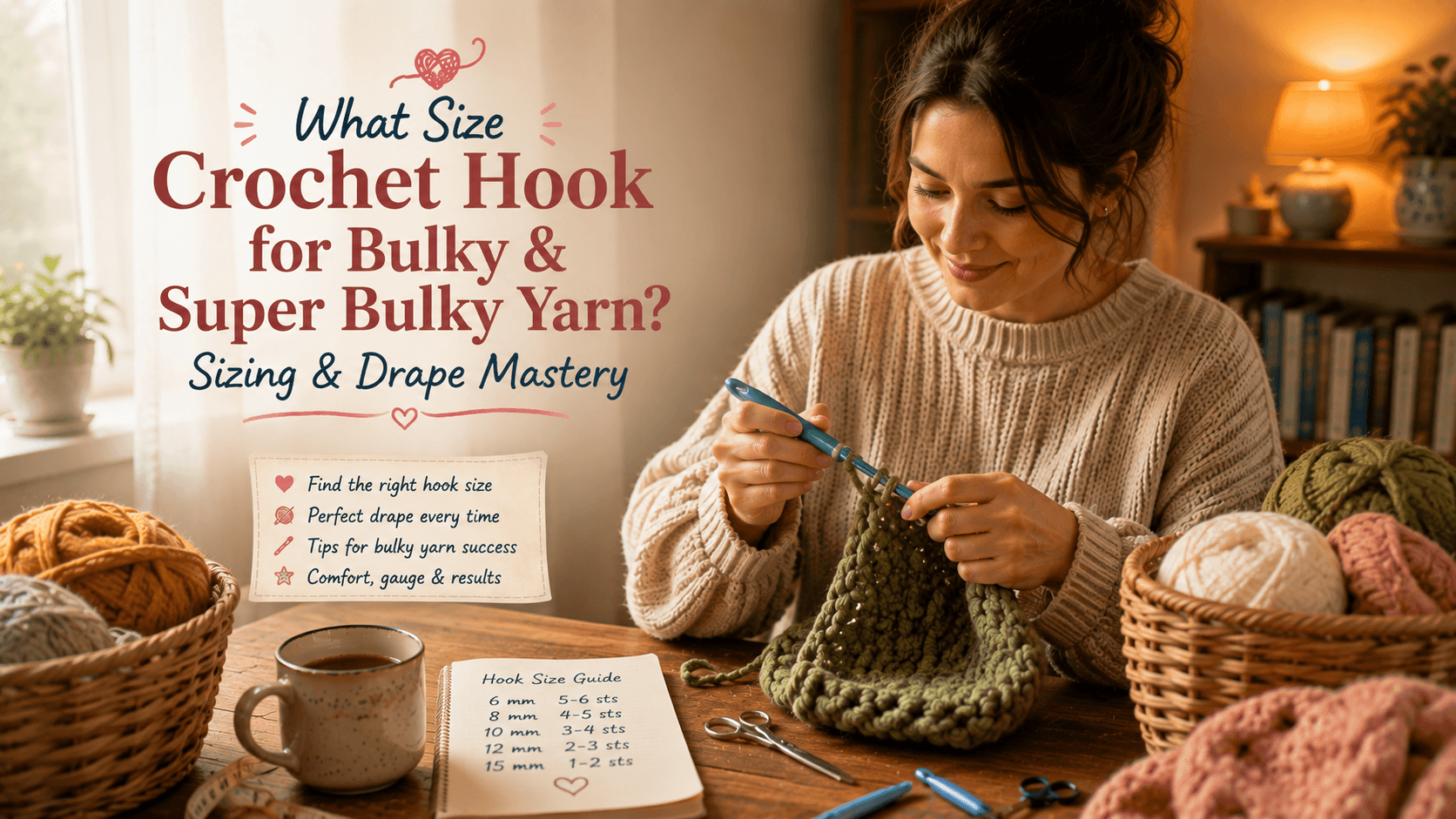
The hook you choose changes much more than the finished size. It controls whether your fabric feels soft and drapey, dense and structured, or somewhere in between.
For a quick starting point:
Bulky / Chunky yarn (#5): about 6.5–9 mm
Super bulky yarn (#6): about 9–15 mm
Jumbo yarn (#7): 15 mm and larger
These ranges are useful starting points, but always check the yarn label and your pattern gauge first.
Bulky vs. Super Bulky: What’s the Difference?
The words bulky, chunky, and super bulky are sometimes used interchangeably, which can make crochet hook sizing confusing.
In the standard yarn-weight system, bulky is Category 5, while super bulky is Category 6.
| Yarn Weight | Category | Typical Crochet Hook Range | Good For |
|---|---|---|---|
| Bulky / Chunky | #5 | 6.5–9 mm | Hats, scarves, blankets, sweaters |
| Super Bulky | #6 | 9–15 mm | Chunky blankets, cowls, baskets |
| Jumbo | #7 | 15 mm+ | Oversized blankets, rugs, décor |
A #5 bulky yarn will generally work beautifully with a 6.5 mm, 8 mm, or 9 mm crochet hook, depending on the fabric you're trying to create. Super bulky yarn moves into the larger hook range, commonly starting around 9 mm.
So, What Size Crochet Hook Should You Actually Use?
Start with the hook size recommended on the yarn label. Then adjust according to your project.
Think of the label recommendation as your starting line, not a rule you can never change.
Want soft, flowing fabric?
Go toward the larger end of the recommended range.
A larger hook creates taller, more open stitches. This is useful when you're making:
Loose crochet blankets
Oversized scarves
Cowls
Sweaters
Cardigans
Drapey home décor
For example, if your bulky yarn recommends 6.5–9 mm, an 8 or 9 mm crochet hook may give you a softer fabric than a 6.5 mm hook.
Need something firm and structured?
Move toward the smaller end.
A smaller hook packs the yarn into tighter stitches, producing a denser fabric that holds its shape better.
This can be useful for:
Crochet baskets
Bags
Slippers
Pet beds
Structured hats
Chunky amigurumi
The trade-off is that a smaller hook can make thick yarn harder to work and may leave you with a fabric that feels stiff.
The Same Yarn Can Create Completely Different Fabrics
This is the part many beginners miss.
Imagine you're using the same super bulky yarn for two projects.
With a 9 mm hook, your stitches may be relatively compact.
Switch to a 12 mm or 15 mm hook, and those same stitches become much larger and more open.
So when someone asks, “What crochet hook size for super bulky yarn?”, the answer depends partly on what they're making.
A chunky blanket may benefit from a larger hook for softness and drape, while a basket needs more structure.
A Simple Bulky Yarn Hook Size Chart
Keep this quick reference beside your crochet basket:
| Project Goal | Bulky #5 Starting Point | Super Bulky #6 Starting Point |
|---|---|---|
| Dense / structured | 6.5–7 mm | 9–10 mm |
| Everyday fabric | 7–8 mm | 10–12 mm |
| Soft / drapey | 8–9 mm | 12–15 mm |
These aren't mandatory sizes. Your yarn construction, tension, stitch pattern, and desired gauge can all change the result. Standard guides also emphasize that yarn-label recommendations are starting points rather than absolute rules.
Why Your Yarn Label Matters More Than a Generic Chart
Two yarns can both be classified as bulky weight #5 and still behave differently.
One might be loosely spun and fluffy. Another might be tightly twisted and compact. A chenille yarn can behave differently again.
That's why the most reliable process is:
Check the label → make a small swatch → judge the fabric → change the hook if necessary.
If your stitches look extremely tight and the hook feels difficult to pull through, try going up a size.
If the fabric has large unwanted holes or isn't holding the shape you need, try going down.
Don't Skip the Gauge Swatch
With thick yarn, a tiny change in hook size can make a surprisingly large difference.
You don't necessarily need to crochet a huge swatch. A small sample is enough to answer the most important question:
Do I like how this fabric feels?
Bend it.
Stretch it.
Hold it up to the light.
If you're making a blanket, check whether it hangs naturally. If you're making a basket, check whether it stands without collapsing.
For garments, however, follow the pattern's gauge requirements rather than choosing a hook purely by feel.
What If My Crochet Project Is Curling?
Hook size can be part of the problem, but it isn't always the cause.
If your fabric is curling, check:
Whether your tension is too tight
Whether your hook is too small
Whether the stitch pattern naturally curls
Whether your foundation chain is tighter than the following rows
Whether your border needs additional stitches
For chunky projects, a foundation chain can sometimes become noticeably tighter than the first worked row. One useful experiment is making the foundation chain with a slightly larger hook before switching back to your main hook.
Choosing a Hook for Chunky Chenille Yarn
Chunky chenille and blanket yarn deserve special attention.
These yarns are extremely soft and can produce gorgeous plush projects, but very tight tension can make them frustrating to crochet.
A slightly larger hook can help create smoother stitches and make the yarn easier to manipulate. Some chunky chenille guides recommend working toward the larger end of the hook range, particularly around 8–9 mm for #5 chunky yarn, depending on the yarn itself.
Always test your specific yarn because chenille constructions vary considerably.
What Hook Is Best for a Chunky Blanket?
For a bulky yarn crochet blanket, a good starting point is often around 8–9 mm.
For a super bulky yarn crochet blanket, you might start around 10–12 mm, then adjust according to the drape you want.
For example, a super bulky blanket pattern using Category 6 yarn may specify a 9 mm M/13 hook.
If your finished blanket feels too stiff, increase the hook size.
If it feels excessively loose and holey, decrease it.
Don't Forget About Comfort
Large hooks can feel surprisingly different from standard crochet hooks.
When working with super bulky yarn, you're moving much more material through each stitch. If your hook is heavy or uncomfortable, your hands can tire quickly.
For larger sizes, lightweight hooks made from materials such as wood, bamboo, or resin can be more comfortable for extended projects.
And if you're working on a huge blanket, don't try to finish it in one marathon session. Your tension often changes when your hands become tired.
The Fastest Way to Find Your Perfect Hook
If you're still unsure which hook to use, try this three-swatch test.
Use the same yarn and make three small samples:
Swatch A: recommended hook size
Swatch B: one size smaller
Swatch C: one size larger
Then compare them side by side.
You'll immediately see which one gives you the combination of stitch definition, softness, density, and drape you're looking for.
That's much more reliable than blindly following a generic crochet hook size chart.
Quick Answers
What size crochet hook for bulky yarn?
For Category 5 bulky or chunky yarn, a common starting range is 6.5–9 mm.
What size crochet hook for super bulky yarn?
For Category 6 super bulky yarn, start around 9–15 mm, then adjust based on your pattern and desired fabric.
Is chunky yarn the same as bulky yarn?
In the standard U.S. yarn-weight system, chunky and bulky generally refer to Category 5 yarn, although individual brands may use terminology differently.
What happens if my crochet hook is too big?
Your stitches become larger and more open, which can give you beautiful drape but may create unwanted holes or reduce the structure of your project.
What happens if my crochet hook is too small?
The fabric becomes denser and tighter. With very thick yarn, it can also become difficult to pull the hook through the stitches comfortably.
Final Rule: Choose the Fabric, Not Just the Number
There's no magic hook size that works for every bulky yarn crochet project.
The better question isn't simply “What size crochet hook should I use?”
It's:
“What do I want my finished fabric to feel and look like?”
Start with the yarn label, test a small swatch, and adjust from there. A slightly different hook can turn the same chunky yarn from a stiff fabric into a soft, luxurious blanket—or from a floppy basket into one that actually holds its shape.
Once you understand that relationship, choosing a crochet hook for bulky yarn becomes much easier.
AlbaCrochet Tip 🧶
Before starting your next chunky project, make three tiny swatches with different hook sizes. Photograph them side by side and keep the notes with your yarn label. After a few projects, you'll build your own personal bulky yarn crochet hook size guide based on the yarns and tension you actually use.
Ready to put chunky yarn to work? Explore AlbaCrochet digital PDF patterns with clear gauge instructions, yarn recommendations, stitch counts, and step-by-step guidance for creating cozy handmade pieces.
Next Steps
Continue Learning
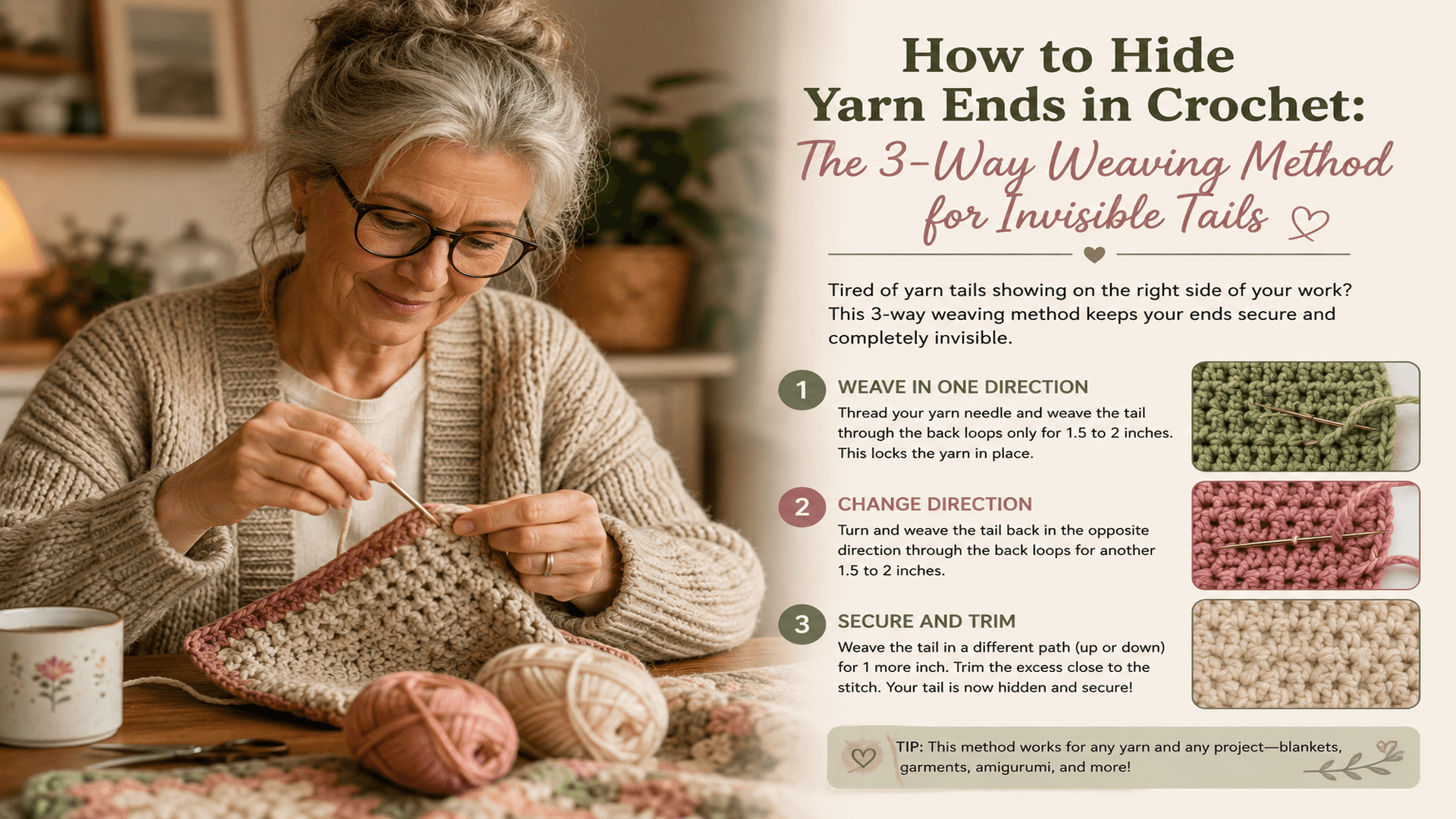
How to Hide Yarn Ends in Crochet: A Simple Method for Secure, Invisible Finishing
Few things make a finished crochet project look less polished than loose yarn tails sticking out of the back. Whether you are finishing a blanket, joining granny squares, changing colors, or completing an amigurumi piece, knowing how to weave in crochet ends is one of those small skills that makes a huge difference. The good news is that you do not need complicated knots or special equipment. With a tapestry needle, a few inches of yarn, and the right weaving path, you can secure most crochet yarn tails neatly inside the fabric. The key is not simply hiding the end. You want to make it difficult for the tail to work its way back out when the project is stretched, handled, or washed. One of the most reliable approaches is to weave the yarn in one direction, reverse the path, and then make a final pass through a different section of the stitches. Changing direction creates additional friction and helps keep the tail in place.
Read tutorial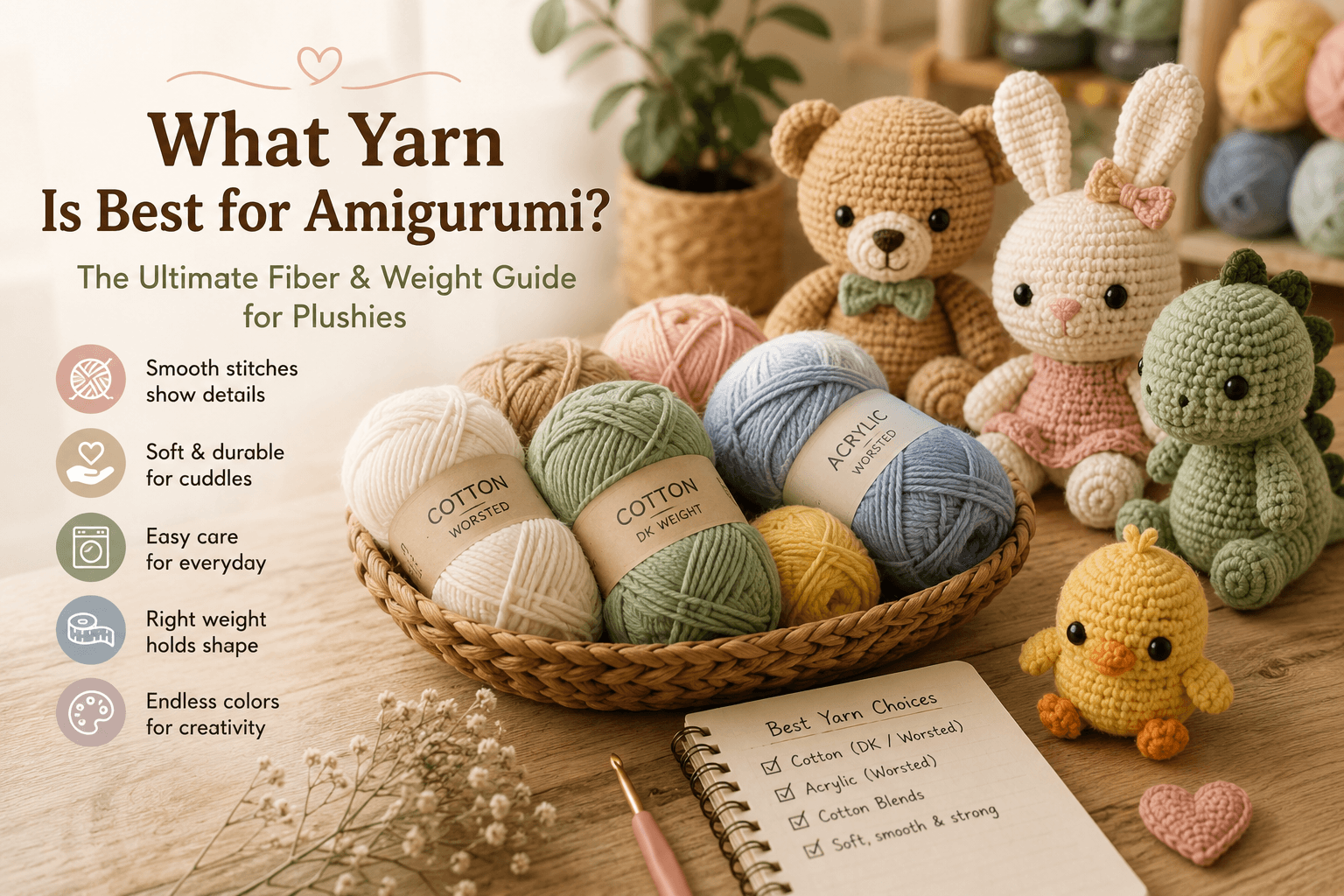
What Yarn Is Best for Amigurumi? The Ultimate Fiber & Weight Guide for Plushies
Looking for the best yarn for amigurumi? The right choice depends on the size of your plushie, how clearly you want your stitches to show, how soft you want the finished toy to feel, and how much stuffing pressure the fabric needs to handle. For most crochet amigurumi, smooth cotton, cotton blends, and acrylic yarn are the easiest choices, while chenille is ideal when you want a soft, oversized plush finish.
Read tutorial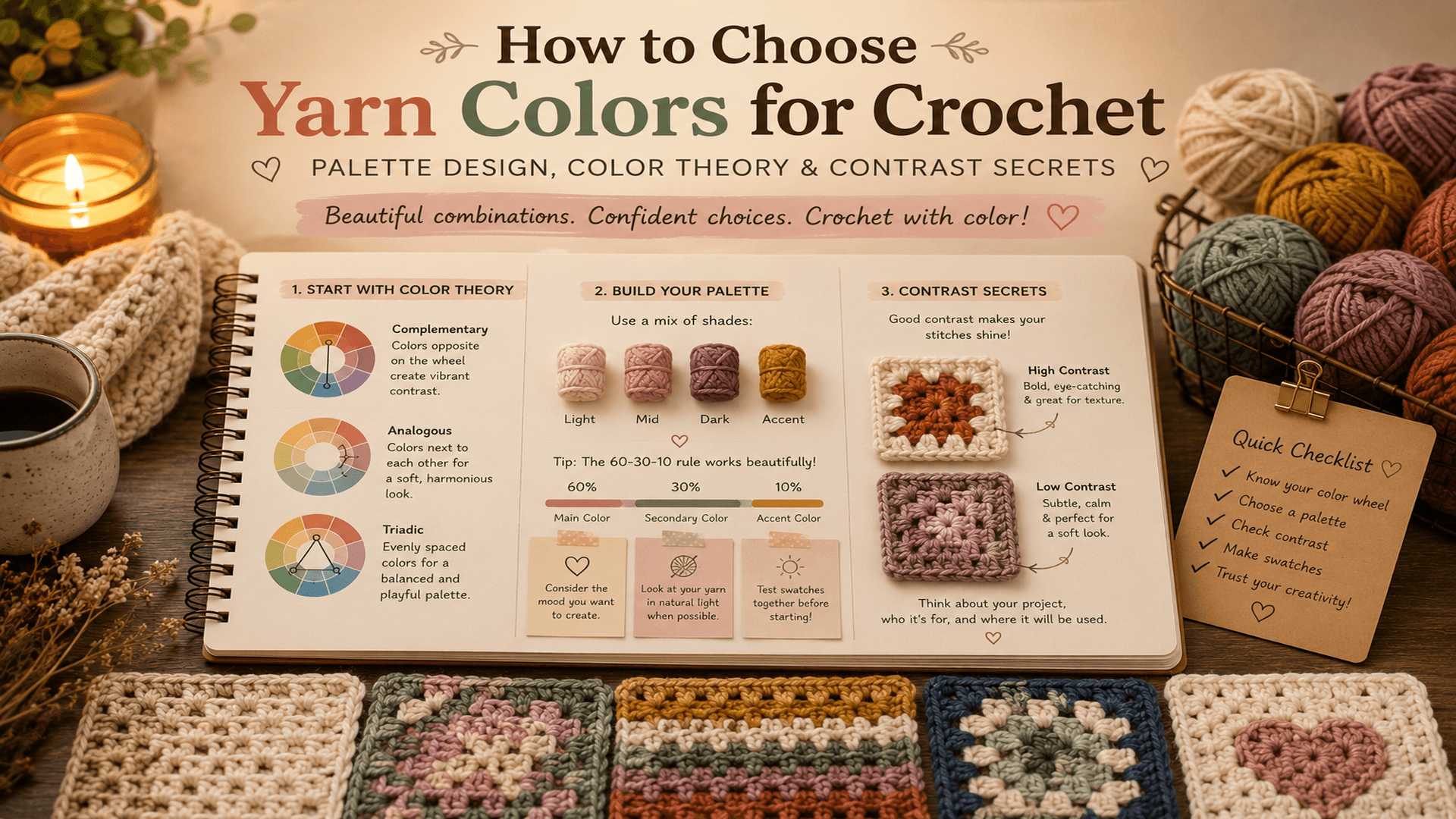
How to Choose Yarn Colors for Crochet: Color Theory, Palettes & Contrast Tips
You find the perfect crochet pattern. The stitches are beautiful. You already know which yarn you want to use. Then you reach the yarn shelf and suddenly have ten different shades in front of you. Cream or white? Sage or olive? Dusty rose or terracotta? And somehow, colors that looked gorgeous on their own don't look nearly as good when you put them together. Choosing yarn colors for crochet can be surprisingly difficult. But you don't need to be an artist or memorize complicated color theory to create a beautiful crochet color palette. A few simple tricks can make a huge difference. You can use the color wheel to find combinations that naturally work together, use contrast to make patterns easier to see, and use a few simple rules to stop your project from looking too busy. Whether you're choosing colors for a crochet blanket, granny squares, a sweater, scarf, bag, or another accessory, this guide will help you put together a yarn color palette that looks intentional and balanced.
Read tutorialReady to make something?
Put your new skills to use with our free pattern collection.