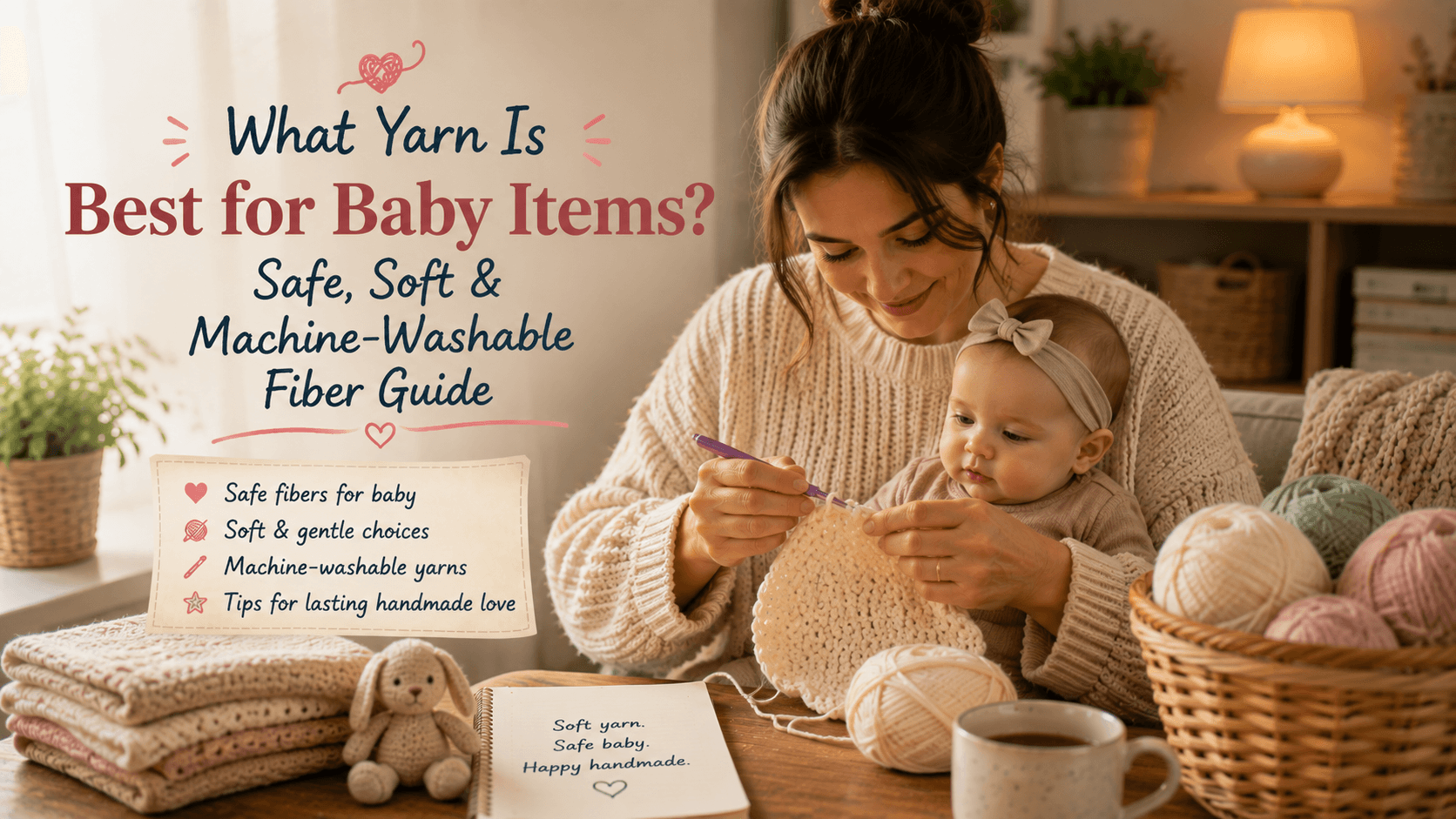
What Yarn Is Best for Baby Items? Safe, Soft & Machine-Washable Fiber Guide
Quick Summary: The best yarn for baby crochet is generally soft, smooth, durable, and easy to wash. Cotton, washable wool blends, and quality acrylic or acrylic blends can all work well depending on the project. Look for reputable safety certifications such as OEKO-TEX® STANDARD 100 when available, follow the yarn's care instructions, and avoid loose, shed-prone fibers and detachable decorations on items intended for babies.
What Makes Yarn Suitable for Baby Crochet?
Choosing yarn for a baby blanket, cardigan, lovey, or pair of booties isn't just about finding the softest skein in the shop.
Baby items are exposed to frequent washing, rubbing, drooling, spills, and plenty of handling. The finished fabric therefore needs to be comfortable against delicate skin, practical to clean, and structurally secure.
There isn't one universally “safest” fiber for every baby project. Cotton, acrylic, wool, and blends can all have useful properties. The right choice depends on what you're making and how it will be used.
For example, breathable cotton can be excellent for lightweight blankets and summer clothing, while washable acrylic can be convenient for everyday garments that need frequent laundering.
Step 1: Look for Trusted Safety Certifications
When choosing yarn for something that will touch a baby's skin, a recognized textile safety certification can provide useful additional reassurance.
One certification you may encounter is OEKO-TEX® STANDARD 100. Products carrying this certification have been tested for a range of potentially harmful substances according to the applicable product class and requirements.
If a yarn manufacturer provides certification information, check the actual product or manufacturer documentation rather than assuming that every yarn from a particular fiber type has been tested.
Certification is helpful, but it isn't the only consideration. You should still evaluate the yarn's softness, construction, care requirements, and the safety of the finished item.
Step 2: Choose Soft, Smooth Fibers
The yarn should feel comfortable against the skin without scratchy or rough fibers sticking out from the fabric.
Good options to consider include:
Cotton
Cotton is breathable, has good stitch definition, and is available in everything from lightweight sport yarns to thicker blanket varieties.
It works particularly well for:
- Baby blankets
- Washcloths
- Lightweight sweaters
- Summer hats
- Booties
- Small accessories
One drawback is that cotton generally has less elasticity than wool or acrylic, so garments may feel less forgiving.
Acrylic
Quality acrylic yarn is a popular choice for baby crochet because it is typically lightweight, durable, and easy to care for.
A soft anti-pilling acrylic can be especially practical for blankets, sweaters, hats, and toys that will be washed frequently.
The important distinction is that “acrylic” doesn't automatically mean soft or high quality. Feel the yarn before purchasing when possible and check the manufacturer's washing instructions.
Washable Wool
Wool isn't automatically unsuitable for babies. Some wool can be wonderfully soft and comfortable, particularly fine merino varieties.
For baby clothing, however, choose carefully. Scratchy wool can irritate sensitive skin, and non-washable wool requires more demanding care.
A washable wool or superwash wool blend may be a useful option when you want warmth and natural elasticity without complicated hand-washing.
Step 3: Prioritize Easy Care
Baby items get dirty.
A beautiful handmade blanket isn't very practical if its owner has to treat every little spill like a museum emergency.
For everyday baby projects, look for yarn with care instructions that fit the parents' routine. Machine-washable yarn is often the most convenient choice, but always follow the manufacturer's recommended temperature, cycle, and drying method.
Don't assume that “machine washable” means “safe to tumble dry.” Some yarns tolerate washing but require air drying or a low-temperature setting.
Before starting a large project, check:
- Washing temperature
- Machine-washing instructions
- Dryer instructions
- Shrinkage potential
- Colorfastness
- Whether the finished fabric changes after washing
A small swatch can tell you much more than the information printed on the front of the skein.
Step 4: Avoid Fibers That Shed Excessively
For items that will be handled closely by babies, smooth and stable yarn construction is generally preferable to yarn that sheds obvious fibers.
Very fuzzy or loosely constructed yarns can make it harder to inspect the finished fabric and may shed fibers during use.
Be particularly cautious with projects made from:
- Very loose novelty yarns
- Extremely fuzzy constructions
- Fibers that shed heavily during handling
- Fragile yarns that break apart easily
This doesn't mean that every fuzzy fiber is automatically dangerous. Rather, baby projects should be evaluated for the finished item's actual construction and intended use.
For a baby blanket or wearable, a smooth yarn is usually a simpler and more practical choice.
Step 5: Match the Yarn to the Project
The best yarn depends heavily on what you're making.
| Baby Item | Useful Yarn Characteristics |
|---|---|
| Blanket | Soft, durable, washable |
| Sweater | Soft, comfortable, washable, appropriate drape |
| Booties | Soft, flexible, washable |
| Hat | Soft, comfortable, appropriate warmth |
| Lovey | Smooth, durable, securely constructed |
| Amigurumi | Firm fabric, durable yarn, securely attached features |
| Washcloth | Absorbent, washable, durable cotton |
For blankets, comfort and washability are often more important than extreme warmth.
For garments, softness, drape, elasticity, and accurate sizing become more important.
For toys and loveys, construction safety matters just as much as fiber choice.
Step 6: Make the Fabric Dense Enough for the Project
The yarn itself isn't the only safety consideration. The way you crochet it matters too.
Avoid unnecessarily large holes in items where little fingers could become caught. This is particularly relevant when designing blankets, toys, and accessories for very young children.
If you're making a stuffed crochet toy, choose a hook size that produces a sufficiently dense fabric for the yarn and pattern rather than automatically using the largest recommended hook.
Likewise, inspect the finished item for loose stitches, openings, or areas where stuffing could escape.
Step 7: Be Careful With Buttons, Beads, and Other Decorations
One of the biggest safety considerations in baby crochet isn't the yarn at all—it's detachable components.
Avoid loose decorative elements that could become detached during normal use, especially on toys, garments, and loveys intended for babies.
This includes things such as:
- Small buttons
- Beads
- Sequins
- Plastic eyes
- Bells
- Decorative charms
- Long unsecured cords
If a design requires a feature, make sure it is securely constructed and appropriate for the item's intended age and use. For baby toys in particular, embroidered details can be preferable to small attached pieces.
Step 8: Wash the Finished Item Before Giving It as a Gift
Whenever the yarn's care instructions allow it, washing the completed item before gifting it is a practical final step.
It gives you an opportunity to check:
- Whether the colors bleed
- Whether the fabric changes size
- Whether the stitches remain secure
- Whether the yarn becomes softer or rougher
- Whether the finished item matches your expected dimensions
Follow the yarn manufacturer's care instructions rather than automatically using a particular washing temperature.
Cotton vs. Acrylic vs. Wool: Which Is Best?
There is no single winner for every project.
Choose cotton when you want breathability, crisp stitch definition, and a natural plant-based fiber.
Choose soft acrylic when easy care, durability, affordability, and frequent machine washing are major priorities.
Choose washable fine wool when you want warmth, elasticity, and the characteristics of a natural animal fiber, provided the specific yarn is soft enough and suitable for the intended use.
For many everyday baby projects, soft cotton and quality washable acrylic are particularly practical starting points.
Common Mistakes When Choosing Baby Yarn
Mistake 1: Assuming Natural Means Safer
“Natural” doesn't automatically mean softer, less irritating, or more appropriate for babies.
A rough wool can be uncomfortable, while a high-quality acrylic can be exceptionally soft and practical.
Judge the actual yarn, not simply the fiber category.
Mistake 2: Choosing Yarn Without Checking Care Instructions
Baby items need frequent cleaning.
Always check how the yarn behaves after washing before committing to a large project.
Mistake 3: Focusing Only on Yarn Safety
A safe yarn cannot compensate for an unsafe finished design.
Loose buttons, beads, poorly secured attachments, long cords, or easily detached pieces can create hazards regardless of the fiber used.
Mistake 4: Making the Fabric Too Loose
An overly open fabric may not be appropriate for every baby item. Consider the age, purpose, stitch pattern, and finished construction before choosing your gauge.
Pro-Tip 💡
For a baby gift, make a small swatch first and wash it exactly as you expect the finished item to be washed.
Check it after drying for softness, stretching, shrinking, color bleeding, and changes in stitch definition. This simple test can prevent you from spending hours crocheting a blanket only to discover that the finished fabric doesn't behave the way you expected.
Frequently Asked Questions
What is the best yarn for a baby blanket?
Soft cotton, quality acrylic, and suitable washable blends can all work well. Prioritize softness, durability, easy care, and a fabric construction appropriate for the baby's age and intended use.
Is acrylic yarn safe for babies?
Acrylic yarn can be used for baby crochet when the specific yarn is suitable for the project and the finished item is properly constructed and cared for. Choose a soft, reputable yarn and follow its care instructions.
Is cotton yarn good for baby clothes?
Yes. Cotton is breathable and has good stitch definition, making it a popular option for lightweight baby clothing. Its relatively low elasticity should be considered when choosing garment designs.
Is wool safe for baby items?
Some wool is suitable for babies, particularly soft fine wool such as merino, but individual babies may find certain wool yarns irritating. Choose a yarn that is genuinely soft and check its care requirements.
Should baby crochet items be machine washable?
For everyday baby items, machine washability can be extremely convenient. However, always follow the yarn manufacturer's care instructions rather than assuming every machine-washable yarn can tolerate the same temperature or dryer setting.
What yarn should I avoid for baby items?
Be cautious with yarns that are very scratchy, fragile, or shed heavily, particularly when the finished item will have close contact with a baby. Also consider the construction of the finished project and avoid unsecured small decorative components.
Recommended Next Step
Choosing the right yarn is only the first part of creating a thoughtful baby crochet gift. Combine a suitable fiber with a secure stitch structure, careful finishing, appropriate sizing, and easy-care instructions.
Explore AlbaCrochet digital PDF baby patterns for thoughtfully designed projects with clear instructions, sizing guidance, and practical construction details for handmade gifts.
Ready to make something?
Put your new skills to use with our free pattern collection.