What Yarn Is Best for Crochet Blankets? A Complete Guide
Walk into a yarn store looking for blanket yarn, and you'll quickly discover that there isn't just one obvious choice. Acrylic is affordable and easy to wash. Wool is warm and springy. Cotton is breathable but can make a large blanket heavy. Chenille feels incredibly soft but can hide your stitches. So what is the best yarn for crochet blankets? For most everyday crochet blankets, a good-quality medium-weight acrylic yarn or an easy-care acrylic blend is often the most practical choice. It's widely available, comes in many colors, and is commonly designed for regular washing. But that doesn't automatically make it the best yarn for your blanket. A chunky winter throw, a baby blanket, a lightweight summer blanket, and a decorative bedspread all have different needs. Instead of choosing yarn based only on how soft it feels in the store, start with one question: How is this blanket actually going to be used? That answer will usually point you toward the right fiber and yarn weight.
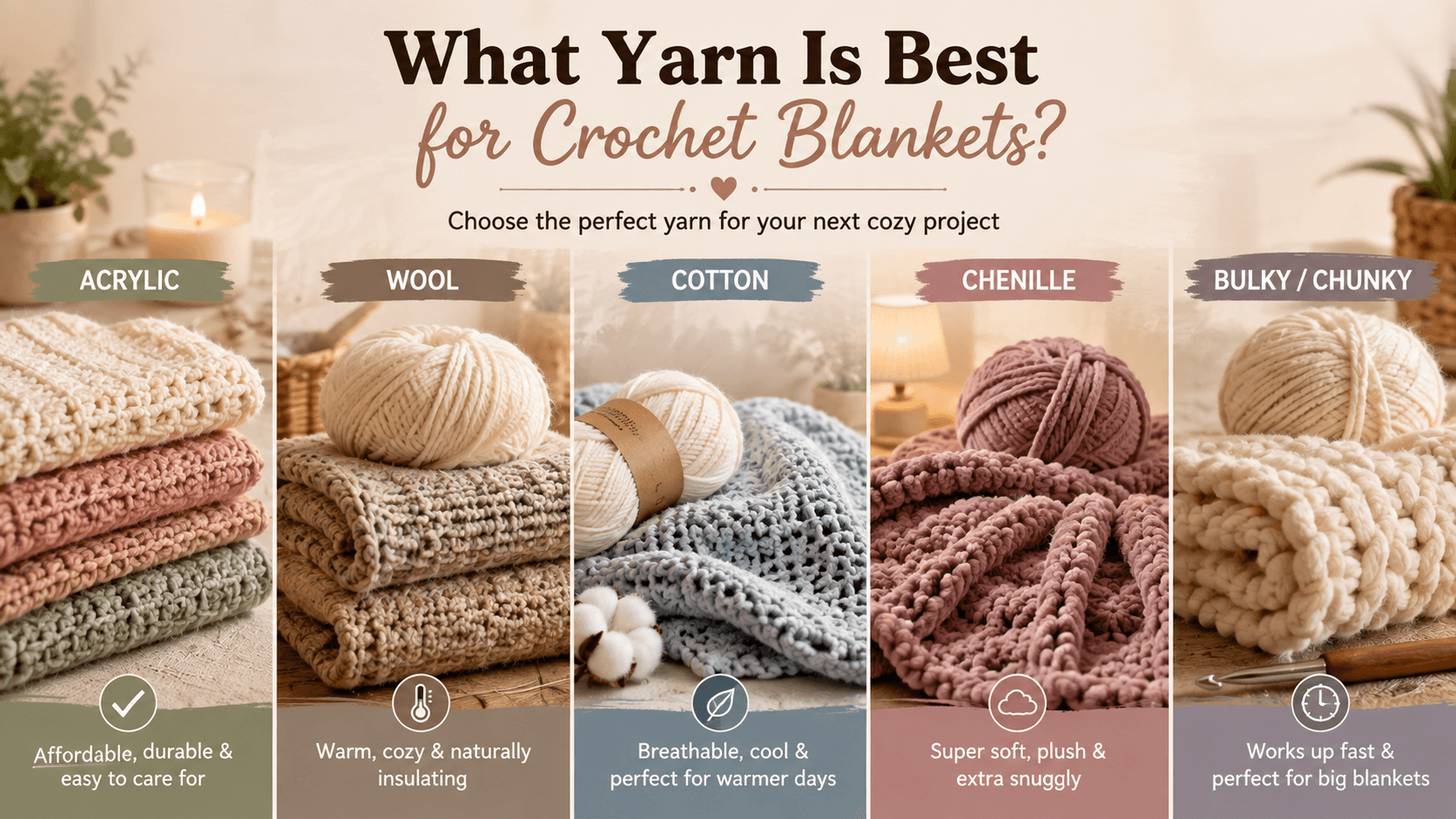
The Quick Answer: Which Yarn Should You Choose?
If you just want a fast answer, use this guide:
| If you want... | Consider... |
|---|---|
| An easy-care everyday blanket | Acrylic or acrylic blend |
| A warm winter blanket | Wool or a wool blend |
| A breathable blanket | Cotton or a cotton blend |
| An extremely soft, plush blanket | Chenille or plush polyester yarn |
| A quick chunky project | Bulky or super bulky yarn |
| A detailed stitch pattern | DK or worsted/medium-weight yarn |
| A frequently washed blanket | A yarn specifically labeled machine washable |
| A lightweight summer throw | Cotton, bamboo blend, or another breathable yarn |
The important part is that there is no universal “best” fiber.
The Craft Yarn Council classifies yarn into weight categories ranging from fine yarns to bulky and super bulky yarns, and the weight you choose can dramatically affect the size, density, and speed of a crochet project.
First, Decide What Matters Most
Before comparing yarn brands or colors, think about the finished blanket.
Do you care most about:
Softness?
Warmth?
Easy washing?
Low cost?
Speed?
Breathability?
A lightweight finished blanket?
Clear stitch definition?
You usually can't maximize every single one.
For example, a super bulky chenille yarn may give you incredible softness and allow you to finish quickly, but it won't show complicated stitches as clearly as a smooth worsted-weight yarn.
A cotton blanket may be breathable and durable, but a large one can become considerably heavier than a similar blanket made with a lighter fiber.
Choosing the best blanket yarn is mostly about deciding which trade-offs you're happy with.
Acrylic: The Practical Choice for Everyday Blankets
Acrylic is one of the most popular choices for crochet blankets, and for good reason.
It is generally affordable, available in a huge range of colors, and many acrylic yarns are designed to be machine washable.
That makes acrylic particularly useful for blankets that will actually be used every day rather than stored away as decoration.
Acrylic can be a good choice for:
Family blankets
Throws
Children's blankets
Gifts
Large blankets on a budget
Colorful blankets
Textured stitch patterns
Good-quality acrylic can also provide decent stitch definition, especially in smoother yarns.
Some yarns are specifically marketed as anti-pilling, which may help reduce the appearance of pills caused by friction. However, the label doesn't mean a blanket will never pill.
If easy care is your priority, check the individual yarn label rather than assuming every acrylic yarn has the same washing and drying instructions.
Acrylic is commonly recommended for everyday blankets because it combines durability, affordability, and easy-care options, although individual yarns can vary.
Best for most people?
Honestly, yes.
If you're making your first large crochet blanket and don't have a very specific goal, a quality medium-weight acrylic yarn is often a safe starting point.
Wool: Best When Warmth Is the Priority
Wool brings something that many synthetic yarns struggle to copy: natural elasticity and warmth.
It has more bounce than cotton, which can create a softer, more flexible crochet fabric.
That makes wool and wool blends particularly appealing for cozy blankets designed for colder weather.
Wool can be a good choice for:
Winter throws
Cozy lap blankets
Cabin-style blankets
Heirloom projects
Blankets where warmth matters more than easy care
However, pure wool may require more careful washing than acrylic.
If you want the warmth of wool without the maintenance of hand-wash-only yarn, look for a yarn specifically labeled superwash or machine washable.
Don't assume all wool is machine washable.
Wool blends can also offer a middle ground. For example, an acrylic-wool blend may combine easier care with some of wool's warmth and elasticity.
Cotton: Best for Breathable and Warm-Weather Blankets
Cotton is a very different experience from wool.
It has less elasticity, tends to create a more structured fabric, and is commonly used for projects where breathability matters.
For a lightweight summer blanket or a throw used in a warm climate, cotton can be a great option.
Cotton works well for:
Summer throws
Lightweight blankets
Warm-climate homes
Decorative blankets
Blankets with crisp stitch definition
There is one thing to keep in mind:
Large cotton blankets can get heavy.
Cotton also has less natural stretch than wool, so some crocheters may find it less forgiving to work with over long periods.
A cotton blend can sometimes give you a softer or more flexible result, depending on the other fibers included.
Cotton and cotton blends are commonly used when breathability is more important than maximum warmth.
Chenille and Plush Yarn: Best for Maximum Softness
If your main goal is to make a blanket that feels incredibly soft and plush, chenille-style and plush polyester yarns are worth considering.
These yarns can create a thick, cozy fabric quickly, especially when used in bulky or super bulky weights.
They're popular for:
Chunky throws
Baby blankets
Decorative blankets
Gift blankets
Extra-soft sensory-friendly projects
But chenille has a personality of its own.
The fuzzy texture can make individual stitches harder to see. Complex stitch patterns may disappear into the fabric, so simple stitches often work best.
Chenille can also feel slippery on the hook, depending on the yarn construction.
The result can be beautiful, but I wouldn't recommend choosing chenille solely because it looks soft in the skein. Make a small swatch first.
Plush and chenille yarns are generally better suited to simpler stitch patterns because their texture can obscure detailed stitch work.
What Yarn Weight Is Best for Crochet Blankets?
The best yarn weight depends on how quickly you want to finish and what kind of blanket you want.
DK or light yarn (#3)
A lighter yarn can create a detailed, flexible blanket.
It's useful for:
Baby blankets
Lightweight blankets
Detailed stitch patterns
Granny square projects
The downside is that large blankets take longer to complete.
Medium or worsted weight (#4)
Medium-weight yarn is one of the most versatile choices for crochet blankets.
It gives you a balance between:
Reasonable project speed
Visible stitches
Manageable fabric thickness
This is a good option if you're unsure where to start.
Bulky yarn (#5)
Bulky yarn helps you finish faster and creates a thicker blanket.
It can work well for:
Warm throws
Chunky designs
Quick gifts
Super bulky yarn (#6)
Super bulky yarn is for speed and drama.
You can create a large, chunky-looking blanket much faster than you could with a lighter yarn.
The trade-offs are that it can require more yarn, cost more for a large project, and create a heavier or bulkier finished blanket depending on the fiber and stitch pattern.
The Craft Yarn Council identifies #3 as light, #4 as medium, #5 as bulky, and #6 as super bulky, with different recommended gauge ranges for each category.
The Yarn Weight You Choose Also Changes the Cost
This is something many crocheters don't think about until they're halfway through the project.
A yarn may look inexpensive because one skein costs only a few dollars, but the skein may not contain enough yardage for a large blanket.
Before buying anything:
Check the pattern's required yardage.
Check how many yards or meters are in each skein.
Calculate how many skeins you need.
Consider buying a little extra if you may need more yarn for a border or if matching the exact color later could be difficult.
Don't rely on a universal “buy 10% extra” rule. The amount of extra yarn you need depends on the pattern, your gauge, whether you're adding modifications, and whether the yarn is likely to remain available.
If possible, buying enough matching yarn at the beginning can help avoid visible color differences later.
Don't Choose Blanket Yarn Without Checking the Care Label
Imagine spending weeks making a huge blanket, then discovering it needs special care that doesn't fit how the blanket will actually be used.
Before buying your yarn, check:
Is it machine washable?
What water temperature is recommended?
Can it go in a dryer?
Does it need to be dried flat?
Is it hand wash only?
The Craft Yarn Council provides standardized yarn label information and symbols intended to communicate yarn characteristics and project information.
For a blanket that will be used by children, pets, or a busy family, easy care may matter more than choosing the most luxurious fiber.
For a decorative or special-occasion blanket, you might be happy with a yarn that requires more careful washing.
There isn't a wrong answer. It depends on the blanket's future.
A Small Swatch Can Save You a Very Expensive Mistake
Before ordering 15 or 20 skeins, crochet a swatch.
Not just to check gauge.
Use the swatch to answer practical questions:
Do you like the softness?
Are the stitches easy to see?
Does the fabric feel too stiff?
Is the blanket likely to be too heavy?
Do you like the drape?
How does the yarn feel after washing?
If you plan to wash the finished blanket, wash the swatch according to the yarn's care instructions.
This can reveal changes in texture, softness, shrinkage, or drape before you've invested in an entire blanket's worth of yarn.
So, What Is the Best Yarn for Your Blanket?
Choose acrylic if you want an affordable, colorful, easy-care everyday blanket.
Choose wool or a wool blend if you want warmth and a cozy, springy fabric for colder weather.
Choose cotton or a cotton blend if you're making a breathable blanket for warmer weather.
Choose chenille or plush yarn if softness is the number one priority and you're happy using simpler stitches.
Choose medium-weight yarn if you want a versatile balance between project speed and stitch definition.
Choose bulky or super bulky yarn if you want a chunky blanket and want to finish faster.
The best yarn isn't necessarily the softest skein or the most expensive one.
It's the yarn that matches how you want the blanket to feel, how warm you want it to be, how often it will be washed, and how much time you want to spend making it.
That is the real shortcut to choosing the right blanket yarn.
Ready to make something?
Put your new skills to use with our free pattern collection.