Cotton vs Wool for Crochet: Which Yarn Is Better?
Choosing between cotton and wool can completely change how your crochet project feels, looks, stretches, and performs. Both are popular natural fibers, but they behave very differently once they're on your hook. Wool is generally elastic, springy, and warm. Cotton is usually smoother, less elastic, and better at creating a more structured fabric. So, is cotton or wool better for crochet? The honest answer is: neither is better for everything. The right choice depends on what you're making. A wool sweater, for example, may feel completely different if you make the same pattern with cotton. A sturdy cotton market bag might lose its structure if you replace the yarn with a stretchy wool. Let's compare cotton vs wool for crochet so you can choose the right yarn before starting your next project.
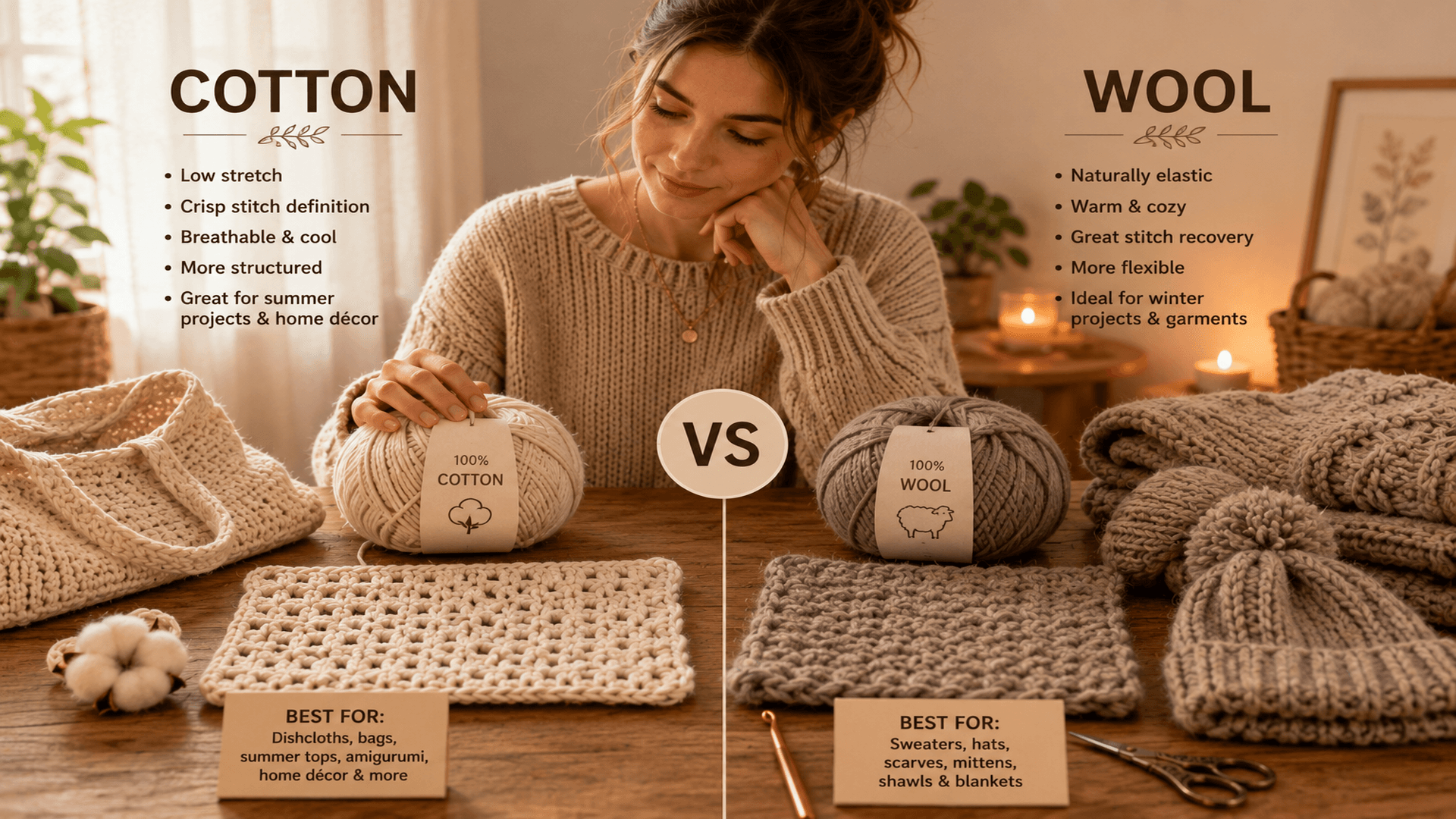
Cotton vs Wool: Quick Comparison
| Feature | Cotton | Wool |
|---|---|---|
| Stretch | Low elasticity | Naturally elastic |
| Stitch definition | Usually crisp and clear | Can range from soft to well-defined |
| Warmth | Less insulating | Naturally warm |
| Structure | Often more structured | Usually more flexible |
| Recovery after stretching | Lower | Generally better |
| Moisture behavior | Absorbs and holds moisture | Absorbs moisture differently and can still feel relatively dry |
| Best for | Summer items, home goods, bags | Sweaters, hats, scarves, winter projects |
When Cotton Is the Better Choice
Cotton is a great option when you want your crochet fabric to have structure and clear stitch definition.
Because cotton yarn generally has less elasticity than wool, it doesn't bounce back in the same way after being stretched. This can be useful for projects where you want the finished item to hold its shape.
Cotton works especially well for:
Dishcloths
Washcloths
Market bags
Tote bags
Summer tops
Lightweight accessories
Amigurumi
Home décor
Table runners
Crochet items where clear stitch definition is important
Cotton can also be a good choice when you want to see every detail of your stitch pattern.
Textured stitches, cables, colorwork, and decorative patterns can often stand out clearly with a smooth cotton yarn.
When Wool Is the Better Choice
Wool is often the better choice when you want warmth, elasticity, and a fabric that can stretch and recover more easily.
Wool fibers naturally have crimp, which gives the yarn more spring than cotton.
This can make wool more forgiving when crocheting garments that need flexibility.
Wool is especially popular for:
Sweaters
Cardigans
Hats
Scarves
Shawls
Mittens
Winter blankets
Cold-weather accessories
If you're making something that needs to move with the body, wool can often provide a more comfortable result than a non-elastic cotton yarn.
Which Has Better Stitch Definition?
Cotton is often chosen for projects where you want clean, visible stitches.
Its smoother and less elastic nature can create a crisp appearance, especially with textured crochet stitches.
However, that doesn't mean wool has poor stitch definition.
The type of wool and how the yarn is spun can make a big difference. Some smooth, tightly spun wool yarns can show stitch patterns beautifully.
The better question is:
Do you want your stitches to look crisp and structured, or soft and flexible?
For a more structured look, cotton may be the better option.
For a softer, springier fabric, wool may be the better choice.
Is Cotton Better for Summer Crochet?
In many cases, yes.
Cotton is commonly used for summer crochet projects because it is breathable and does not provide the same level of insulation as wool.
Popular summer crochet projects include:
Tank tops
Lightweight shirts
Beach bags
Bucket hats
Lightweight accessories
However, yarn weight and stitch pattern also matter.
A thick cotton yarn worked in dense stitches can still create a heavy, warm fabric.
If you're making summer clothing, consider both the fiber and the openness of the stitch pattern.
Is Wool Better for Winter Crochet?
Wool is a natural choice for many cold-weather projects because of its insulating properties and elasticity.
This makes it especially useful for garments and accessories designed to keep you warm.
A wool hat can stretch comfortably around the head, while a wool sweater can move more easily with the body than a similar item made with a less elastic fiber.
For winter crochet projects, wool is often a strong option for:
Sweaters
Beanies
Scarves
Mittens
Thick shawls
Warm blankets
Which Is Better for Crochet Blankets?
Both can work, but they create very different blankets.
Choose cotton if you want:
A heavier blanket
Clear stitch definition
A more structured fabric
A blanket suitable for warmer conditions
Choose wool if you want:
More warmth
A softer and springier feel
A lighter-feeling, elastic fabric depending on the yarn
A cozy cold-weather blanket
Keep in mind that large cotton blankets can become quite heavy, especially when wet.
For this reason, yarn blends are also worth considering.
Which Is Easier to Crochet With?
This depends on your personal crochet style.
Some beginners may find wool easier because its elasticity makes small tension mistakes feel less noticeable.
Cotton can feel less forgiving because it has less stretch and does not bounce back in the same way.
That doesn't mean cotton is difficult to crochet with.
Many crocheters love cotton because the yarn can provide clear stitches and a predictable, structured result.
If you find cotton uncomfortable to work with, try:
An ergonomic crochet hook
Relaxing your grip
Adjusting how you tension the yarn
Taking breaks during longer crochet sessions
Trying a different cotton yarn construction
The best yarn is ultimately the one that feels comfortable in your hands and gives you the fabric you want.
What About Cotton and Wool Blends?
You don't always have to choose 100% cotton or 100% wool.
Yarn blends can combine some of the characteristics of different fibers.
A wool blend may offer warmth and elasticity while changing the feel, durability, or care requirements of the yarn.
A cotton blend may add softness, elasticity, or other properties depending on what it is blended with.
Always check the fiber percentages before assuming a blend will behave exactly like pure cotton or pure wool.
Which Should You Choose?
Use this simple guide before buying your yarn:
Choose cotton if you're making:
Summer clothing
Dishcloths or washcloths
Bags
Amigurumi
Structured home décor
Projects where crisp stitches are important
Choose wool if you're making:
Sweaters
Hats
Scarves
Mittens
Winter accessories
Warm and flexible garments
If you're still unsure, make a small swatch with both yarns.
Crochet the same stitch pattern using cotton and wool, then compare the stretch, drape, texture, and appearance.
That small test can tell you far more about which yarn is right for your project than simply choosing one fiber because it is considered "better."

The Bottom Line
For cotton vs wool for crochet, there is no universal winner.
Cotton is often the better choice when you need structure, clear stitches, and a fabric suited to warmer-weather or practical projects.
Wool is often the better choice when you want warmth, elasticity, and a soft fabric that can move and recover from stretching.
Instead of asking which fiber is best overall, ask one simple question before starting:
What do I want this finished crochet project to do?
Once you know whether you need warmth, structure, stretch, durability, or crisp stitch definition, choosing between cotton and wool becomes much easier.
Ready to make something?
Put your new skills to use with our free pattern collection.