How to Stop Crochet Edges from Curling: Causes and Easy Fixes
If your crochet edges are curling, rolling inward, or refusing to lay flat, you're not alone. Curling is a common crochet problem, especially when working blankets, scarves, shawls, garments, and flat panels. Sometimes the curl starts immediately after the first few rows. Other times, the project looks fine until several rows later. The good news is that you can usually identify the cause and fix it. A crochet project can curl because of a tight foundation chain, uneven tension, stitch imbalance, a dense stitch pattern, or the natural behavior of the yarn and fabric. In this guide, you'll learn how to stop crochet edges from curling, how to fix an existing project, and how to prevent the problem next time.
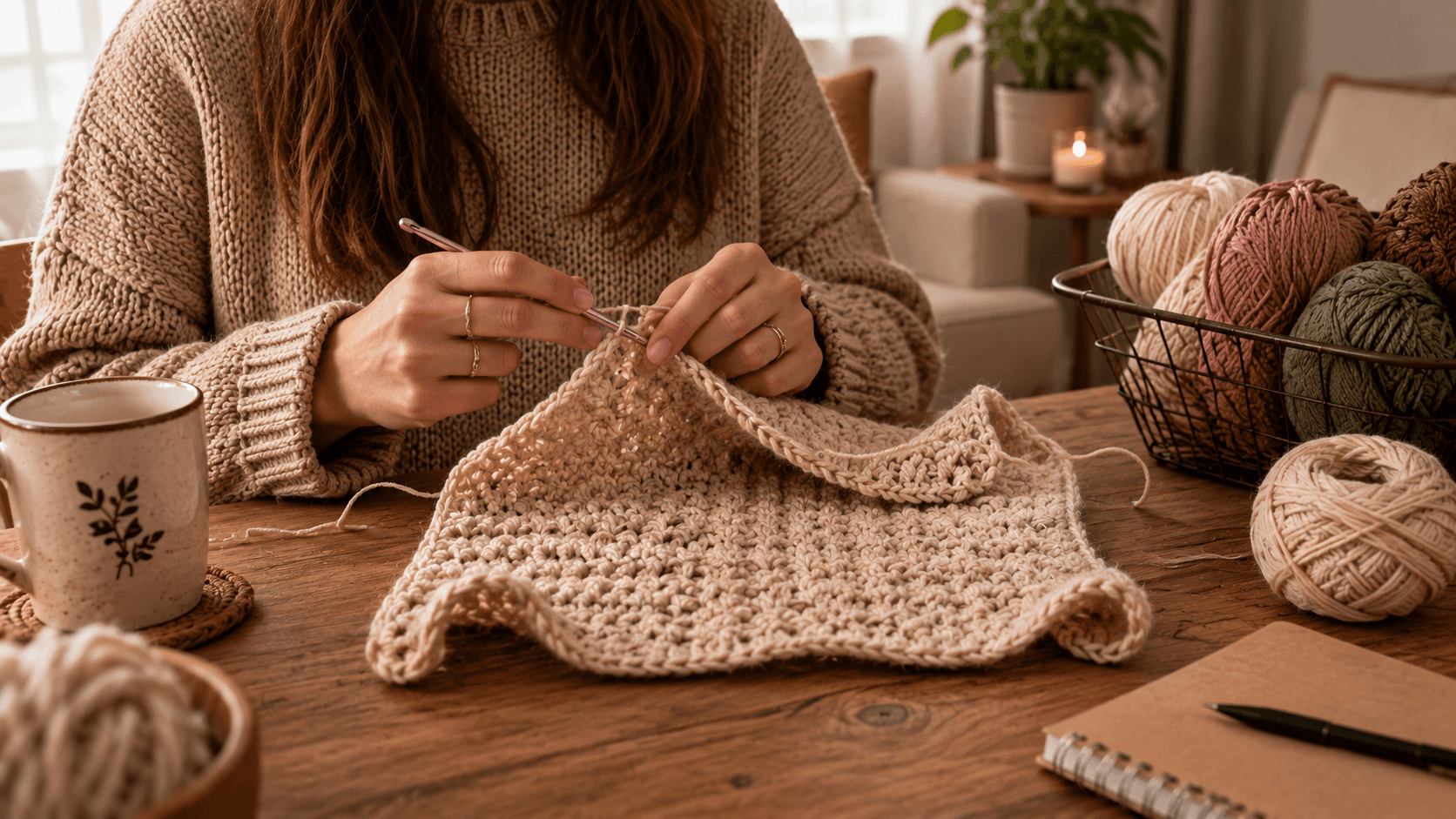
1. Your Foundation Chain Is Too Tight
One of the most common reasons for crochet edges curling is a foundation chain that is tighter than the rows worked above it.
When the foundation chain cannot stretch as much as the rest of the fabric, it pulls the bottom edge inward. This can cause your crochet to curve, curl, or form a slight arc instead of laying flat.
How to fix it
When starting your next project, try one of these methods:
- Make your foundation chain with a slightly larger hook.
- Chain more loosely than usual.
- Use a hook size that helps your foundation chain match the width and flexibility of the following rows.
- Try Foundation Single Crochet when the pattern allows it.
Foundation Single Crochet can create a more flexible starting edge because the foundation and first row of stitches are worked together.
If your current project is only slightly curled, blocking may help relax the edge.
2. Your Crochet Tension Is Too Tight
Tight tension doesn't only make individual stitches difficult to work into. It can also cause the entire fabric to pull inward.
If your stitches are significantly tighter than the pattern's intended gauge, your crochet may become stiff, dense, or curled.
How to fix it
Pay attention to how tightly you're holding both the yarn and crochet hook.
Try to:
- Relax your grip on the hook.
- Allow the yarn to move smoothly through your fingers.
- Avoid pulling every completed stitch tight.
- Make a gauge swatch if the finished size or shape matters.
If you naturally crochet tightly, testing a larger hook may help create a softer and more flexible fabric.
3. Your Stitch Pattern May Be Creating an Imbalance
Some crochet stitch patterns naturally pull the fabric in different directions.
Dense stitches, textured stitches, and combinations of stitches with different heights can sometimes create uneven tension across the fabric. This may cause the edges or corners to curl.
How to fix it
Check whether the curling appears throughout the entire project or only in a specific section.
If the curl begins after changing stitches, colors, or pattern sections, the stitch combination may be contributing to the problem.
You can try:
- Adjusting your tension.
- Using the hook size recommended by the pattern.
- Checking your gauge.
- Following any blocking instructions included with the pattern.
- Adding a suitable border if the project is designed for one.
Avoid adding an extremely tight border, as this can pull the edges even more.
4. Your Turning Chains or Row Ends May Be Uneven
If the sides of your crochet are curling or becoming uneven, check your row ends.
The way a pattern uses turning chains can affect the shape of the edge. Some patterns count the turning chain as a stitch, while others do not.
This is why it is important to follow the specific instructions in your pattern rather than using one turning-chain rule for every project.
How to fix it
Check the pattern to see:
- Whether the turning chain counts as a stitch.
- Where the first stitch of each row should be placed.
- Whether the final stitch should be worked into the turning chain or another stitch.
- How many stitches should be in each row.
Using stitch markers at the beginning and end of rows can make it easier to maintain straight edges and avoid accidentally adding or losing stitches.
5. The Yarn or Fiber May Be Affecting the Fabric
Sometimes your technique is perfectly fine, but the yarn itself affects how the fabric behaves.
Different fibers have different levels of elasticity, drape, and memory. A stiff yarn or dense fabric may naturally want to curl more than a softer, more flexible fabric.
The stitch pattern and hook size can also change how the yarn behaves.
How to fix it
Make a small swatch before starting a large project, especially when using a new yarn or stitch pattern.
Wash or block the swatch according to the yarn's care instructions and see how it behaves after drying.
This gives you a better idea of whether the finished project is likely to lay flat.
How to Fix Crochet That Is Already Curling
If your crochet project is already finished or well underway, don't panic. Depending on the cause and fiber, you may be able to improve the shape without unraveling everything.
Try Blocking
Blocking can help relax and shape crochet fabric.
The best blocking method depends on the fiber and the yarn manufacturer's care instructions.
Common methods include:
- Wet blocking.
- Spray blocking.
- Steam blocking when appropriate for the fiber.
Shape the crochet gently and allow it to dry completely before removing it from the blocking surface.
Always check how your specific yarn reacts to water and heat before blocking the entire project.
Can Adding a Border Stop Crochet From Curling?
A border can sometimes help stabilize a crochet edge that is curling, especially when the main fabric is only slightly uneven.
A simple round of relaxed single crochet may help create a cleaner edge. Other borders can also add weight and structure to the project.
However, the border should not be too tight.
If you force too many stitches into the border, the edge may become wavy. If you use too few stitches or crochet too tightly, the border can pull the project inward and make the curling worse.
The goal is to add a border that matches the tension and shape of the existing fabric.
How to Prevent Crochet Edges From Curling
The easiest way to fix curling is to prevent it before the project becomes too large.
Here are a few simple habits that can help:
- Make your foundation chain flexible.
- Keep your crochet tension consistent.
- Check your gauge when size matters.
- Count your stitches regularly.
- Follow the pattern's turning-chain instructions.
- Avoid adding stitches or accidentally skipping stitches at row ends.
- Test new yarn and stitch combinations with a small swatch.
- Block the finished project when appropriate for the yarn and pattern.
- Add borders with relaxed, even tension.
Final Thoughts
If you're wondering how to stop crochet edges from curling, start by looking at your foundation chain and overall tension.
A tight foundation is one of the most common causes, but it isn't the only one. Uneven row edges, stitch patterns, fabric density, and yarn behavior can also cause your crochet project to curl.
The best solution depends on what is creating the imbalance.
Check your stitch count, compare your tension with the pattern's gauge, and make sure your foundation edge is flexible enough for the rest of the fabric. If the project is already finished, careful blocking or a properly worked border may help it lay flatter.
With a few small adjustments, you can create smoother, straighter crochet edges that lay flat and give your finished project a cleaner, more polished look.
Ready to make something?
Put your new skills to use with our free pattern collection.